
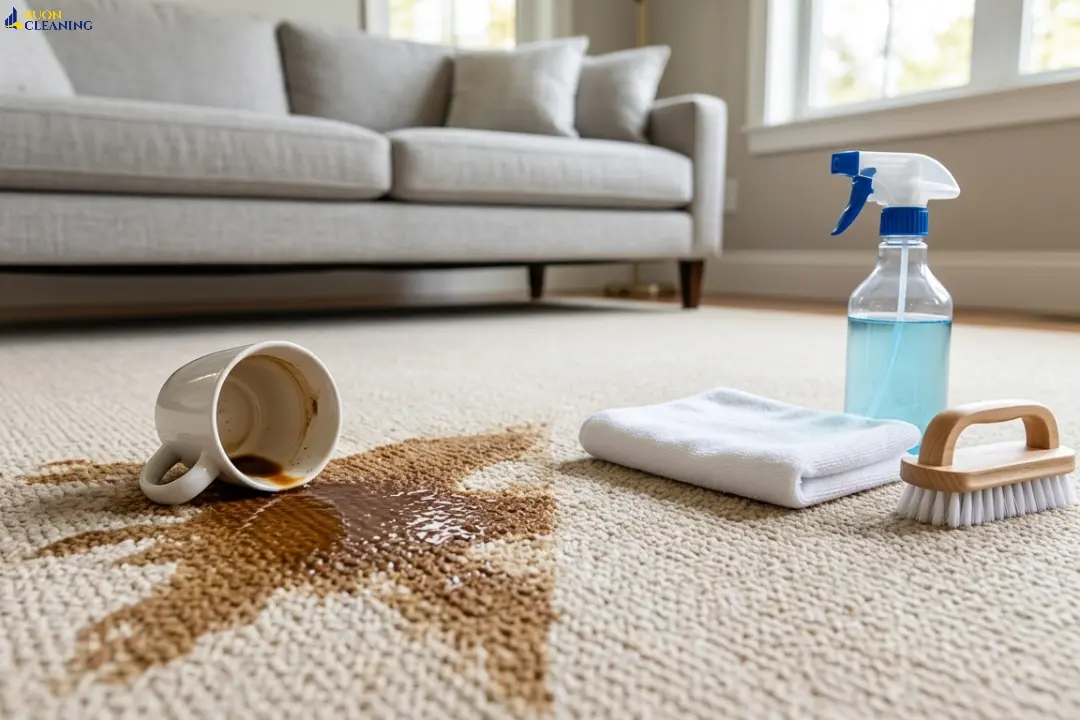
How to Get Coffee Stains Out of Carpet
A coffee spill does not automatically mean a permanent brown mark on your carpet. If you catch it quickly, the best approach is simple: blot up as much coffee as possible, treat the remaining stain with a carpet-safe cleaner, remove any residue and let the carpet dry completely.
The key is restraint. Scrubbing harder, pouring on more water or mixing several household cleaners can turn a manageable spill into a much harder stain.
The treatment also changes slightly depending on whether the coffee is fresh or dried, and whether it contained milk, cream, sugar or syrup.
Table of Contents
What to Do Straight After Spilling Coffee on Carpet
Start with a clean white cloth or plain white kitchen roll and press it firmly onto the spill and do not rub.
Blotting lifts liquid from the carpet. Rubbing tends to push it sideways and deeper into the pile, making the affected area larger.
Move from the outside of the stain towards the centre, changing to a clean part of the cloth as it becomes wet. Once you have absorbed as much coffee as possible, apply a small amount of cool water and blot again.
You are not trying to soak the carpet. The aim is simply to dilute the coffee that remains in the fibres.
Before using any cleaning product, check the carpet manufacturer’s care instructions and test it somewhere inconspicuous first, particularly if the carpet is wool, naturally dyed or made from another sensitive fibre.
What You Will Need
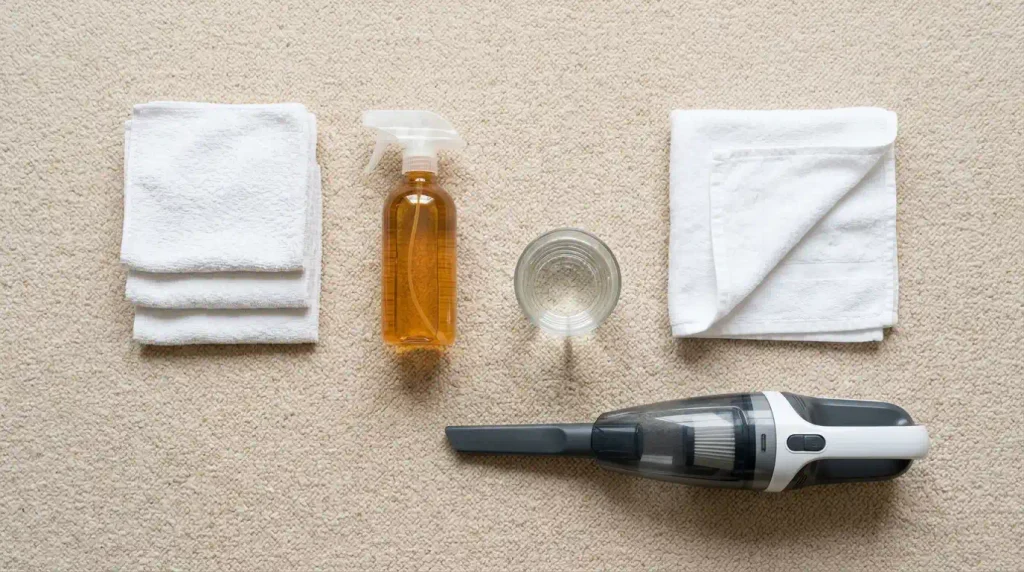
For a typical coffee spill, keep things simple:
- Clean white cloths or white kitchen roll
- Cool water
- A stain remover suitable for your carpet
- A clean, dry towel
- A vacuum cleaner for use once the carpet has dried
White cloths are preferable because there is less risk of transferring dye onto a damp carpet.
Try not to reach automatically for whatever cleaning liquid happens to be under the kitchen sink. Products made for hard surfaces, dishes or general household cleaning are not necessarily suitable for carpet fibres.
How to Remove a Fresh Coffee Stain From Carpet
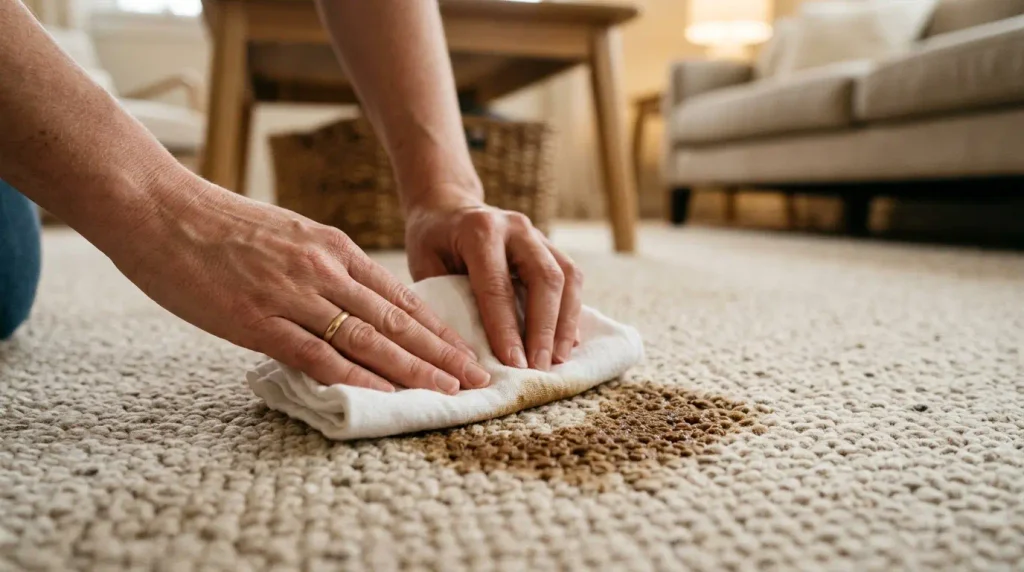
Fresh coffee is normally easier to deal with because less of it has dried into the fibres.
Step 1: Absorb as Much Coffee as Possible
Press a dry cloth onto the spill and lift it away. Repeat with a clean section until very little liquid is transferring.
Resist the temptation to scrub, even if the stain looks stubborn.
Step 2: Dilute the Remaining Coffee
Apply a small amount of cool water to the affected area and blot again.
This helps draw out more of the coffee without introducing unnecessary cleaning chemicals.
Step 3: Treat the Remaining Stain
If the mark is still visible, apply a carpet stain remover that is suitable for the fibre you are cleaning.
Follow the product instructions rather than making the area wetter than necessary. A small, controlled treatment is usually preferable to saturating the carpet in one attempt.
Step 4: Keep Blotting
Work from the outer edge towards the middle, pressing and lifting the cloth rather than rubbing it across the pile.
Change cloths as soon as they become heavily stained.
Step 5: Remove Any Cleaner Left Behind
If the product instructions call for rinsing, use a small amount of clean water and blot thoroughly.
This part is easy to overlook. Cleaning residue left in the carpet can become sticky and attract dirt, leaving you with a darker patch later even though the original coffee stain has gone.
Step 6: Dry the Area Properly
Press a dry towel firmly over the carpet to absorb excess moisture, then allow the area to air-dry.
Do not judge the final result while the carpet is still damp. A stain can look completely gone and then become visible again as the fibres dry.
How to Remove a Dried Coffee Stain From Carpet
Instead of immediately scrubbing at the hardened mark, lightly dampen it with cool water. This helps soften the dried coffee so it can be lifted from the fibres more easily.
Blot the area, then apply an appropriate carpet stain remover according to its instructions.
You may need to repeat the process, but avoid repeatedly soaking the same patch. More water does not necessarily mean better stain removal.
If several treatments have already been tried without much improvement, adding another household chemical is unlikely to help. At that stage, it is worth considering professional stain treatment.
Does It Matter What Was in the Coffee?
Yes. Black coffee, a milky latte and a heavily sweetened drink do not leave exactly the same residue behind.
Black Coffee
With black coffee, the visible brown staining is usually the main concern.
Quick blotting followed by careful spot cleaning is often enough for a small fresh spill.
Coffee With Milk or Cream
Milk adds another layer to the problem.
Even if the brown colour disappears, organic residue can remain deeper in the carpet. If it is not properly removed and the area stays damp, an unpleasant smell may develop later.
Coffee With Sugar or Syrup
Sugary coffee can leave the carpet feeling slightly sticky.
That residue attracts dust and everyday soil, which means the area may start looking dirty again surprisingly quickly.
The goal is therefore not just to make the stain invisible. The residue needs to come out as well.
What Should You Use on a Coffee Stain?
For most carpets, a carpet-specific stain remover that is suitable for the fibre is the safest starting point.
Plenty of homemade treatments appear online, but they are not automatically right for every carpet.
Can White Vinegar Remove Coffee Stains?
Diluted white vinegar is often suggested for coffee stains, and it may help in some situations.
That does not make it universally safe. Check the carpet’s care instructions and test any homemade solution first, especially on wool or other natural fibres.
Does Bicarbonate of Soda Remove Coffee Stains?
Bicarbonate of soda can help absorb moisture and some odours, but it should not be treated as a guaranteed coffee stain remover.
If brown coffee residue remains in the fibres, it still needs to be removed rather than simply covered with powder.
Can You Use Washing-Up Liquid?
Some DIY methods recommend diluted washing-up liquid, but general household detergents are not made specifically for carpet care.
They can be difficult to rinse out completely and may leave a sticky residue. A purpose-made carpet treatment is the more predictable option, particularly for wool or expensive carpets.
Check What Your Carpet Is Made From
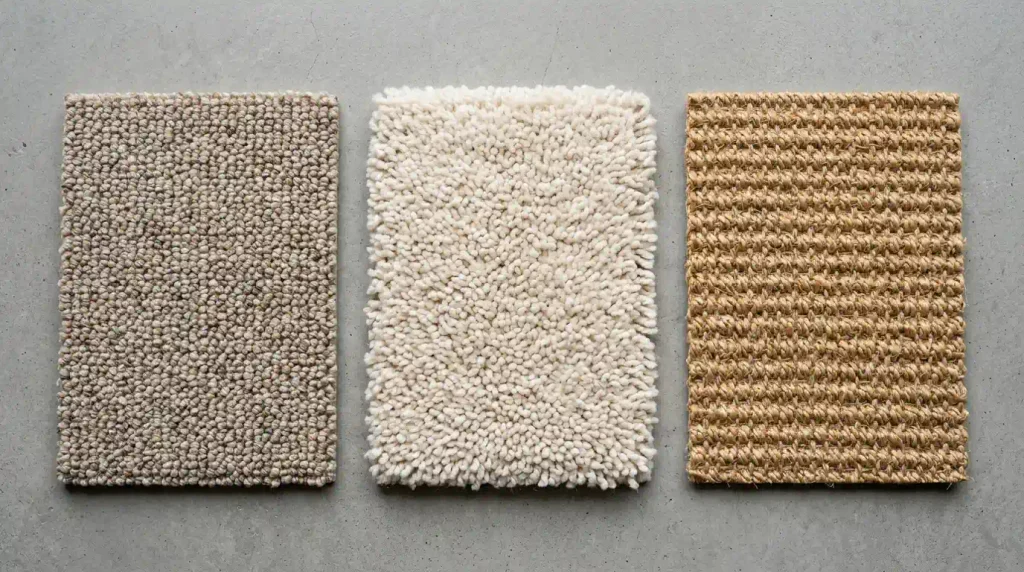
The same treatment should not automatically be used on every carpet.
Synthetic fibres are often more tolerant of spot cleaning, provided the product is suitable and the manufacturer’s instructions are followed.
Wool needs greater care. Excess moisture, aggressive rubbing and unsuitable cleaning chemicals can affect both the fibres and appearance of the carpet.
Natural materials such as sisal and seagrass can also react poorly to wet cleaning.
If you are unsure what your carpet is made from, check the label or manufacturer information before applying a stain remover.
Why Has the Coffee Stain Come Back?
A frustrating problem with coffee stains is that they sometimes disappear after cleaning and then return several hours later.
This can happen because of wicking.
Wicking is the movement of moisture and dissolved residue from deeper within the carpet back towards the surface as it dries.
In other words, the top of the carpet may have been cleaned successfully while some coffee remains lower in the pile or backing. As moisture evaporates, that residue travels upwards and the brown mark becomes visible again.
Over-wetting can make this more likely because it carries the spill further into the carpet.
If the same stain repeatedly returns after drying, surface spot cleaning may no longer be enough.
How to Remove a Coffee Smell From Carpet
If the stain has gone but the carpet still smells, there is probably residue left behind.
This is particularly common with coffee containing milk or cream.
Do not simply spray fragrance over the area. The source of the smell needs to be removed.
Blot or extract the remaining contamination where possible, avoid leaving excess cleaning solution behind and make sure the carpet dries properly. Opening windows and improving airflow can help, and there are a few other practical ways to dry your carpet faster.
A persistent sour or stale smell can indicate that the spill travelled deeper than the visible surface.
Mistakes That Can Make a Coffee Stain Worse
The most common problems come from doing too much rather than too little.
Avoid scrubbing the carpet aggressively, flooding a small stain with water or repeatedly pouring different cleaners onto the same area.
Mixing household cleaning chemicals is also a poor idea. Apart from the potential safety issues, you may not know how one product will react with another or with a treatment that is already sitting in the carpet.
Bleach is not a general-purpose coffee stain remover either. It can permanently affect carpet colour and fibres unless the carpet has specifically been made and tested for that type of treatment.
Finally, do not forget about drying. A carpet that remains damp for too long can develop problems that are harder to deal with than the original spill.
When Is It Better to Call a Professional Carpet Cleaner?

A small fresh coffee spill usually deserves a sensible DIY attempt first.
Professional cleaning becomes more worthwhile when the stain:
- Has already dried and will not lift
- Covers a large area
- Keeps returning after the carpet dries
- Has left a persistent smell
- Has soaked deeply into the pile
- Is on wool or another delicate carpet
- Has already been treated with several products
Professional stain removal is different from repeatedly applying stronger chemicals at home. The carpet fibre, age of the stain, previous treatments and depth of contamination can all be assessed before the cleaning method is chosen.
Controlled extraction can also remove moisture and residue from deeper in the carpet rather than concentrating only on what is visible at the surface.
That said, no method can guarantee that every old stain will disappear completely. Permanent colour changes, previous chemical damage and long-set stains can all affect the result.
How to Stop a Coffee Spill Becoming a Permanent Problem
The best response to spilled coffee is usually the least dramatic one.
Blot it quickly. Keep the amount of water under control. Use something that is actually suitable for your carpet, then remove the residue and allow the area to dry properly.
Once dry, check the carpet again in normal daylight. If there is still a mark, stickiness or smell, you will have a much clearer idea of what remains to be treated.
Repeatedly throwing different cleaning products at the same stain rarely improves the outcome. Sometimes knowing when to stop is just as useful as knowing how to start.
FAQs
Are Coffee Stains Permanent on Carpet?
Not always. Fresh coffee stains can often be removed successfully if they are blotted and treated quickly. Older stains may be harder to remove, particularly if coffee has reached deeper into the carpet or previous products have altered the fibres or colour.
Can You Get a Coffee Stain Out After It Has Dried?
Yes, many dried coffee stains can still be treated. Lightly dampen the affected fibres first to soften the dried residue, blot the area and then use a stain remover suitable for your carpet. Avoid soaking or aggressively scrubbing the stain.
What Is the Safest Thing to Use on a Coffee Stain?
A carpet-specific stain remover approved for the type of carpet you have is generally the safest choice. Check the manufacturer’s instructions and test the product on a hidden area before treating the visible stain.
Can You Use Vinegar on a Wool Carpet?
Do not assume vinegar is safe for wool simply because it is a common household remedy. Wool carpets can be sensitive to unsuitable cleaning solutions, so follow the carpet manufacturer’s advice and use a product specifically suitable for wool.
Why Does My Carpet Smell After Spilling Coffee With Milk?
Milk or cream may remain within the carpet even after the brown stain has disappeared. Residue trapped deeper in the pile or backing can start to smell, particularly if the area stays damp.
When Should I Stop Trying to Remove a Coffee Stain Myself?
Stop if repeated treatment is making little difference, the stain keeps returning, the carpet is becoming excessively wet or several different cleaning products have already been used. Professional assessment is also sensible for wool, delicate carpets and large or deeply absorbed spills.

Leave a Reply