
Why Professional Carpet Cleaning for Stain Removal Is Worth It
Short answer: Yes, for most set-in stains it’s worth it. A professional does three things a spray bottle or hire machine can’t. They work out what the stain actually is and use the right product for it, they clean the backing and underlay rather than just the surface, and they pull the water and soap back out so the stain doesn’t come back a week later. In the UK you’ll pay somewhere between £35 and £85 for a room. Replacing a carpet you’ve damaged trying to clean it yourself costs around £58 per square metre.
Here’s the detail behind each of those points, so you can tell when a shop-bought spray will do and when it won’t.
Table of Contents
Why do carpet stains come back after DIY cleaning?
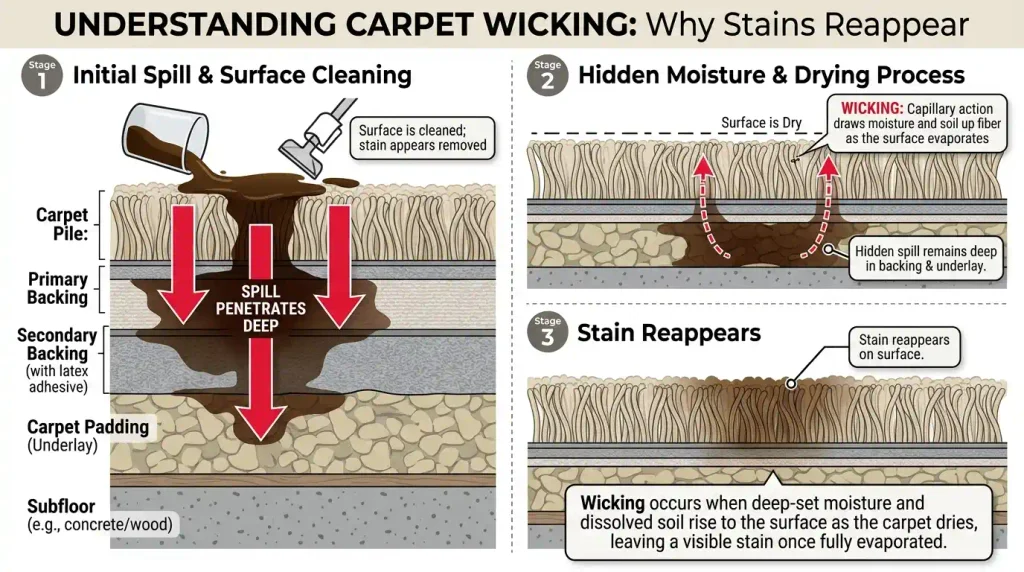
It’s called wicking. When something spills, it soaks down through the pile and into the backing and underlay. Cleaning the top gets rid of what you can see. Then, as the carpet dries, the water that’s still sitting underneath rises back up through the fibres and brings the stain with it. The patch looks fine on the day and is back within hours or days.
The other cause is soap left in the carpet. Most household sprays and hire-machine solutions leave a sticky film behind unless you rinse them out properly. That film grabs dirt, so the spot you cleaned goes grey faster than the carpet around it. If you’ve ever wondered whether to keep going until the water runs clear, this is why it matters.
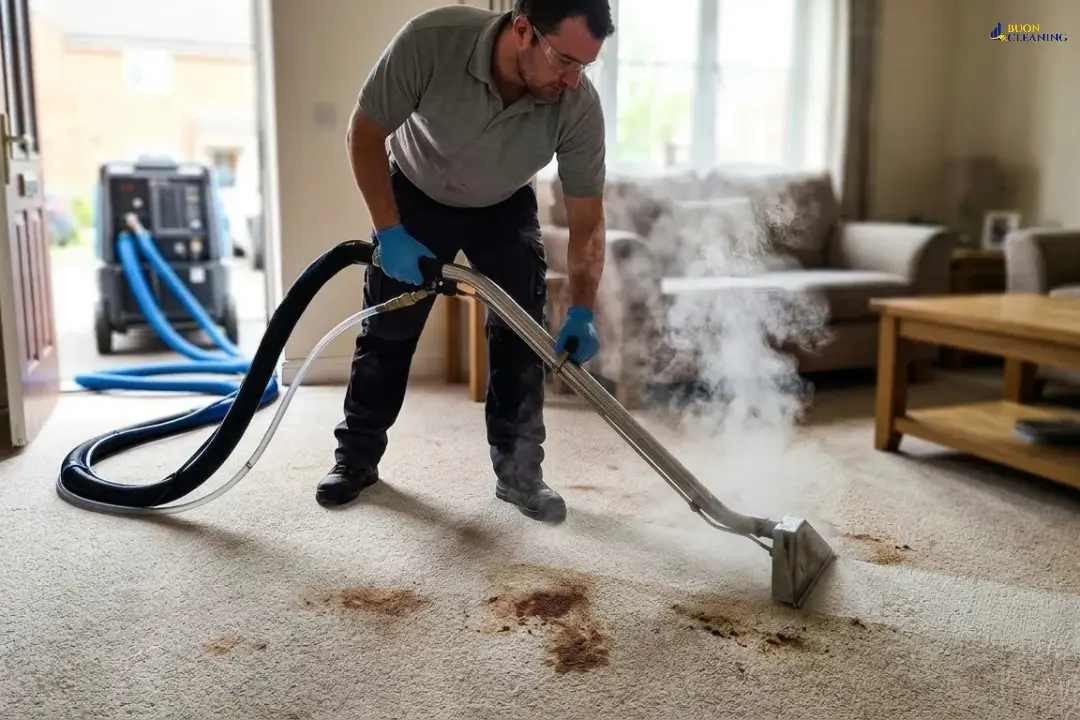
Professional hot water extraction deals with both. The machine pushes cleaning solution into the carpet under pressure, then a strong vacuum pulls the solution, the dirt and the water back out of the backing. Hire machines and handheld cleaners simply don’t have that suction, which is why the same stain can behave so differently depending on who treats it. We’ve covered how steam carpet cleaning works in more detail if you want it.
Which stains need professional treatment?
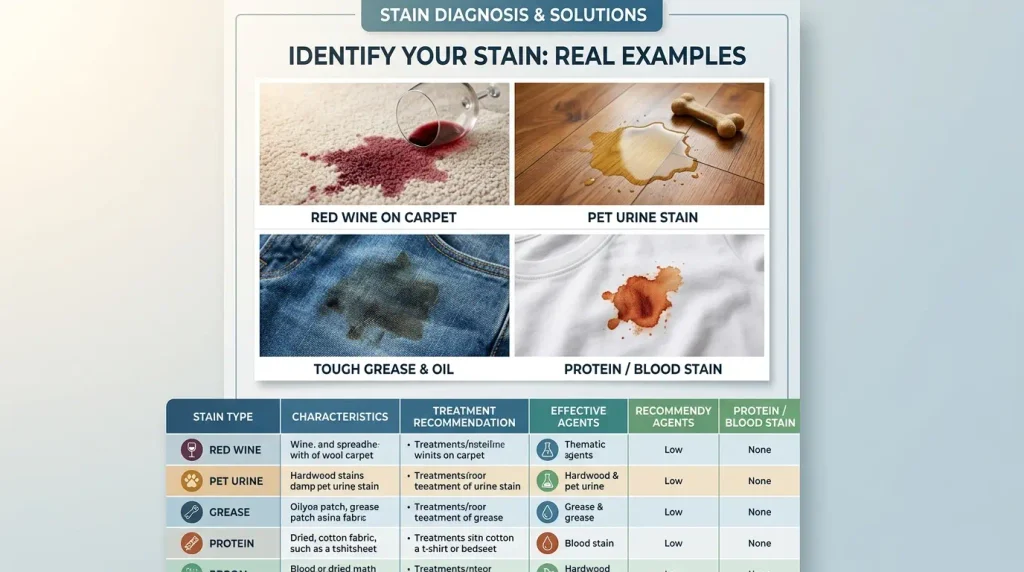
Not all of them. A fresh, water-based spill on a synthetic carpet can usually be blotted out at home. The ones below are where a professional is the safer bet.
| Stain type | Examples | Why DIY often fails | What a professional does |
| Protein | Blood, vomit, urine, milk, egg | Hot water and steam cook the protein into the fibre for good | Enzyme treatment, then cold-water extraction |
| Tannin and dye | Red wine, tea, coffee, blackcurrant, hair dye, turmeric | Household products can’t break the bond between the dye and the fibre | Oxidising or reducing agents, tested on a hidden spot first |
| Oil and grease | Cooking oil, butter, make-up, wax, shoe polish | Water pushes oil further into the backing | Solvent pre-treatment, then extraction |
| Pet accidents | Urine, faeces | Smell and salts sit in the underlay, so surface cleaning leaves them there | Sub-surface treatment plus odour neutraliser |
| Mixed | Vomit, gravy, tomato sauce | Two or more stain types in one; a single product can’t do both | Treated in stages, one type at a time |
Two things hold true for every stain in that table. Rubbing spreads it and drives it deeper, so blot, don’t scrub. And the clock is against you. The National Carpet Cleaners Association (NCCA) says plainly that the longer a stain is left, the less likely it is to come out at all.
What can go wrong when you treat a stain yourself?
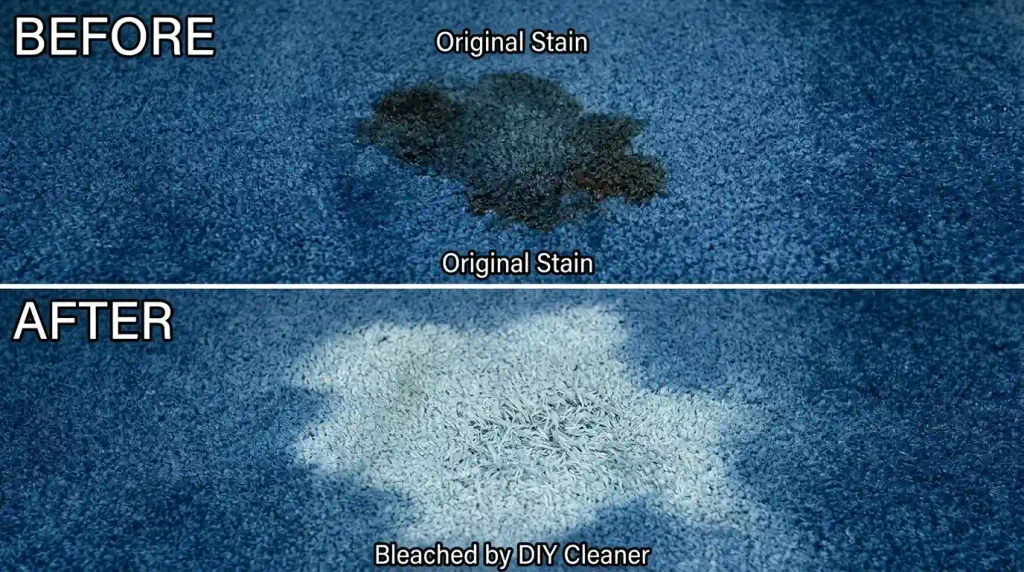
The cost of DIY stain removal isn’t the product. It’s the damage when the product or the method is wrong for your carpet.
Colour loss. Bleach-based cleaners, and some oxygen-based ones, strip the dye out of the carpet. You’re left with a pale patch that’s there for good. A stain can be cleaned. A bleached patch can’t.
Damage to wool. Wool only tolerates a narrow pH range. A lot of general carpet sprays are alkaline and will fuzz, yellow or shrink a wool carpet. Our guide to carpet cleaning chemicals explains which products suit which fibres.
Setting the stain. Hot water on blood, urine or milk, or heat on anything sugary like cola, bonds it to the fibre. A stain that would have come out now won’t.
Over-wetting. A hire machine moved too slowly, or three goes at the same spot, soaks the underlay. That’s what causes wicking, mould and, on some carpets, brown marks as the jute backing bleeds its own colour.
Rubbing. It untwists the pile. Even once the stain’s gone, that patch still looks different in the light.
Home remedies have their place, and we’ve written about what baking soda can and can’t do on carpet stains. But a technician checks the fibre and the stain type before putting anything on it, tests the product somewhere hidden, and uses kit that takes out what it puts in. That’s what you’re paying for.
How much does professional carpet stain removal cost in the UK?
The main UK trade price guides for 2026 put professional carpet cleaning at roughly:
- One small to medium room: £35 to £50
- Stairs and landing: £35 to £85
- Minimum call-out: around £85 with a lot of firms
- Stain protector: about £15 a room, applied after cleaning
- Treating a specific stain: usually priced once someone’s looked at it, because the type, age and fibre all change the job
We’ve broken this down further in our carpet cleaning cost guide, with local prices for Leeds and Doncaster.
Now compare that with the alternatives:
- Hire machine: from £27.99 for 24 hours, plus the branded detergent you have to use with it. For one living room that’s not far off a professional visit, and you get none of the suction, the stain-specific products or the guarantee.
- New carpet: an average of £58 per square metre including removal and fitting, or roughly £700 for a typical 12ft by 12ft room. One bleached patch or one set stain in the middle of the room and this is where you end up.
Prices vary by area, carpet size and condition. Buon Cleaning quotes every job individually, so you know the price before anyone starts.
When is professional carpet cleaning worth it for stains?
These are the situations where we’d say book it.
You’ve already treated it once and it’s come back. That’s wicking. Treating the surface again just repeats the cycle and adds more soap.
It’s blood, urine, wine, dye or grease. Those are the stains where the wrong product makes things worse, not better.
The carpet is wool or a wool blend. There’s very little room for error on pH or moisture.
You’re moving out of a rented home. The Deposit Protection Service reports that cleaning has been the top reason for deposit deductions five years in a row, and the Tenancy Deposit Scheme says deep carpet stains usually justify a deduction, unlike normal flattening or wear. A professional clean with an invoice is the best evidence you can hand to a landlord or agent. Our end of tenancy carpet cleaning checklist and guide to landlord cleaning charges cover what’s fair and what isn’t.
A pet has had an accident. Urine goes all the way to the underlay. Unless it’s treated at that depth, the smell comes back as soon as the room warms up.
The carpet is still under warranty. Most manufacturer warranties require periodic professional hot water extraction, and damage from the wrong cleaning product will void them.
For general upkeep, the NCCA recommends a professional deep clean every 12 to 18 months, or every 6 to 12 months if you have pets. Between cleans, these habits keep a carpet looking new for longer.
What to expect from Buon Cleaning stain removal
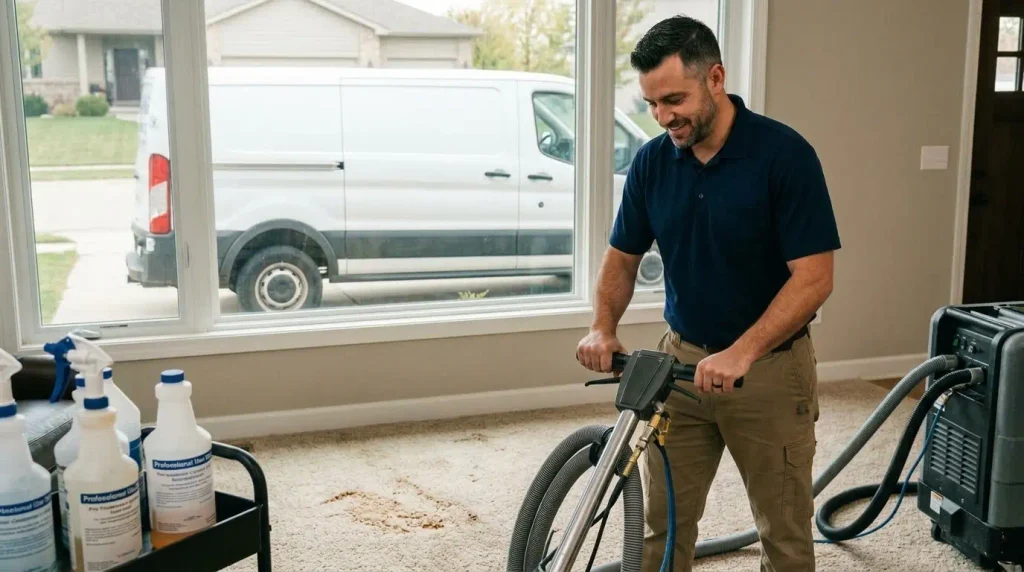
Buon Cleaning offers professional carpet cleaning and stain removal for homes and businesses across Nottingham, Derby, Leeds, Doncaster, Huddersfield, Wakefield and Wolverhampton.
- Method: hot water extraction with a pre-treatment matched to the stain, so it’s lifted out of the backing rather than pushed into it.
- Products: eco-friendly, child- and pet-safe cleaning solutions.
- Drying: most carpets are dry within 4 to 6 hours, helped along by our drying equipment.
- Protection: an optional protective treatment after cleaning to slow down future staining.
- Guarantee: if you’re not happy with the result, tell us and we’ll put it right.
For a quote on a specific stain, tell us what caused it, how long it’s been there and what you’ve already tried. Call 0115 990 2782 or get in touch online.
FAQs
Can professional carpet cleaners remove old stains?
Often, yes. Old stains are harder because the stain has bonded to the fibre and may have been set by earlier attempts, but professional pre-treatment and extraction shift a lot of them. Bleach marks and burns aren’t stains, though, and can’t be cleaned out. A burnt carpet needs a patch repair or replacing.
Is professional carpet cleaning better than a hire machine for stains?
For stains, yes. A hire machine uses one all-purpose detergent whatever the stain, and it doesn’t have the vacuum power to pull anything out of the underlay. It’s fine for freshening up a lightly soiled synthetic carpet. It’s not the tool for set-in or sub-surface stains.
How long does a carpet take to dry after professional stain removal?
With hot water extraction and proper drying equipment, most carpets are dry in 4 to 6 hours. An over-wetted DIY clean can take a day or more, which is when wicking and smells set in. If you’re drying one yourself, these tips speed it up.
Does professional carpet cleaning remove pet urine smell?
Yes, as long as the treatment reaches the underlay where the urine salts are held. Surface cleaning only masks it for a while. Sub-surface treatment with an odour neutraliser removes the source. There’s a full walkthrough in our guide to removing pet stains and odours from carpet.
Will a professional stain removal service damage my carpet?
A trained technician tests products on a hidden area and matches the pH and the amount of moisture to the fibre. That’s the safety net DIY doesn’t have. Ask any cleaner what method they use and whether they’ve worked on wool.
Can I claim carpet stain removal against my tenancy deposit?
If you’re the tenant, booking and paying for a professional clean before checkout usually costs less than the deduction would. Keep the invoice as proof of the carpet’s condition when you left.

Leave a Reply