

How to Get Red Wine Out of Carpet and Rugs
Right now, in this order:
- Blot with a clean white cloth. Do not rub.
- Press down hard, lift, move to a dry part of the cloth, repeat.
- Keep going until the cloth stops picking up colour.
- Only then reach for a cleaning solution.
That is the part that matters, and it is the part everyone skips because the instinct is to go looking for a product first. Every bit of wine you lift out in the first two minutes is wine you never have to treat afterwards.
Once the bulk is out, the method below handles most carpets and rugs. Check what yours is made of before anything wet goes near it, though. The wrong solution on wool does damage the wine never would have.
And if it caught the sofa on the way down, which it often does, we have separate guides for wine on upholstery and red wine on suede furniture.
Table of Contents
What to Do in the First 60 Seconds
Speed beats technique here.
Red wine carries pigments called anthocyanins, which give it the colour, and tannins, which help it grip onto fibres. While the spill is wet, both are still loose and both will come up. As it dries they bond to the fibre, and from that point you are removing a stain rather than removing wine.
You have a few minutes. Use them.
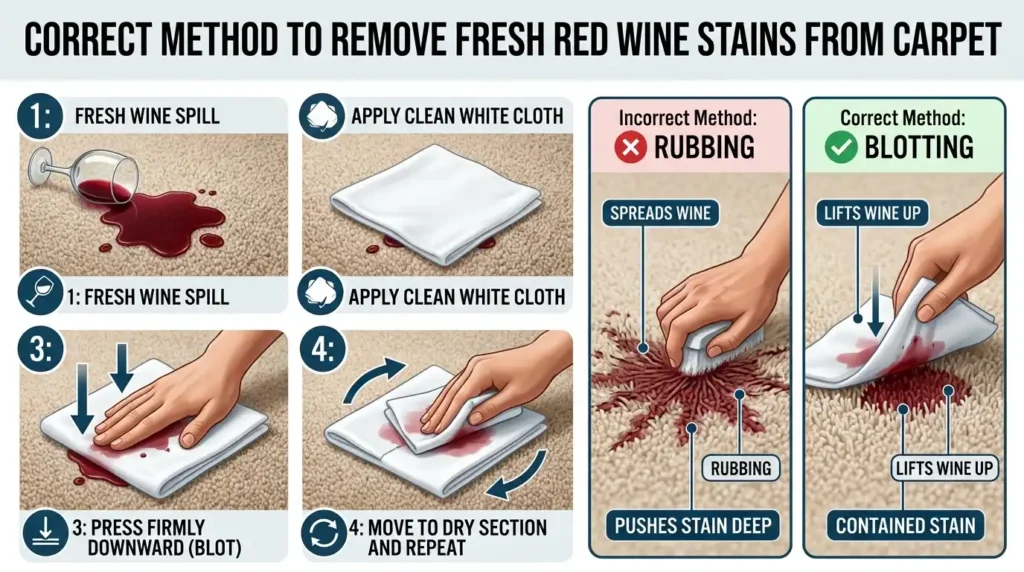
Blot, Never Rub
Rubbing does two things and both are bad. It drives the wine deeper into the pile and down towards the backing where you cannot reach it, and it distorts the fibres, leaving a fuzzy patch that shows even after the colour has gone.
Press straight down instead. Hold for a few seconds, lift, move to a clean part of the cloth, go again.
Use white cloths or plain kitchen roll. Anything coloured can transfer its own dye into wet carpet, which is a genuinely miserable way to make a bad situation worse.
Why Cold Water and Not Hot
Cold only. Heat sets both the pigment and the tannins into the fibre, and nothing undoes that afterwards.
It is the most common mistake people make, and it comes from good instincts. Hot water feels like it should clean better. On red wine it does exactly the opposite.
Before You Put Anything on It, Check Your Fibre
Two minutes here separates a stain from permanent damage.
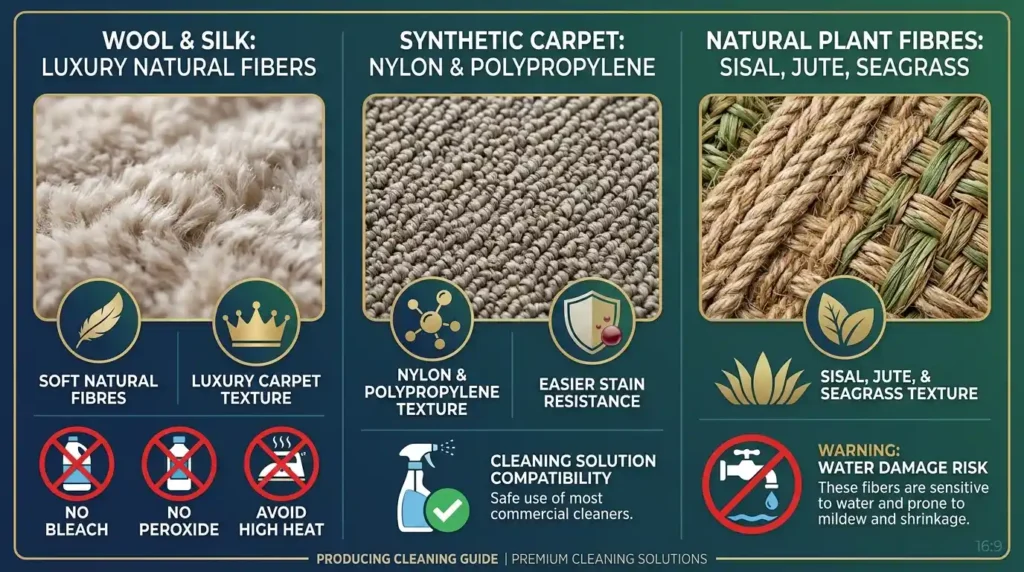
Wool and Silk
Never put hydrogen peroxide on wool or silk. It bleaches both, permanently, and you end up with a pale patch that draws the eye far more than the wine ever did.
Wool also reacts badly to alkaline cleaners and hot water, which cause shrinkage and felting. Keep to something mild and slightly acidic, which is precisely what the washing up liquid and vinegar mix below is. Our guide to cleaning a wool rug covers the wider care.
Synthetic, Polypropylene and Nylon
The forgiving ones, and the most common in UK homes. Polypropylene especially is stain resistant and tolerates almost anything you throw at it, including diluted hydrogen peroxide on light colours.
Fitted carpet laid in the last fifteen years or so is usually one of these.
Sisal, Jute and Seagrass
Do not use water. Not the method below, not plain water, nothing wet at all.
Natural plant fibres mark permanently the moment they get damp, so you swap a red stain for a brown watermark ring that is often bigger and just as obvious. Blot up what you can with a dry cloth and stop there. These need dry cleaning methods and it is not a home job.
How to Test Before You Treat
Pick somewhere hidden. The underside of a rug, or a corner behind the sofa.
Put a little of your solution on a white cloth, press it into the pile for ten seconds, then look at the cloth. Colour on the cloth means the dye is not fast, and anything wet you apply will carry that dye across the carpet with it. Stop and call someone.
The Method That Works on Most Carpets and Rugs
What You Need
- Several clean white cloths, or plenty of kitchen roll
- Washing up liquid
- White vinegar, and it has to be white, because malt or wine vinegar will stain
- Cool water
- A spray bottle if there is one to hand

Mix one tablespoon of washing up liquid and one tablespoon of white vinegar into 500ml of cool water. That is the whole recipe. Mild enough for wool, effective enough for everything else, which is why it beats the more aggressive options as a general purpose answer. There is more on what else earns cupboard space in our guide to the best cleaning solutions for rugs.
Step by Step
- Blot out everything you can first. Do not move on until the cloth comes away clean.
- Apply the solution sparingly. Spray lightly, or dampen a cloth and press it on. Do not pour. More liquid means the wine spreads sideways and soaks down into the backing.
- Leave it five minutes. The detergent needs time to lift the pigment off the fibre.
- Blot again with a clean dry cloth. Press firmly, lift, move to a dry section, repeat.
- Rinse with a barely damp cloth of plain cool water. Detergent left in the pile attracts dirt, and the patch turns grubby within weeks.
- Blot dry, then stand on a folded towel over the area to pull moisture out of the pile.
- Dry it properly. Window open, fan on it, and nothing goes back on top until it is dry.
Still some colour? Repeat the whole cycle rather than scrubbing harder. Three gentle passes will always beat one aggressive one.
The Rug Advantage Nobody Uses
Spill on a rug rather than fitted carpet? Then you have an option nobody with a lounge carpet gets, and hardly anyone uses it.
Lift the rug and slide a thick folded towel underneath the stained area. Now when you blot from above, the towel underneath pulls the wine downwards and out, instead of leaving it to sit in the backing. You are drawing the stain through the rug rather than shoving it around inside it.
With a smaller rug you can go further. Take it to the bath or out onto a hard surface, lay towels beneath it, and work both sides. Blot from the back as well as the front. Most of the wine in a rug ends up in the middle of the pile, and getting at it from below roughly halves the work.
It is the main reason a rug spill usually ends better than a carpet spill, and it also cuts the chance of the stain returning later, for reasons that come up below. For rug care beyond spills, see deep cleaning rugs at home.
How to Remove a Dried Red Wine Stain
Harder, but often far from hopeless. The pigment has bonded to the fibre, so the first job is loosening it again.
Rehydrating the Stain First
Dampen the stain with cool water and walk away for ten minutes. You are not cleaning yet, you are softening. Then apply the washing up liquid and vinegar solution, give it a full ten minutes rather than five, and blot.
On synthetic carpet only, there is a second option for stubborn dried marks. Spread a paste of bicarbonate of soda and water over the damp stain and let it dry out completely. As it dries it draws some of the pigment up into the powder, which you then vacuum off thoroughly. It works better than people expect on polypropylene and does very little on wool. Our guide to bicarbonate of soda on carpet stains has the detail.
Expect several rounds. A week old stain rarely lifts in one go.
When Dried Wine Is Permanent
Be realistic about three situations. Wine sitting on light or cream wool for months has usually oxidised into the fibre. Anything that has met hot water or a hot iron at some point is set for good. And if someone has already gone at it with a bleaching product on coloured carpet, the fibre itself has changed colour, which is damage rather than staining and no cleaning will bring it back.
What Actually Works, and What Is a Myth
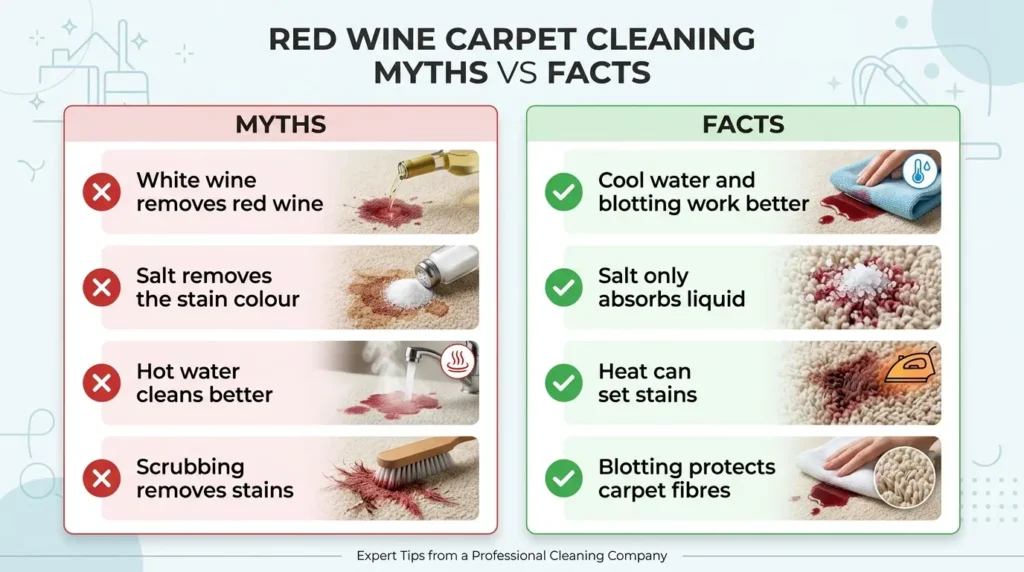
| Method | Does it work? | Use it? |
| Blotting with a white cloth | Yes, the single most effective step | Always, and first |
| Washing up liquid and white vinegar | Yes, reliably and safely | The default method |
| Salt | Absorbs liquid only, does nothing to colour | Fresh spills, and never on wool |
| Bicarbonate of soda | Absorbs and deodorises, weak on colour | A follow up, not a stain remover |
| Club soda or sparkling water | No better than plain water | No real advantage |
| White wine on red wine | No | Never |
| Hydrogen peroxide | Yes, but it bleaches | Light synthetics only, patch test |
| Shop bought stain remover | Often, if it suits the fibre | Check the label for wool |
White Wine on Red Wine
It does not work. Pouring white wine over a red wine stain dilutes it slightly, which is what plain water does, while adding sugar and acid into your carpet.
That dilution is why it seems to help in the moment. Water achieves the same thing without leaving sugar behind for dirt to cling to later.
Salt
Salt absorbs liquid, so it will pull a bit of wine out of a very fresh spill before it soaks in. It does nothing whatsoever to colour already in the fibre, and the results people report usually come from the blotting they did before reaching for it.
Leave it off wool entirely. It is abrasive against the fibre, and residue left in the pile draws moisture back in afterwards.
Bicarbonate of Soda
Useful, though not for the reason most guides give. It soaks up leftover moisture and kills the smell, which makes it a decent final step once the colour is already out. As the main event on a red wine stain it underperforms.
Club Soda and Sparkling Water
The theory is that the bubbles lift the pigment. In practice the blotting does the lifting and cold tap water performs about the same. If there is an open bottle next to you, fine. It is not worth crossing the room for.
Hydrogen Peroxide
Effective and genuinely risky. It works by bleaching the pigment, which is exactly why it also bleaches wool, silk and anything that is not colourfast.
If you go ahead, keep it to light coloured synthetic carpet, dilute to 3 per cent, mix one part washing up liquid to three parts peroxide, patch test somewhere hidden, and never let it sit. On a rug, bear in mind it can soak straight through and reach the rug pad underneath.
Shop Bought Stain Removers
Plenty of them work well. What matters is the label rather than the brand, since a lot of general carpet stain removers are alkaline and unsuitable for wool. Wool carpet or rug? Look for something that says wool safe, ideally WoolSafe approved.
Why the Stain Came Back a Few Days Later
This is wicking, and it does not mean your cleaning failed.
What happened is that the wine got past the pile into the backing or the underlay. As the carpet dried, that moisture travelled back up towards the surface and brought the pigment with it. It is far more common after a spill that was treated with too much liquid, which is why the method above keeps going on about applying it sparingly.
The fix runs against instinct. Do not scrub harder. Dampen the area lightly with plain cool water, lay a folded dry towel over it, weigh it down with something heavy, and leave it overnight. The towel draws the moisture and the pigment up and out rather than letting it settle back on the surface.
Repeat if it returns. If it keeps coming back after two or three goes, the contamination has reached the underlay and needs extraction equipment.
Red Wine on Wool and Persian Rugs
A hand knotted, Persian, Oriental or antique rug is a different situation from everything else on this page. Blot the spill with a dry white cloth, then stop and think before you do anything else.
Why Dye Run Is the Real Danger
Many hand knotted rugs use natural dyes that are not colourfast. Add water and those dyes migrate, so the red bleeds out into the cream border and a wine stain becomes a ruined rug.
The wine itself rarely destroys a valuable rug. The rescue attempt usually does.
What Not to Use
No hydrogen peroxide. No bleach. No alkaline carpet shampoo, no hot water, no steam, and no washing machine no matter how tempting the rug’s size makes it look.
Anything with real value, blot it dry and get a specialist to look at it. The difference between rug and carpet cleaning explains why the two are not interchangeable.
When to Stop and Call a Professional
Call someone if the rug is wool, silk, hand knotted or valuable. Or if the stain keeps returning after two or three attempts, if the spill was big enough to reach the underlay, or if it has dried in on a light coloured carpet.
What a Professional Can Do That You Cannot
Two things, mostly.
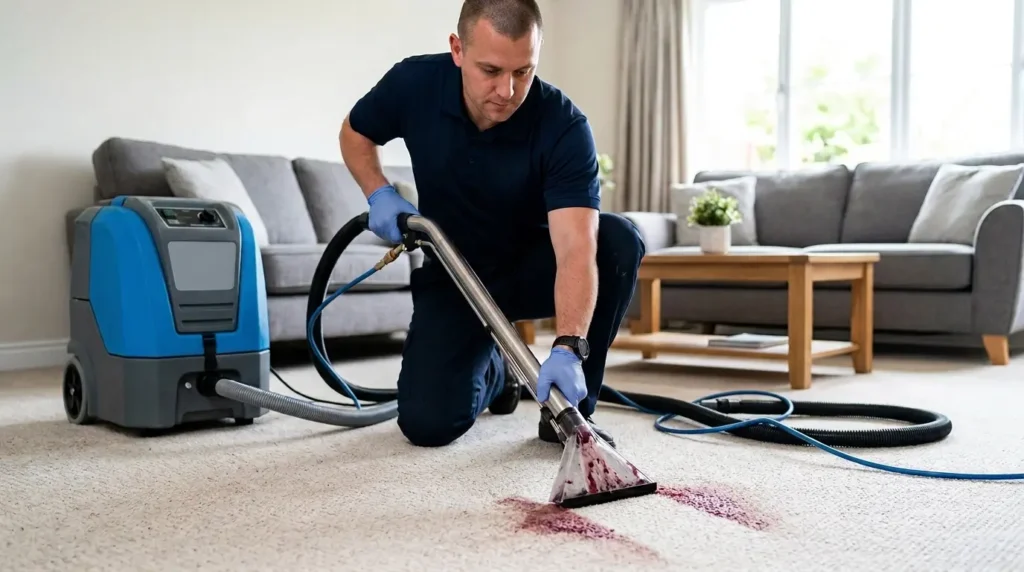
Hot water extraction injects solution and immediately vacuums it back out under high suction, which lifts pigment out of the backing and underlay instead of moving it around. And professional spotting chemistry is fibre specific, including reducing agents that break the wine pigment down chemically rather than bleaching everything near it.
That second one is usually what shifts a stain people had already written off. Our page on professional carpet stain removal sets out what is realistically treatable.
What It Costs
A single stain treatment added to a room clean typically runs £10 to £40 on top of the standard rate. Full pricing is in our carpet cleaning cost guide.
Worth doing that sum before you lose three evenings to it, particularly on a carpet you actually like.
How to Stop It Happening Again
A stain protector treatment makes liquid bead on the surface instead of soaking straight into the pile, which buys you the extra minute that decides whether a spill becomes a stain. Around £15 to £30 per room, and it wears off within twelve to eighteen months.
Past that, the practical stuff. Keep a white cloth somewhere you can grab it fast, because the delay while you hunt for something to blot with is what usually does the damage. Put a pad under loose rugs so they stay put and there is a barrier between spill and floor. And deal with it while the party is still going rather than after everyone has left, awkward as that feels. Two minutes at the time saves an evening later on. There is more on the general upkeep in our guide to keeping carpet looking new.
Tried everything and it is still sitting there? We remove set-in stains from carpets and rugs across Nottingham using hot water extraction and fibre specific spotting chemistry. Have a look at our professional carpet cleaning service.
FAQs
Does red wine stain permanently?
Usually not, if you get to it while it is wet. Fresh spills come out almost completely with blotting and a mild detergent solution. Permanent damage tends to come from the response rather than the wine: hot water, scrubbing, or a bleaching product on coloured carpet. Dried wine on light coloured wool is the main case where a mark stays visible even after professional treatment.
Can I use Vanish on a red wine stain?
On synthetic carpet, yes, and the oxygen based carpet products work reasonably well on red wine. On wool, check the label first. Several general carpet stain removers are alkaline and will damage wool fibres, so look for one stating it is wool safe or WoolSafe approved. Patch test somewhere hidden either way, since red wine stains are often on the visible middle of a room where a bleached patch would be worse than the stain.
Will a carpet cleaner machine remove red wine?
A domestic hire machine can help on a fresh spill, but it can also make things worse. These machines put down more water than they lift back out, and excess water in the backing is exactly what causes the stain to wick back to the surface days later. If you use one, do a dry pass afterwards to pull out as much moisture as you can. Professional extraction equipment has far stronger suction, which is why it does not have the same problem.
How long do I have before a red wine stain sets?
The first few minutes do most of the work, and you want the bulk lifted within about ten minutes. After that the pigment starts binding to the fibre. Once it dries completely, usually within a few hours, you are dealing with a set stain and the job becomes considerably harder. Blotting immediately matters more than what you eventually treat it with.
Does red wine damage carpet fibres or just stain them?
Just stains them, in almost every case. Wine is acidic but not strong enough to break down carpet fibre, so what you are left with is a colour problem rather than structural damage. The exception is on wool, where wine left for a long period can weaken the fibre slightly. Most real damage on stained carpets comes from bleach, peroxide or hard scrubbing during the attempted rescue.
Can red wine come out of a light or cream carpet?
Often yes, though it takes more patience and more repeat passes than on a darker carpet. Fresh spills on cream synthetic carpet usually clear completely. Cream wool is the hardest combination, because the safe treatments are gentler and there is nowhere for a faint residual mark to hide. Expect to repeat the cycle several times, and get a professional in before trying anything stronger, since a bleached patch on a pale carpet is permanent and far more noticeable.

Leave a Reply