
How to Get Urine Out of a Mattress
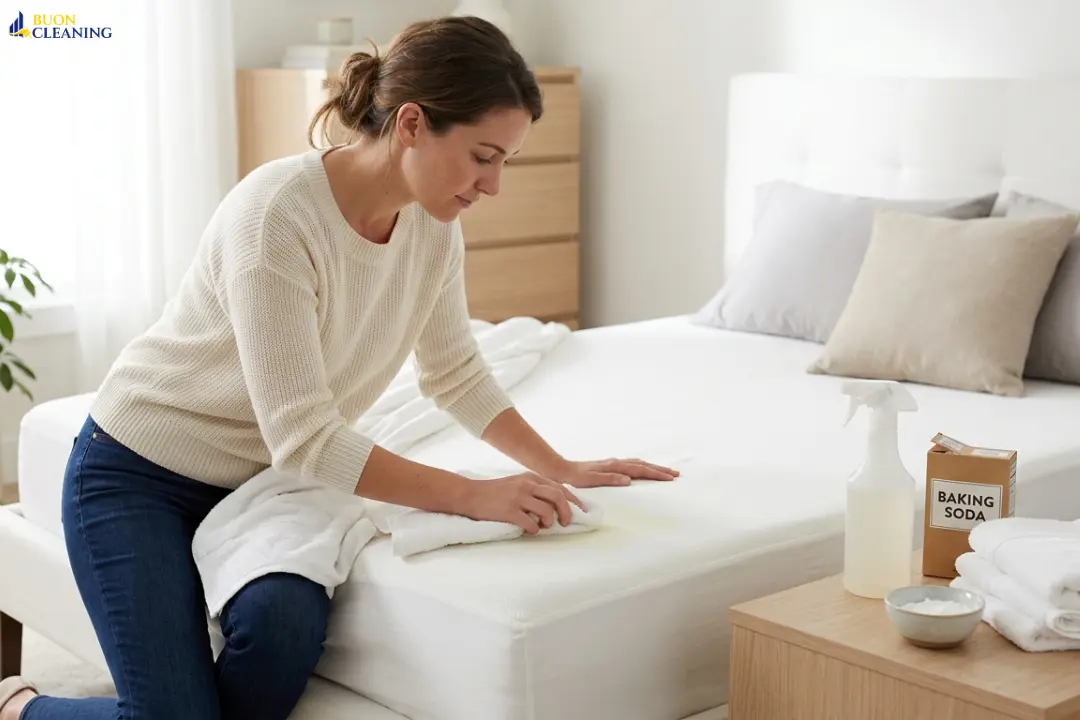
A urine stain on a mattress needs quick action. The fastest way to treat it: remove the bedding, blot as much liquid as possible, treat the area with a suitable cleaning solution, use bicarbonate of soda to control odours, then let the mattress dry fully. Acting quickly reduces the risk of deep staining and lingering smells.
Older stains are harder to shift because urine soaks past the surface into the filling. If a strong smell remains after cleaning, professional treatment is usually the better option, especially after repeated accidents or deep contamination.
Common causes in UK homes include child bedwetting, pet accidents, elderly incontinence, and unnoticed guest-room incidents.
Why Urine Is So Difficult to Remove From a Mattress
What Happens When Urine Soaks Into Mattress Fibres?
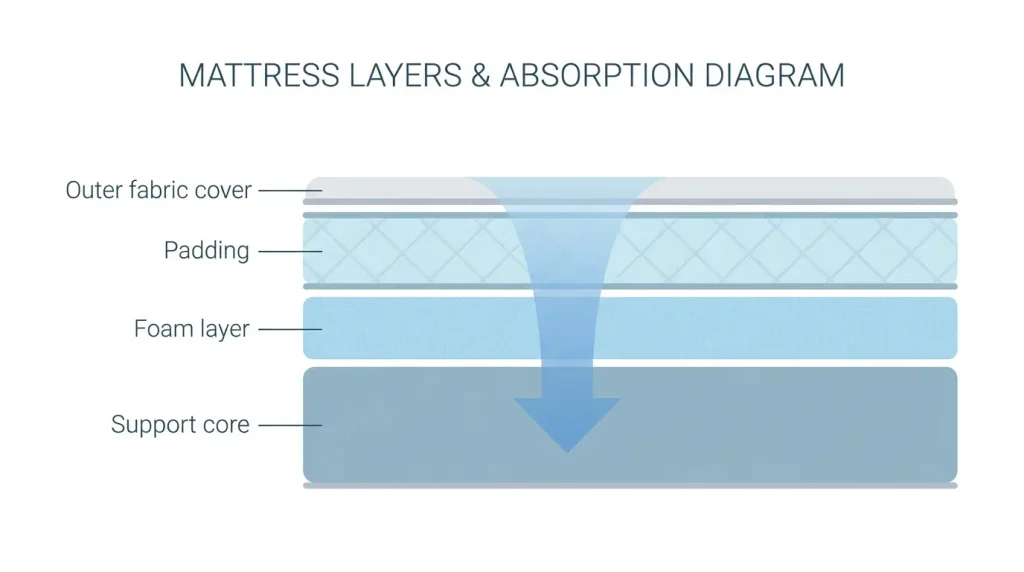
Mattresses are built from several layers: outer fabric, padding, foam, and support systems. Urine travels through these layers quickly, so wiping the surface often removes visible moisture without touching what’s underneath. As urine dries, the residue left behind is what causes lingering odour, which is why a mattress can look clean but still smell. Foam and memory foam are particularly absorbent, so using too much liquid during cleaning makes drying harder and can affect the mattress condition.
Fresh Urine vs Old Urine Stains: What Changes?
Fresh stains are easier to treat; most of the moisture can still be removed before it spreads, with a lower risk of permanent discolouration. Old stains often leave yellow marks, develop a stronger ammonia-like smell, and may need several rounds of treatment.
What You Need Before Cleaning a Urine-Stained Mattress
Gather supplies before starting so you can act quickly. Always test any product on a small hidden area first, since mattress fabrics and fillings react differently to cleaning solutions.
Basic kit: clean towels or microfibre cloths, bicarbonate of soda, white vinegar, a spray bottle, vacuum cleaner, rubber gloves, clean water, and a fan or good ventilation.
The goal isn’t to soak the mattress; it’s to remove moisture carefully, treat the area, and allow enough time to dry. If urine has soaked deeply, sat for a long time, or still smells after treatment, professional cleaning may be the more effective route.
How to Remove Fresh Urine From a Mattress Step by Step
Step 1: Remove Bedding and Protect the Mattress
Strip all bedding immediately, including sheets, duvet covers, toppers, pillow covers, and any mattress protector, and wash what’s washable according to the care label. A waterproof protector only prevents future damage; it won’t undo urine that’s already soaked through. Check the mattress label for any material-specific guidance, especially for memory foam.
Step 2: Blot the Urine Before It Spreads
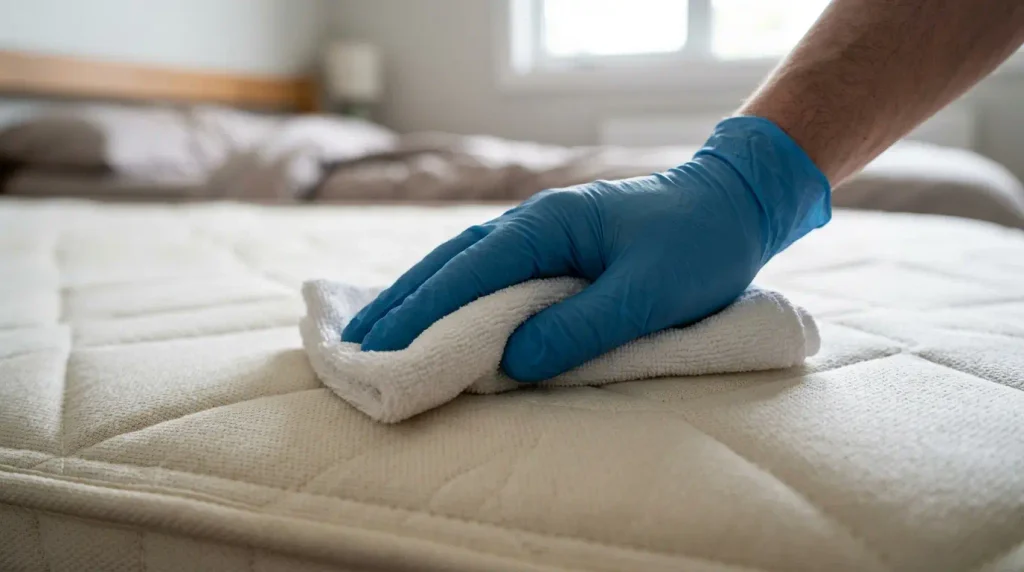
Press a clean towel firmly onto the area, lift when wet, and repeat with a fresh section of cloth. Don’t scrub; rubbing pushes urine deeper into the fibres and spreads the stain. Keep blotting until very little moisture transfers to the towel. This matters most for foam mattresses, where moisture travels quickly through the porous structure.
Step 3: Treat the Stain With a Suitable Cleaning Solution
Apply treatment lightly rather than soaking the area, which protects the filling and speeds up drying.
White vinegar solution: A diluted vinegar solution helps neutralise odour and break down surface residue. Apply lightly with a spray bottle, let it sit briefly, then blot away the excess. Avoid pouring vinegar directly onto the mattress, and test on a hidden area first if the fabric is coloured.
Hydrogen peroxide solution: Useful for tougher, more visible stains, but test on a hidden section first, avoid strong concentrations, and don’t oversaturate. Some fabrics react differently to peroxide.
How to Get Rid of Urine Odour from a Mattress
A mattress can look clean and still smell, because odour usually comes from residue trapped in the layers rather than the visible stain. Covering it with fragrance won’t solve this; you need to treat the source.
Using Bicarbonate of Soda for Odour Control
After treating the stain, sprinkle a generous layer of bicarbonate of soda over the area, leave it for several hours or overnight, then vacuum thoroughly. It absorbs moisture and reduces surface odour, but won’t fix smells coming from deep inside foam layers. If that’s the case, a stronger approach is needed.
When to Use an Enzyme Cleaner
Enzyme cleaners target the organic residue that causes persistent smells rather than masking them. They’re particularly useful for pet urine, older untreated stains, repeat accidents, and odours that keep returning after normal cleaning. Follow the product instructions, apply only the recommended amount, allow enough contact time, and never mix with other cleaning chemicals. If the smell persists after enzyme treatment, the contamination is likely deeper than surface level, and professional extraction cleaning is the next step.
How to Deal With Old Urine Stains on a Mattress
Old stains involve dried residue and discolouration, and the smell can return even after cleaning. Success depends on treating both the visible mark and what’s underneath it.
Removing Yellow Urine Marks
Vacuum the surface first, apply a suitable stain treatment carefully, avoid soaking the mattress, and repeat treatment rather than over-applying product in one go. Allow the mattress to dry completely between treatments. Some discolouration may not disappear completely, particularly where deeper layers or affected fabrics are involved.
Removing Long-Lasting Urine Odours
A smell that keeps returning usually means residue is trapped between layers rather than on the surface, often because earlier cleaning only addressed the visible area. Enzyme treatment can help; if the odour persists, professional extraction cleaning is the most effective route left.
How Different Mattress Types React to Urine Cleaning
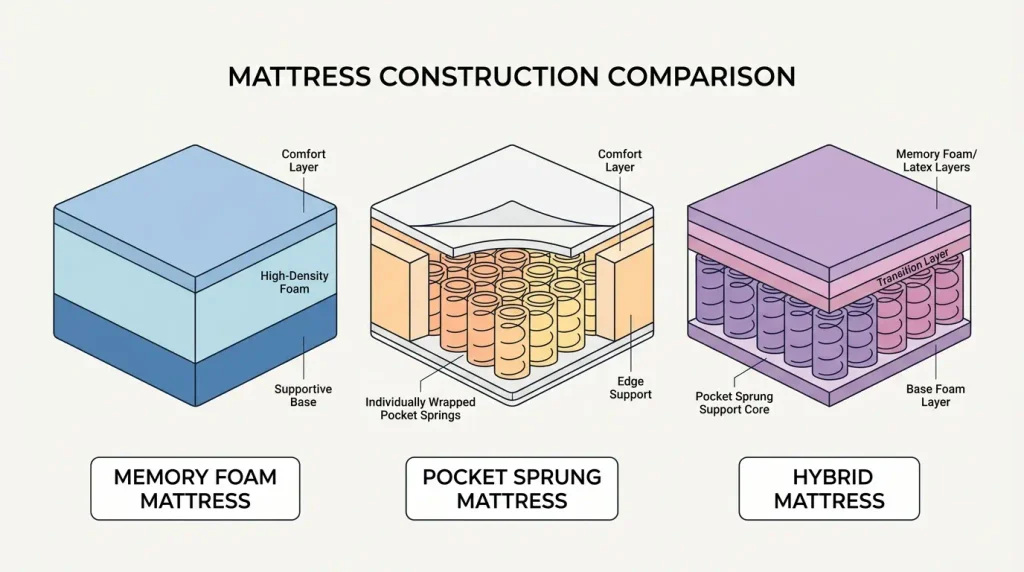
Mattress construction affects how quickly urine absorbs, how hard stains are to shift, and how long drying takes.
Memory foam: Highly absorbent air-pocket structure. Avoid excess water, apply solutions lightly, blot rather than scrub, and ventilate well, since damp foam takes noticeably longer to dry.
Pocket Sprung: The springs themselves do not absorb liquid, but the surrounding fabric and padding can. Treat stains quickly and keep moisture from travelling deep into the upholstery layers.
Hybrid: Combines foam and springs, so urine can get trapped between materials if not treated promptly. Identify the construction before cleaning, avoid oversaturating, and prioritise thorough drying.
Why Proper Mattress Drying Is Just as Important as Cleaning
A mattress holds moisture far longer than sheets or towels because of its layered construction. Poor drying can lead to musty smells, reduced lifespan, and poor hygiene, particularly for memory foam and hybrid mattresses, which hold moisture inside their internal layers.
Best drying methods: open windows, use fans to circulate air, keep the mattress uncovered until fully dry, and place it in a well-ventilated room. Don’t rush drying with excessive heat or extra cleaning product, as both can make the problem worse. A mattress that stays damp or keeps smelling usually means urine reached deeper layers, and professional equipment may be needed to remove the moisture properly.
Common Mistakes People Make When Cleaning Urine From a Mattress
Using too much water: Mattresses aren’t designed to be soaked; excess moisture travels deeper into foam and padding and makes drying much harder. Use small amounts of solution, blot rather than add more liquid, and allow full drying time.
Masking odours instead of removing them: Air fresheners and perfume sprays only cover the smell temporarily; the residue causing it is still there.
Using harsh chemicals: Bleach and other strong products can damage fabric and leave residues. Always test on a hidden area first and never mix cleaning chemicals.
Sleeping on a damp mattress: Wait until it’s completely dry before putting bedding back on; using it too soon traps moisture and brings the smell back.
Can Professional Mattress Cleaning Remove Urine Stains?
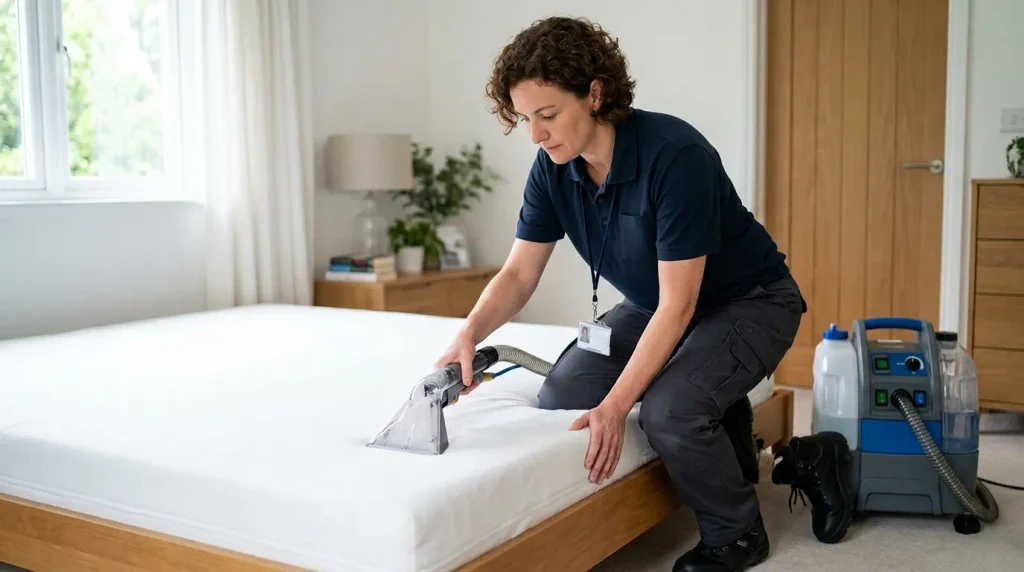
Yes. Professional cleaning can remove stains, cut odours, and improve hygiene where household methods fall short. It’s worth considering when the stain is old, a strong smell remains after DIY treatment, multiple accidents have affected the same spot, the mattress has absorbed a lot of liquid, or previous cleaning attempts haven’t worked. A professional assessment can also confirm whether the mattress is salvageable.
Typical professional methods include specialist stain treatments, upholstery cleaning equipment, and controlled extraction cleaning that removes moisture and contaminants without over-wetting the mattress.
| DIY Cleaning | Professional Cleaning |
| Best for fresh, small accidents | Best for deep stains and persistent odour |
| Household products | Specialist products and equipment |
| Lower upfront cost | Cost varies by treatment needed |
| Takes homeowner time and effort | Done by trained specialists |
| May not reach deeper layers | Reaches deeper contamination |
Buon Cleaning provides professional mattress, upholstery, carpet, and rug cleaning across Nottingham and the surrounding area, using methods designed to protect fabrics while delivering a thorough clean.
How Much Does Professional Mattress Cleaning Cost in the UK?
Pricing depends on mattress size, stain severity, location, and treatment required.
| Mattress Type | Average Price Range |
| Single | £30–£60 |
| Double | £40–£80 |
| King-size | £50–£100 |
These are general market ranges and vary between companies and mattress condition. Other cost factors include mattress material, whether additional odour-control work is needed, and whether the job is combined with other services such as upholstery or carpet cleaning.
How to Prevent Future Urine Accidents and Mattress Damage
Invest in a waterproof mattress protector: Modern protectors are breathable and comfortable, not the stiff plastic covers of the past. A good one prevents liquid reaching the mattress fibres, makes accidents easier to clean, and extends the mattress’s lifespan. It’s a sensible investment for homes with young children, pets, elderly family members, or a guest room. Clean it regularly; it reduces risk but doesn’t replace normal mattress care.
Schedule regular mattress maintenance: Vacuum the surface occasionally, keep the bedroom well ventilated, let bedding dry fully before making the bed, and follow the manufacturer’s care guidance. Book professional cleaning when deeper treatment is needed, particularly after accidents or long periods of everyday use.
Conclusion
A urine accident doesn’t automatically mean a new mattress. Remove the bedding immediately, blot as much urine as possible, treat the stain, control odour with bicarbonate of soda or enzyme cleaner, and let it dry completely. For older stains, repeat accidents, or smells that keep returning, professional cleaning offers a deeper solution.
Buon Cleaning offers professional mattress, upholstery, carpet, and rug cleaning for homeowners across Nottingham and the surrounding area, helping protect your mattress and avoid unnecessary replacement.
FAQs
Can you completely remove urine smell from a mattress?
It depends on how quickly it’s treated and how deep the liquid is absorbed. Fresh stains respond well to prompt treatment; older ones may need enzyme cleaning or professional treatment if the smell persists.
Does bicarbonate of soda remove urine smell from a mattress?
It helps with surface-level odour by absorbing moisture, but won’t fully clear strong smells trapped deep in the fibres or foam; those need a more thorough approach.
Can I use bleach to clean urine from a mattress?
No. Bleach can damage fabric and mattress materials and leave chemical residue. Use products designed for fabric surfaces and test on a hidden area first.
How long does a mattress take to dry after urine cleaning?
Drying time depends on the mattress material, moisture level, and ventilation. Keep the mattress uncovered with good airflow until it is completely dry.

Leave a Reply