
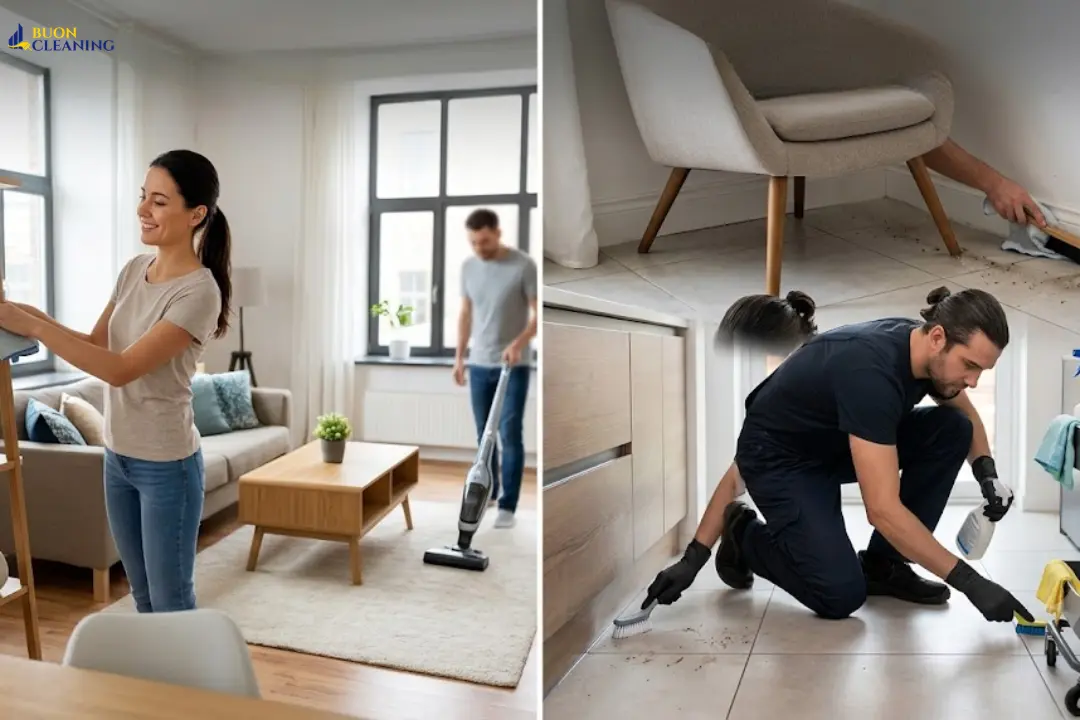
Deep Cleaning vs Regular Cleaning Explained: The Complete UK Guide
Deep cleaning vs regular cleaning are two levels of domestic cleaning that serve different purposes in home care and property maintenance.
Regular cleaning focuses on ongoing upkeep. It includes surface-level tasks like dusting, vacuuming, mopping floors, and wiping visible areas. This keeps a home tidy and prevents everyday dirt from building up.
Deep cleaning goes much further. It helps eliminate hidden dirt, bacteria, and stubborn buildup from hard-to-reach areas. This includes scrubbing behind appliances, descaling bathroom fixtures, cleaning inside ovens, and removing embedded dirt from grout and corners. It supports higher hygiene standards and helps restore a property closer to its original condition.
The key difference is intensity and purpose. Regular cleaning maintains appearance and daily hygiene. Deep cleaning delivers a complete home refresh by improving cleanliness and eliminating stubborn buildup that routine cleaning may overlook.
In the UK, homeowners often combine both approaches. Routine cleaning keeps spaces livable, while deep cleaning is used for seasonal resets, moving in or out, or after long periods of neglect.
For homeowners in Nottingham and Derby, professional services like Buon Cleaning provide structured domestic cleaning solutions tailored to both needs, ensuring homes stay clean, hygienic, and well maintained throughout the year.
Table of Contents
What Is Regular House Cleaning? Ongoing Maintenance Standards
Regular house cleaning involves routine household tasks performed to maintain daily cleanliness, hygiene, and a tidy appearance. It focuses on keeping a home consistently presentable rather than restoring it.
Most households in the UK schedule regular cleaning weekly or fortnightly. This creates a predictable maintenance cycle that prevents dirt, dust, and clutter from building up over time.
The core tasks stay surface-level. These usually include vacuuming carpets and rugs, mopping hard floors, wiping kitchen counters, cleaning bathroom sinks, and dusting visible surfaces like shelves and furniture. Light clutter control is also part of the process, helping maintain order in shared living spaces.
Regular cleaning plays a key role in indoor air quality. Dust particles and pet hair accumulate quickly in busy homes. Without routine removal, these particles settle into fabrics and corners, making future cleaning harder and less effective.
It also supports long-term property maintenance. Clean surfaces are less likely to stain or degrade, and consistent care helps preserve flooring, fixtures, and furnishings.
However, regular cleaning does not target deep contamination. It does not include descaling, intensive scrubbing, or sanitising hidden areas. Instead, it focuses on visible cleanliness and daily hygiene management.
In most UK homes, regular cleaning acts as the foundation of upkeep. It keeps living environments comfortable between deeper, more intensive cleaning sessions carried out periodically for full hygiene restoration.
What Is Deep House Cleaning? Restorative Standards Explained
Deep house cleaning is an advanced level of domestic cleaning services designed to restore a property to a much higher hygiene standard than routine upkeep. It focuses on removing built-up dirt, hidden grime, and bacteria that regular cleaning does not reach.
Unlike standard maintenance cleaning, deep cleaning works top-to-bottom across the entire home. It includes intensive tasks such as scrubbing tile grout, removing limescale from bathroom fixtures, degreasing kitchen surfaces, and cleaning behind and underneath heavy appliances. It also covers inside ovens, fridges, and extractor fans, where grease and residue often accumulate over time.
A key part of deep cleaning is sanitisation. High-touch areas like switches, door handles, and countertops are thoroughly disinfected to reduce bacteria and improve overall hygiene. This makes deep cleaning especially relevant for households with children, pets, or allergy sensitivities.
Professional deep cleaning services may also use specialised methods such as steam-based cleaning for soft furnishings or high-temperature treatments to lift embedded dirt. In kitchens and bathrooms, chemical descaling solutions are often used to break down mineral deposits and restore surfaces.
The health benefits are significant. Deep cleaning reduces allergens such as dust mites, mould spores, and pet dander trapped in carpets and upholstery. It also improves indoor air quality by removing long-term buildup in hidden areas.
In the UK, deep cleaning is commonly used before moving in or out, after renovation work, or as a seasonal reset. It restores a home to a near “like-new” condition and prepares it for ongoing maintenance cleaning.
The Technical Showdown: Regular vs. Deep Cleaning Checked Side-by-Side
Regular cleaning and deep cleaning differ mainly in labour intensity, time commitment, and scope of work. Both fall under domestic cleaning, but they operate at very different levels of detail.
Regular cleaning is designed for speed and maintenance. For a typical three-bedroom home in the UK, the cleaning process usually takes between 1.5 and 3 hours. A single cleaner can usually complete the job efficiently because the tasks focus on visible surfaces and routine hygiene. The workflow is structured and repeatable, which keeps operational time low.
Deep cleaning is far more intensive. The same size property often takes 6 to 8 hours or more, especially if the home has not been professionally cleaned for some time. These jobs usually require a coordinated approach, often involving more than one cleaner to maintain consistency and efficiency across rooms.
The task checklist also changes significantly. Regular cleaning includes vacuuming, mopping, dusting, and surface wiping. Deep cleaning expands this into detailed work such as scrubbing grout lines, descaling taps, degreasing kitchen units, and sanitising hidden or hard-to-reach areas.
From an operational perspective, deep cleaning requires higher physical effort and more specialised products. It often includes steam extraction or targeted cleaning agents to remove embedded dirt and long-term buildup.
In contrast, regular cleaning focuses on keeping a home consistently presentable between deeper interventions. It prevents accumulation but does not correct long-standing hygiene issues.
In simple terms, regular cleaning maintains condition, while deep cleaning resets it to a higher standard of cleanliness.
Hard Water and Limescale: Why Regular Cleaning Isn’t Enough
Hard water is widespread in many areas of the UK, including the East Midlands and nearby regions such as Nottinghamshire and Derbyshire. It contains elevated levels of minerals, primarily calcium carbonate and magnesium, which leave visible deposits once the water evaporates.
Over time, these minerals build up and form limescale deposits on taps, shower screens, kettles, tiles, and within the internal components of plumbing systems. Regular cleaning can remove fresh surface marks, but it struggles to break down hardened scale once it bonds to materials.
This is where deep cleaning becomes necessary. Professional deep cleaning services use specialised descaling solutions designed to effectively dissolve and remove stubborn mineral deposits. These agents are stronger than standard household cleaners and are applied carefully to avoid surface damage while restoring fixtures to a cleaner finish.
Limescale also affects more than appearance. In plumbing systems and appliances, mineral buildup can reduce water flow and force boilers or heaters to work harder. This leads to energy efficiency loss, as systems require more energy to maintain performance when internal scaling restricts heat transfer.
A simple way to understand this is that scale functions as an insulating layer. The thicker it becomes, the more energy is needed to achieve the same heating result, which increases running costs over time.
Regular cleaning can reduce the accumulation of deposits on visible surfaces, but it is often unable to prevent mineral buildup in concealed or high-temperature areas. Deep cleaning addresses these areas directly, restoring performance and improving hygiene in bathrooms and kitchens.
In hard water regions, combining routine cleaning with periodic deep cleaning helps maintain both appearance and long-term property maintenance standards.
Securing Your Deposit: End of Tenancy Cleaning Obligations Under UK Law
End of tenancy cleaning sits at the point where domestic cleaning becomes a legal and financial concern. In the UK, tenants are expected to return a rental property in a condition that matches the original check-in inventory, allowing for fair wear and tear.
Under the Tenant Fees Act 2019, landlords cannot charge excessive or unfair cleaning fees, but they can still request the property is cleaned to a professional standard if it was provided that way at the start of the tenancy. This is why clarity in the inventory report matters so much.
Deposit protection is handled through schemes like the Tenancy Deposit Scheme (TDS), which helps resolve disputes between tenants and landlords. Cleaning is one of the most common causes of disagreement, especially when properties show signs of grease buildup, limescale, or neglected hygiene in kitchens and bathrooms.
Industry reports frequently identify cleaning-related concerns as a common cause of deposit disputes, which is why many tenants opt for a professional deep cleaning service before vacating a property. This ensures that hidden areas, appliances, and sanitised surfaces meet expected standards.
A full end of tenancy clean typically includes deep sanitisation, oven and extractor cleaning, bathroom descaling, and detailed floor treatment. These tasks go beyond standard maintenance cleaning and are more aligned with thorough restorative cleaning methods.
Many professional cleaners also offer a re-clean guarantee, which provides added reassurance if a landlord raises concerns after inspection. This reduces financial risk and helps tenants secure their deposit more reliably.
Selecting the Perfect Service for Your Nottinghamshire Home
Choosing between regular cleaning vs deep cleaning depends on the condition of your home and your long-term maintenance goals. Both services fall under domestic cleaning, but they solve different problems.
Regular cleaning works best for ongoing upkeep. It suits busy households that need consistent support with dusting, vacuuming, mopping, and general surface cleaning. This keeps daily hygiene under control and prevents dirt from building up.
Deep cleaning is better for reset situations. It is commonly selected for seasonal deep cleaning, pre-move-in preparation, post-renovation cleaning, or properties that have not been professionally cleaned for an extended time. It focuses on restoring hygiene standards across the entire home, including hidden and hard-to-reach areas.
For homeowners in Nottinghamshire and nearby Derby, selecting a local service provider offers quicker response times and an understanding of regional factors such as hard water and limescale buildup. Services like Buon Cleaning offer structured cleaning options that cover both maintenance and deep restorative work.
Eco-conscious households also increasingly look for eco-friendly cleaning solutions that reduce harsh chemical use while still maintaining strong hygiene outcomes. Using pet-safe and family-friendly products is particularly important in households with children or animals.
A practical approach is to start with a deep clean to reset the property, then follow with regular cleaning to maintain that standard. This combination supports long-term property maintenance, improves hygiene consistency, and keeps the home in a presentable condition throughout the year.
UK Professional Cleaning Standards and Regional Pricing Trends
Professional domestic cleaning services in the UK are shaped by service depth, property size, and regional operating costs. Regular cleaning and deep cleaning are priced and staffed differently because they require different levels of labour and technical skill.
Regular cleaning is usually carried out by one cleaner working through a structured checklist. It focuses on surface-level maintenance such as dusting, vacuuming, and mopping. Because the tasks are predictable and less physically demanding, one cleaner can complete multiple jobs in a day while maintaining consistent standards.
Deep cleaning is more complex. It often requires a coordinated team working across multiple areas of a property simultaneously. One cleaner may focus on kitchen degreasing, another on bathroom descaling, while others handle floors, skirting boards, and high-level dusting. This division of labour improves efficiency and ensures a consistent finish across the entire home.
In the UK market, cleaning costs vary by region. Regions such as London and the South East generally have higher service rates, largely driven by increased labour and overhead costs. Areas such as Nottinghamshire and Derbyshire typically fall within a more moderate pricing bracket, shaped by regional demand and local operating expenses.
For homeowners, the most cost-effective approach is often a combination strategy: a one-off deep clean to reset hygiene standards, followed by regular cleaning to maintain them. This reduces long-term buildup and supports consistent property maintenance without repeated intensive work.
Conclusion
Understanding the difference between deep cleaning and regular cleaning helps you choose the most effective approach for maintaining your home. Regular cleaning supports day-to-day hygiene by managing dust, dirt, and light surface buildup. It keeps your home presentable and maintains a stable clean home baseline.
Deep cleaning, on the other hand, delivers a full restorative home cleaning process. It targets hidden grime, limescale, grease, and bacteria that build up over time in kitchens, bathrooms, and hard-to-reach areas. This makes it essential for seasonal resets, moving situations, and long gaps between professional cleans.
For UK homeowners, especially in areas like Nottinghamshire and Derby, combining both methods offers the most reliable results. Regular upkeep maintains order, while periodic deep cleaning restores hygiene standards.
Professional services such as Buon Cleaning help bridge this gap by offering structured solutions for both routine and intensive cleaning needs. This ensures consistent home hygiene, improved property condition, and long-term maintenance efficiency throughout the year.
FAQs
What is the recommended frequency for deep cleaning?
Most homes benefit from a deep cleaning every 3 to 6 months, depending on usage levels and household size.
Is regular cleaning enough for a healthy home?
Regular cleaning maintains surface hygiene, but deep cleaning is needed to remove hidden dirt and bacteria.
What does a deep cleaning service cover?
It includes oven cleaning, descaling bathrooms, grout scrubbing, and detailed cleaning of hidden areas.
Can I switch from regular cleaning to deep cleaning anytime?
Yes, deep cleaning can be booked anytime, especially during moves, seasons, or heavy buildup.
Do professional cleaners bring their own equipment?
Yes, most professional domestic cleaners use their own specialized tools and cleaning products.

Leave a Reply