

Things You Can Clean With a Magic Eraser
A magic eraser is one of the cheapest and most useful tools in any cleaning cupboard. Used on the right surface, it lifts scuffs, crayon and grime that sprays and cloths can’t touch, with nothing but water. Used on the wrong one, it can leave a dull patch you can’t undo.
This guide covers both: the things you can clean with a magic eraser, room by room, and the surfaces you should keep it well away from.
Quick Answer: What Can You Clean With a Magic Eraser?
You can clean most hard, matt or satin surfaces with a magic eraser, including painted walls, skirting boards, door frames, light switches, uPVC window frames, grout, sinks, baths, shower trays and white trainers. Don’t use one on car paint, glossy or polished finishes, natural stone, non-stick pans, stainless steel, glass hobs, screens or skin, because it works like a very fine sandpaper.
What Is a Magic Eraser and How Does It Work?
A magic eraser is a block of melamine foam, often sold in the UK as a magic sponge or melamine sponge. “Magic Eraser” is Mr. Clean’s brand name, but most supermarket and pound-shop versions are the same material.
It doesn’t contain soap or chemicals. Melamine foam is made of a hard resin with a fine, open structure, and as you rub, it breaks down into tiny hard particles that scrape dirt off the surface. McGill University’s Office for Science and Society describes the effect as “sort of like a very fine sandpaper”, and the cleaning is “purely physical”. That’s why it works with just water, why it shrinks as you use it, and why it can scratch delicate finishes.
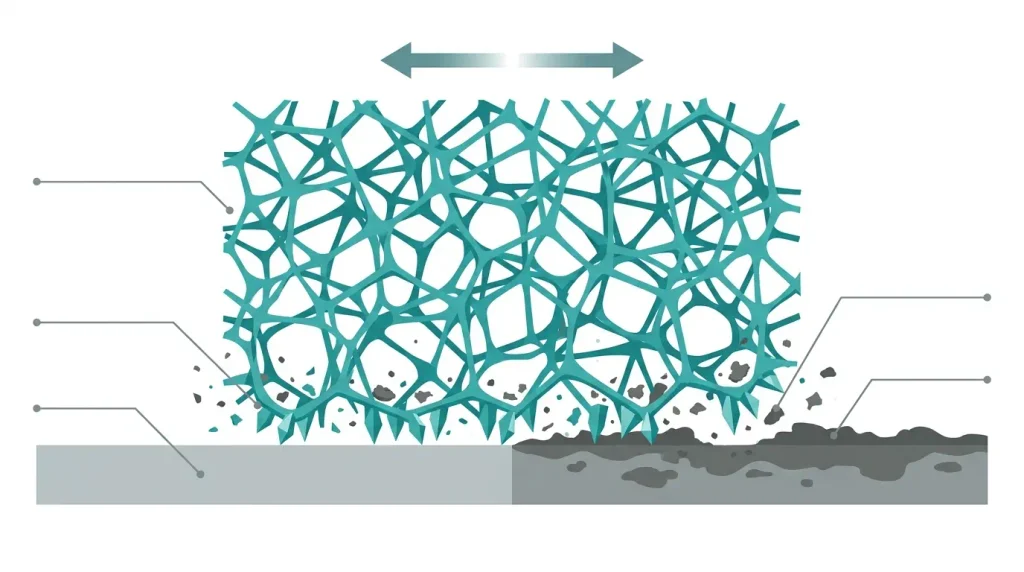
| Magic eraser | At a glance |
| What it’s made of | Melamine foam |
| How it cleans | Gentle abrasion, like very fine sandpaper |
| What you add | Water only |
| Best on | Hard, matt or satin surfaces with marks sitting on top |
| Avoid on | Gloss, polish, coatings, stone, screens and skin |
20 Things You Can Clean With a Magic Eraser, Room by Room
Living Room and Hallway
- Scuffs on painted walls. Shoe marks, bag scrapes and furniture rubs lift off matt and silk emulsion with light pressure.
- Crayon, pencil and felt-tip on walls. A favourite with parents. Work slowly and stop as soon as the mark is gone.
- Light switches and plug sockets. The grey ring of fingerprints around a switch plate comes off in seconds. Turn the power off at the switch and wring the sponge until it’s barely damp.
- Door frames and the area around handles. It’s one of the most-touched spots in any home.
- Skirting boards. Run a damp eraser along the top edge to lift dust lines and vacuum marks.
- Radiators. Painted radiators collect fingerprints and yellowed marks, especially round the valves.
Kitchen
- Sinks (ceramic and composite). Lifts tea, coffee and pan marks from white ceramic and many composite sinks.
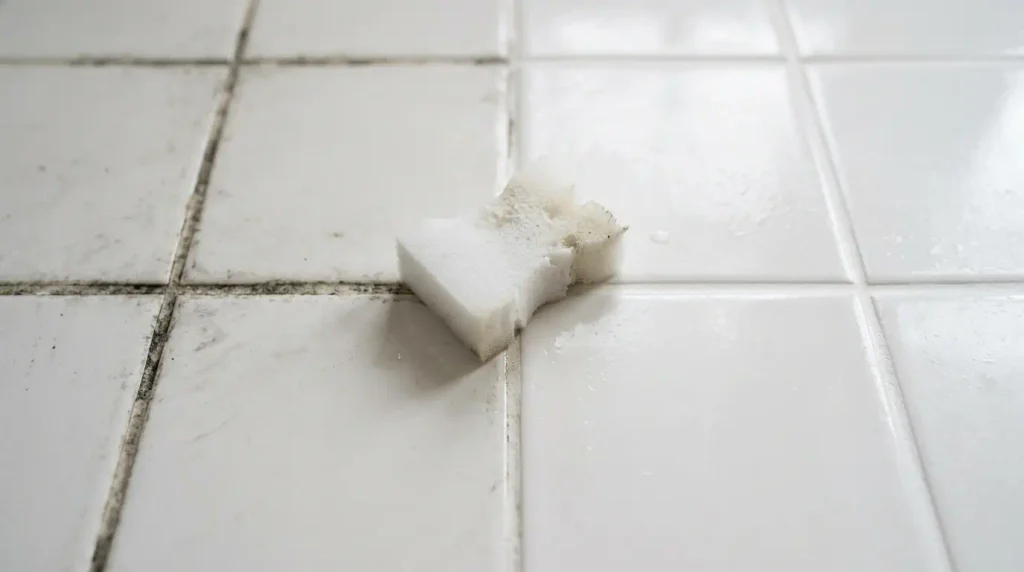
- Tile grout. A small corner of the sponge gets into grout lines on kitchen splashbacks and brightens them up.
- Inside the fridge. Dried-on spills on plastic shelves and drawers wipe away without harsh sprays near food.
- Plastic food containers. Helps shift tomato and curry staining on the outside and lids.
- Matt kitchen cupboards. Fingermarks on matt or satin painted doors. Skip high-gloss units (see below).
Bathroom
- Soap scum on baths and shower trays. Acrylic and enamel baths respond well to gentle pressure.
- Shower screen frames. The plastic and metal trim where limescale and scum build up.
- Grout between tiles. Brightens dull grout around the bath and shower.
- Toilet bowl rings. Lifts the stubborn line at the waterline. Wear gloves, and throw that piece away afterwards.
Around the House and Outside
- uPVC window frames and sills. Brings yellowed or grubby white uPVC back to white.
- Garden furniture. Plastic and resin chairs and tables after winter.
- White trainers and rubber soles. Cleans the rubber edging of canvas and leather trainers. For the uppers, follow our guide on how to clean white trainers at home.
- Car interior plastics. Scuffs on door panels and kick plates (never the paintwork).
- Permanent marker on hard plastics. Lunch boxes, toys and storage boxes.
A professional tip: a magic eraser works best on marks that sit on top of a surface. If a stain has soaked into something porous, like unsealed wood or fabric, rubbing harder just wears the surface away.
What Not to Use a Magic Eraser On
Because a magic eraser cleans by gently sanding the surface, it can dull, scratch or strip anything with a shine, a coating or a seal. Keep it away from these:
| Surface | Why to avoid it | Use instead |
| Car paintwork | Scratches the clear coat and leaves dull patches | Car shampoo and a microfibre wash mitt |
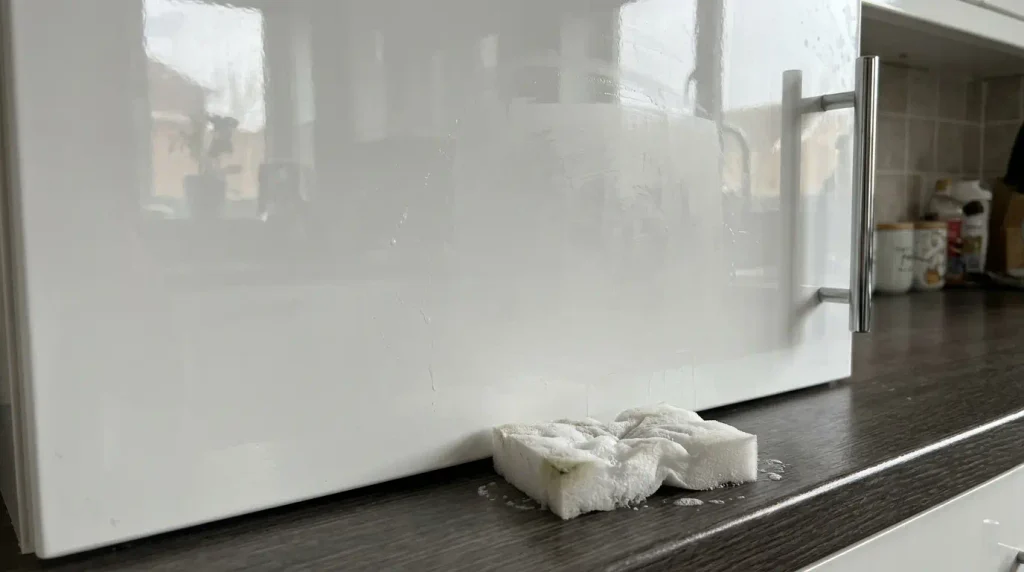
| High-gloss kitchen units and gloss paint | Leaves visible matt patches on the shine | Warm soapy water and a soft microfibre cloth |
| Granite and marble worktops | Can wear away the sealant and dull the stone | A stone-safe cleaner and a soft cloth |
| Non-stick pans | Scratches the coating, which then wears faster | A soft sponge and hot soapy water after soaking |
| Stainless steel | Leaves fine scratches and scuffs on the finish | Microfibre cloth, wiped with the grain |
| Polished or varnished wood | Can strip the finish | A dry soft cloth and a suitable wood polish |
| Glass and ceramic hobs | Can leave fine scratches on the glass | A hob scraper and hob cleaner |
| TV, laptop and phone screens | Scratches screens and anti-glare coatings | A dry microfibre cloth |
| Your skin | It’s abrasive and can irritate or graze skin | Soap, or a proper hand cleaner for paint |
If in doubt, test first. Try a small hidden area, such as the back of a door or inside a cupboard, then let it dry and check it in daylight before doing the whole surface.
How to Use a Magic Eraser Safely, Step by Step
Most damage comes from using a magic eraser too dry, too hard or for too long. This is the method professional cleaners use:
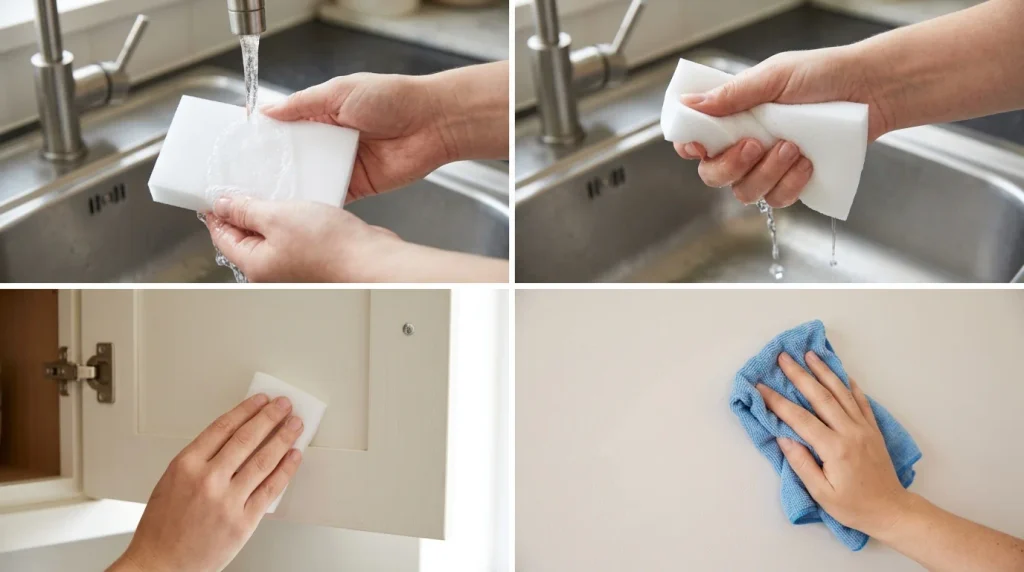
- Wet it. Soak the sponge in clean, cold or lukewarm water. A dry eraser is noticeably more abrasive.
- Wring it out. Squeeze until it’s damp, not dripping, especially near switches and sockets.
- Test a hidden spot. Rub gently, let it dry and check for dulling before you carry on.
- Use light pressure. Let the foam do the work. Pressing hard is what leaves shiny or dull patches on paint.
- Work in small circles, then wipe. Tackle the mark only, not the whole wall, then wipe the area with a clean damp cloth to remove the residue.
- Cut it down. A smaller piece gives more control on grout, switches and corners, and makes one sponge last longer.
- Wear gloves for long jobs. The foam is abrasive on skin too.
Don’t mix it with other products. A magic eraser only needs water. Adding bleach or strong sprays doesn’t make it work better and makes it harder to judge what’s lifting the mark.
Do Magic Erasers Shed Microplastics?
As a magic eraser wears down, it sheds tiny particles of melamine foam. McGill University’s Office for Science and Society notes that this means it releases microplastics. To keep its use sensible, use it for targeted marks rather than whole surfaces, wipe the area afterwards, and put worn-out sponges in the bin rather than rinsing the crumbs down the sink.
When to Call in Professional Cleaners in Nottingham
A magic eraser is perfect for quick fixes, but it’s a spot cleaner, not a deep clean. If you’re facing a whole house of scuffed walls, grimy grout and bathroom build-up, professional deep cleaning in Nottingham covers every room from top to bottom.
Moving out? End of tenancy cleaning deals with the scuffs, grout and build-up that landlords and letting agents check for at the final inspection.
Buon Cleaning’s team knows which product suits which surface, so nothing ends up dulled or scratched. If you’re looking for reliable cleaners in Nottingham, call 0788 866 8478 or email admin@buoncleaning.co.uk for a free quote.
FAQs
Does a Magic Eraser Remove Mould?
A magic eraser can lift surface mould staining from sealed tiles and grout, but it doesn’t kill mould or deal with the damp causing it. Treat the area with a proper mould remover, ventilate the room, and get persistent mould checked, as it usually points to a condensation or leak problem.
How Long Does a Magic Eraser Last?
A magic eraser wears away as you use it, so it lasts a handful of small jobs rather than weeks. Cutting it into smaller pieces, using light pressure and keeping it damp all make one sponge go further. Replace it once it starts crumbling.
Can a Magic Eraser Remove Limescale?
It can shift light limescale and soap scum on shower trays, baths and tiles. For heavy build-up, a descaler works better and with less scrubbing. Avoid shiny chrome taps and shower heads, as the abrasion can dull the finish. For the ring inside the toilet bowl, see our guide on how to remove limescale from a toilet.
Can You Use a Magic Eraser on Fabric or Upholstery?
No. A magic eraser is designed for hard surfaces. On fabric it can rough up the fibres and leave a fuzzy, worn patch, and it won’t lift stains that have soaked in. Sofas and armchairs need the right fabric cleaner, or professional upholstery cleaning for stains that won’t shift.
Are Cheap Magic Sponges as Good as Branded Ones?
They’re made from the same material, melamine foam, so they work the same way. Some cheaper sponges are softer and wear down faster, so you may get fewer jobs out of each one, but they’re usually fine for everyday marks.
Are Magic Erasers Safe Around Children and Pets?
A magic eraser doesn’t contain cleaning chemicals, which makes it a handy option in family homes. Still, store sponges out of reach so they don’t get chewed, wipe surfaces with a clean damp cloth after use, and bin worn-down pieces and crumbs.

Leave a Reply