
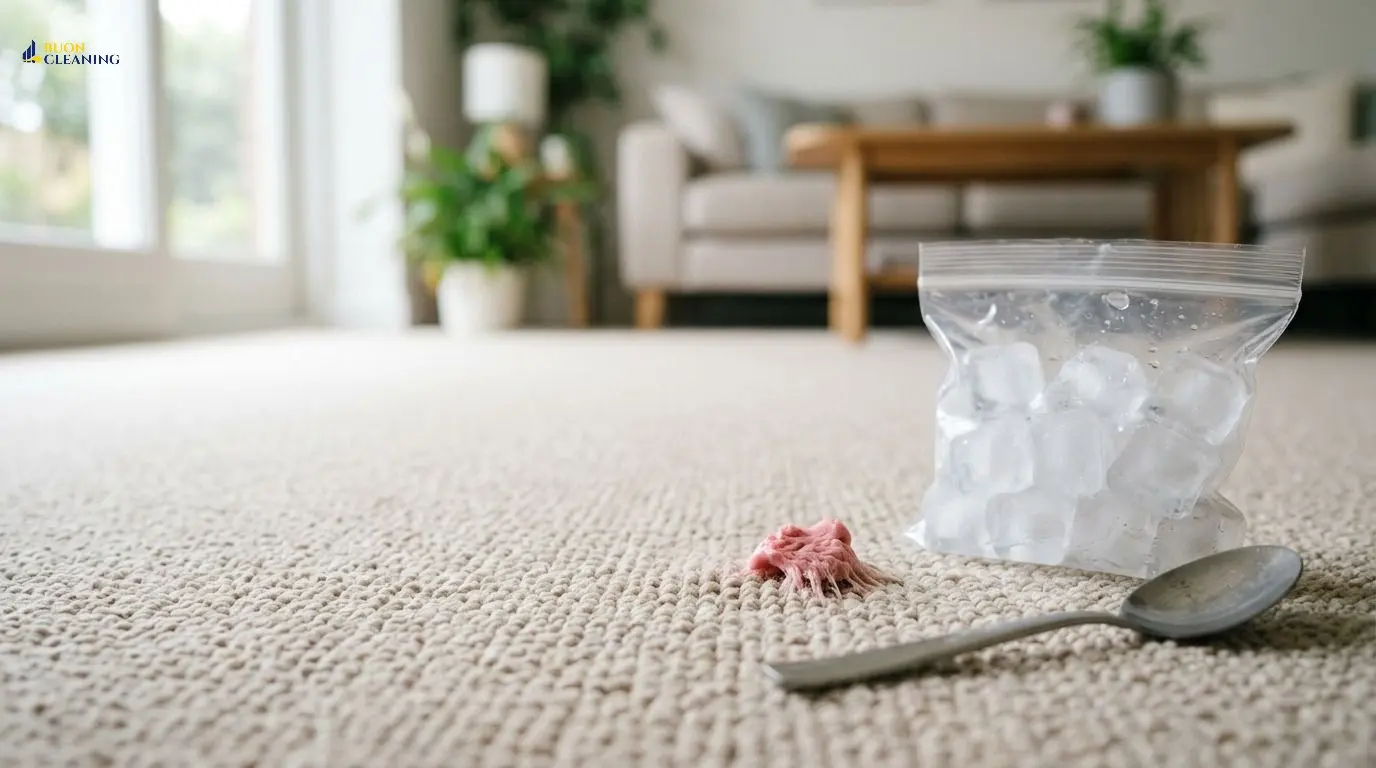
The safest approach to remove chewing gum from carpet is to cool the gum until it becomes firm, lift it away gradually, then deal with any sticky residue separately. Avoid rubbing fresh gum, pulling at the fibres, or immediately applying oils and strong cleaning products. Those methods can spread the gum or leave you with a second stain to remove.
For most carpets, ice and patience are a much better starting point than force.
Table of Contents
What Is the Safest Way to Remove Chewing Gum from Carpet?
The simplest method is to harden the chewing gum with ice and then carefully lift it from the carpet.
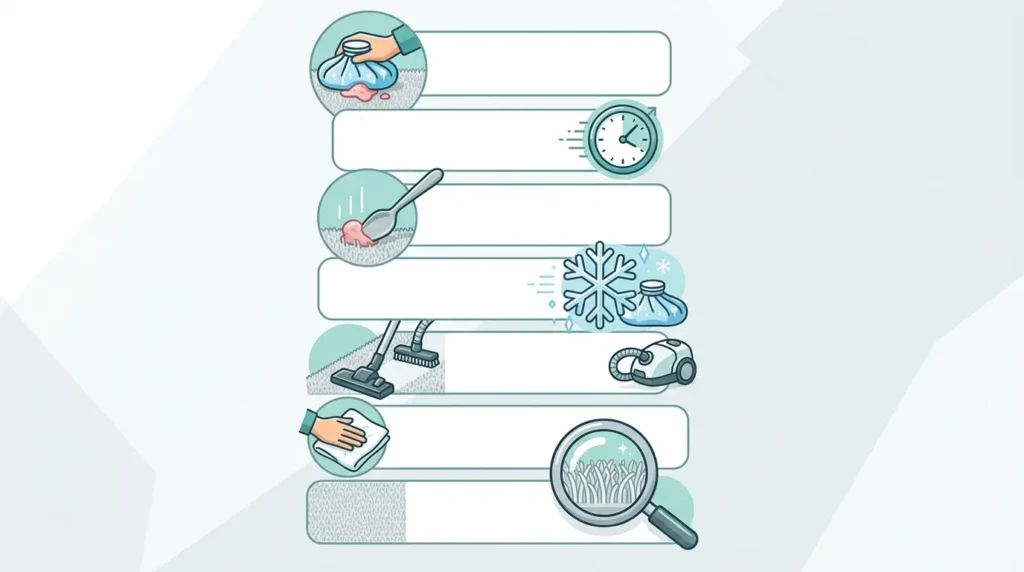
In short:
- Keep people from walking over the gum.
- Put ice cubes in a sealed plastic bag.
- Hold the bag against the gum until it becomes firm.
- Gently lift the hardened gum with a blunt spoon.
- Remove loose pieces as they come away.
- Re-freeze the gum if it begins to soften.
- Treat any remaining sticky residue separately.
The key is to work gradually. Trying to pull the whole piece away at once can stretch the gum across neighbouring fibres or pull part of the carpet pile with it.
Why Freezing Chewing Gum Works
Warm chewing gum is flexible and sticky. That is exactly what makes it difficult to remove.
Cooling it changes the way it behaves. Once the gum becomes hard, it is much easier to lift or break away in small pieces without smearing it further through the carpet.
This is also why rubbing is rarely helpful. Friction warms the gum and pushes it deeper into the pile.
Check the Carpet Before You Start
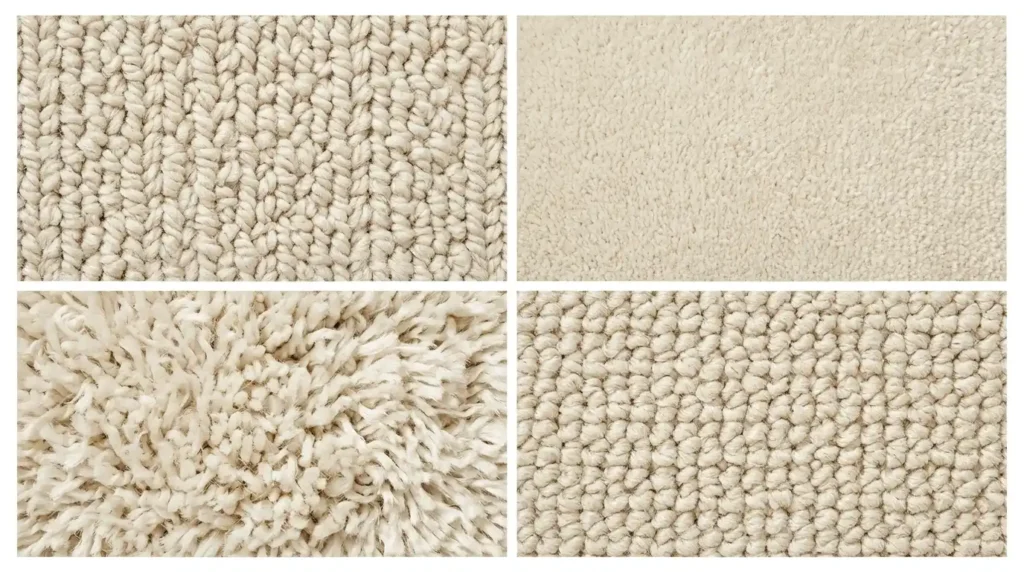
Not every carpet should be treated in exactly the same way.
Before applying any cleaner, try to identify the carpet fibre and check the manufacturer’s care instructions if they are available. If you cannot identify the material, stay with the gentlest method first.
Wool and Natural-Fibre Carpets
Wool deserves extra care.
Start with cold treatment and avoid experimenting with strong household chemicals or solvents. If the gum leaves residue behind, choose a product specifically suitable for wool and test it somewhere inconspicuous first.
WoolSafe-approved products are useful when choosing treatments intended for wool carpets and rugs.
Most importantly, stop if you notice colour transfer, fuzzing or fibres beginning to lift.
Synthetic Carpets
Polypropylene, polyester and nylon carpets are often hard-wearing, but that does not mean every cleaning product is safe to use on them.
A solvent may affect the colour, backing or protective treatment even when the visible fibre seems unaffected.
If the carpet is marketed as bleach-cleanable, that is a specific property of that carpet. It does not mean bleach should be used as a general stain remover.
Want more detailed information about bleach-cleanable carpets cleaning? Check out Buon Cleaning’s guide to cleaning bleach-cleanable carpets.
Deep-Pile and Loop-Pile Carpets
Chewing gum can disappear surprisingly far into a deep carpet pile.
Loop carpets present another problem: a scraper can catch one of the loops and pull it out of position.
Use short, controlled movements rather than digging underneath the gum. If the fibres start moving with it, stop.
Removing the gum is not worth leaving a permanently damaged patch behind.
What You Will Need
For the basic method, you only need a few things:
- ice cubes or a reusable cold pack;
- a sealed plastic or freezer bag;
- a blunt spoon or smooth, blunt-edged tool;
- clean white cloths;
- a vacuum cleaner;
- a suitable carpet spot cleaner if residue remains.
White cloths are useful because you can immediately see whether dirt, colour, or gum residue is transferring onto them.
If you decide to use a specialist gum-removal product, follow its instructions rather than mixing it with other cleaners.
How to Remove Chewing Gum from Carpet with Ice
Step 1: Stop It Spreading
Keep shoes, children, and pets away from the affected area.
If the gum is still soft, with your fingers. Soft gum stretches easily, and a small spot can quickly become attached to several more carpet fibres.
Scrubbing with a cloth usually makes matters worse for the same reason.
Step 2: Place Ice Over the Gum
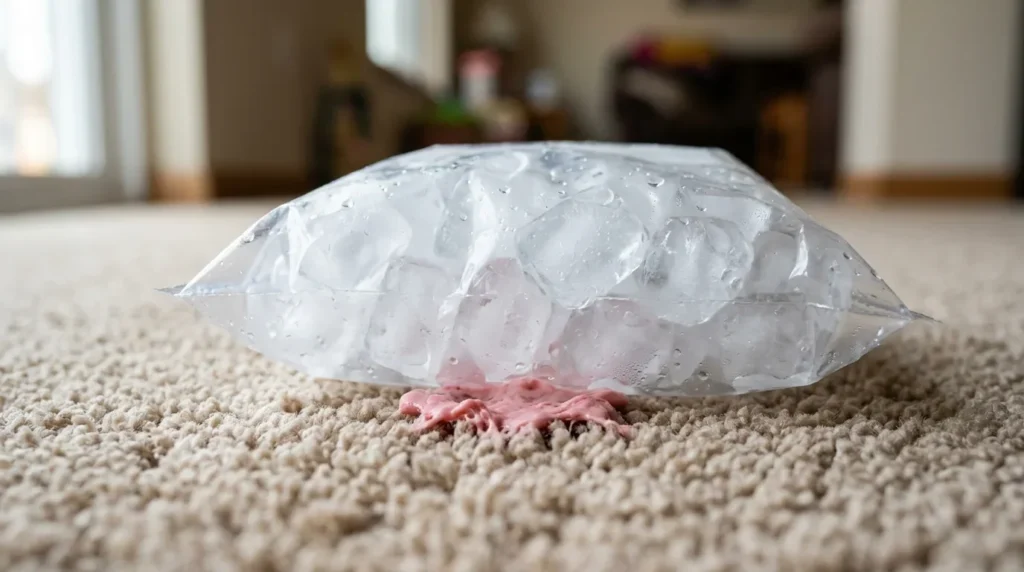
Put several ice cubes inside a sealed plastic bag and place it directly on the chewing gum.
A reusable cold pack can also work if it is clean.
Using a sealed bag matters. The aim is to cool the gum without soaking the carpet with melting ice.
Step 3: Wait Until the Gum Feels Firm
There is no exact time that works for every carpet.
A small, thin piece of gum will cool more quickly than a thick piece that has been pressed into the pile. Room temperature also makes a difference.
What matters is the texture.
If the gum still bends or stretches when touched lightly, leave the ice on for longer. You want it firm enough to lift rather than smear.
Step 4: Lift the Gum Carefully
Start at the outside edge.
Use the rounded edge of a spoon or another blunt tool to gently work the gum away from the carpet. Try to lift upwards rather than digging down into the fibres.
Do not worry if it comes away in several small pieces.
That is often safer than trying to remove everything in one go.
If the gum begins to soften while you are working, stop and apply the ice again.
Step 5: Remove the Loose Pieces
Pick up the larger pieces as they detach.
Once most of the gum has been removed, vacuum carefully around the area to collect smaller hardened fragments before they warm up and stick elsewhere.
Step 6: Check for Residue
Once the solid gum is gone, feel the carpet lightly.
If the fibres still feel tacky, stop scraping. You are now dealing with residue rather than the original piece of chewing gum, and it needs a different approach.
How to Remove Sticky Gum Residue from Carpet
This is where people often damage the carpet.
The obvious reaction is to keep scraping until the stickiness disappears. In reality, continued scraping can roughen the pile while doing very little to remove a thin film of gum.
Start with the least aggressive treatment that is suitable for your carpet.
Apply a small amount of compatible spot cleaner to a clean white cloth rather than pouring it directly onto the carpet. Blot the affected fibres gently and keep checking the cloth for colour transfer.
Avoid soaking the area. Excess moisture can travel into the backing or underlay and make drying more difficult.
Buon Cleaning’s guide to carpet cleaning chemicals explains why the cleaning product should match the fibre and the type of contamination.
Can You Use Washing-Up Liquid?
A small amount of heavily diluted, clear washing-up liquid is sometimes used for household spot cleaning, but it is easy to overdo it.
Washing-up liquid is made for dishes, not carpets. Too much can leave detergent behind, and that residue may make the carpet feel sticky or attract dirt later.
If your carpet manufacturer allows a mild detergent solution, use as little as possible and apply it with a cloth rather than pouring it onto the carpet.
For wool or an unidentified carpet, a fibre-appropriate carpet cleaner is the safer option.
Should You Use a Specialist Carpet Chewing Gum Remover?
A specialist chewing-gum remover can be useful when cold treatment has removed most of the gum, but stubborn material remains.
Before using one, check:
- which carpet fibres it is suitable for;
- whether it can be used on wool;
- whether a patch test is required;
- how long it should remain on the carpet;
- how the residue should be removed afterwards.
The words “carpet cleaner” on a bottle do not automatically mean it is suitable for every type of carpet.
How to Remove Old or Dried Chewing Gum from Carpet
Old gum may already feel hard, but that does not necessarily make it easier to remove.
Over time, it can become wrapped around individual fibres or collect dirt that has been walked into the carpet.
Start by cooling it again. Making the gum colder can help it become more brittle and easier to remove in small sections.
Work from the outside towards the centre. If one part comes away but another remains firmly attached, re-freeze the remaining gum instead of increasing the pressure.
Afterwards, inspect the area carefully.
A dark mark underneath may not be gum at all. It could be soil that became trapped in the sticky surface over time.
What If the Gum Has Been Walked Into the Carpet?
Trodden-in chewing gum takes more patience.
Pressure from shoes can push the gum around individual fibres and deeper into the carpet pile. It may also contain dirt and grit from footwear.
Freeze the area first and remove only what releases without excessive force.
You may need to repeat the cooling process several times.
Be particularly careful on deep-pile and loop carpets. Digging underneath the gum can damage the pile long before the final bit of gum comes loose.
If the gum has spread across a larger patch, reached deep into the pile or wrapped tightly around the fibres, professional treatment is usually the safer next step.
How to Remove Chewing Gum from a Wool Carpet
Wool carpet needs a conservative approach.
Start by checking the manufacturer’s instructions, then:
- Harden the gum with ice inside a sealed plastic bag.
- Wait until it feels firm.
- Gently lift it without pulling the wool fibres.
- Remove any loose fragments.
- Use only a suitable wool-safe treatment if residue remains.
- Blot rather than scrub.
- Stop if the fibres begin to distort or colour transfers onto the cloth.
Avoid trying several different household products one after another. Even if each seems mild on its own, mixing treatments makes it harder to know what has caused a reaction if something goes wrong.
For an expensive wool carpet or rug, professional treatment may be the more sensible option.
What Should You Avoid Using on Chewing Gum?
A product can loosen gum and still be a poor choice for carpet.
That distinction matters.
The real aim is not simply to dissolve the chewing gum. It is to remove it without damaging the fibre, affecting the colour, or leaving another residue behind.
Hairdryers and Hot Water
Heat softens chewing gum.
That may sound useful, but soft gum is also more likely to stretch and spread between fibres.
For DIY treatment, cold gives you more control.
If the gum becomes warm while you are working, stop and cool it again rather than trying to scrape it while it is flexible.
WD-40
WD-40 is often mentioned as a way to loosen chewing gum.
The problem is that you may successfully loosen the gum and then be left with an oily residue in the carpet. That residue still needs to be removed, and not every carpet fibre or backing will react in the same way.
For that reason, it is not the first method we would reach for.
Start with ice. If further treatment is needed, use a product that is intended for the carpet you are cleaning.
Peanut Butter and Other Oils
The logic behind the peanut-butter trick is that oils can help loosen chewing gum.
Unfortunately, carpet is absorbent.
Adding an oily food product may leave a grease mark after the gum has gone. At that point, you have simply swapped one stain for another.
There is little reason to start with oil when the gum can often be hardened and lifted without adding another substance.
Vinegar
Vinegar appears in countless household cleaning tips, but it is not required for the first stage of gum removal.
Freeze and lift the gum first.
If something remains afterwards, treat the residue according to the carpet fibre and manufacturer guidance rather than assuming an acidic household solution is suitable for every carpet.
Cutting the Carpet Fibres
Avoid cutting gum out of the carpet unless a specialist has assessed the damage.
Trimming even a few fibres can leave a noticeable low spot, particularly once the carpet has been vacuumed and the pile settles.
If you cannot remove the gum without cutting or pulling the pile, it is better to stop.
Why Does the Carpet Still Feel Sticky After the Gum Is Gone?
A tacky patch does not necessarily mean you missed a large piece of chewing gum.
A thin residue may still be coating the fibres.
The stickiness could also come from something used during an earlier cleaning attempt, such as too much detergent, an oil-based product, or another cleaner that was not fully rinsed away.
This is why it helps to think of the job in two parts:
First, remove the gum, then clean the residue.
Do not keep adding different products until something works. Once several cleaners have been used on the same spot, diagnosing the remaining problem becomes much harder.
What If the Carpet Looks Darker Afterwards?
Give the carpet time to dry before assuming it has been stained permanently.
Damp fibres often look darker. Scraping and blotting can also change the direction of the pile, which affects the way light reflects from it.
If the patch remains dark once completely dry, possible causes include:
- lingering gum residue;
- dirt attached to a tacky area;
- detergent residue;
- oil from a previous DIY treatment;
- a genuine colour change caused by a cleaning product.
What If Carpet Fibres Start Coming Out?
If fibres are lifting, loops are opening, or the carpet pile is visibly changing shape, more scraping is likely to make the damage worse and it is recommended to stop whatever you are doing with it. Do not use extra force just to remove the last visible piece of gum because this is the point where professional assessment makes sense.
When Should You Call a Professional Carpet Cleaner?
A small piece of fresh gum on a hard-wearing carpet is often manageable at home.
The situation changes when the gum is deeply embedded, or the carpet itself is at risk.
Consider professional treatment if:
- the gum has been walked into the pile;
- several pieces of gum are present;
- you have a wool or delicate carpet;
- you do not know what the carpet is made from;
- fibres are pulling, or loops are opening;
- the carpet has changed colour;
- an oil or solvent has already been used;
- sticky residue keeps returning;
- the affected area is large;
- the carpet is valuable or difficult to replace.
A professional carpet cleaner is not simply applying a stronger chemical. The useful part is knowing what the carpet is made from, what has already been applied, and which treatment can be used without causing further damage.
If you are in Nottingham and chewing gum has become more than a straightforward DIY job, Buon Cleaning provides professional carpet cleaning in Nottingham, including stain treatment.
How Professionals Deal with Chewing Gum in Carpet
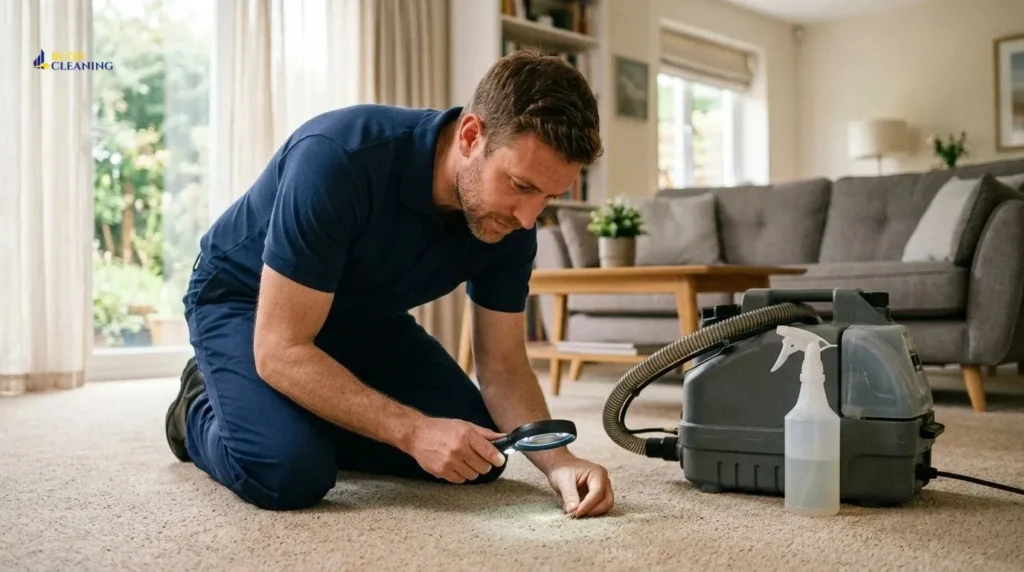
Professional gum removal usually starts with inspection.
The cleaner needs to know what type of carpet they are working on, how far the gum has travelled into the pile, and whether anything has already been applied to it.
That may involve looking at:
- the carpet fibre;
- pile construction;
- colour stability;
- the depth of the contamination;
- previous DIY cleaning products;
- oily or sticky residue left behind.
The gum can then be hardened or treated with an appropriate specialist product before being carefully separated from the fibres.
If residue remains afterwards, controlled spot cleaning, rinsing or extraction may be used where suitable.
That sequence matters. Removing the visible chewing gum is only half the job if a sticky product residue is left behind.
Chewing Gum in Rental Properties and Offices
Chewing gum becomes harder to deal with once it has been walked over repeatedly.
That is common in offices, communal areas, student accommodation and rental properties where nobody notices the gum immediately.
Rental and End-of-Tenancy Carpets
If you find chewing gum while preparing a rental property for handover, remove it before carrying out the final carpet clean.
That way you can see what, if anything, remains underneath it.
Avoid cutting the carpet just to get rid of the visible gum. A damaged patch may be far more noticeable during an inspection than the original contamination.
For a wider cleaning plan, use our end-of-tenancy carpet cleaning checklist or see our end-of-tenancy cleaning service in Nottingham.
Offices and Commercial Carpets
In workplaces, chewing gum is often found in entrances, corridors, reception areas and other high-traffic spaces.
By the time it is noticed, it may have been pressed into the carpet dozens of times.
If gum is appearing regularly or several areas are affected, treating each spot with a different household product is rarely a good long-term approach.
A planned commercial carpet cleaning service allows embedded spots and general soiling to be dealt with as part of the same maintenance programme.
Conclusion
For most chewing gum on carpet, start with cold rather than chemicals.
Harden the gum with ice inside a sealed bag, lift it slowly and re-freeze it whenever it begins to soften. Once the solid gum has gone, treat any remaining stickiness as a separate cleaning problem.
The biggest mistakes usually happen when people rush: rubbing soft gum, scraping too hard or adding several household products one after another.
If the fibres begin to move, fray or change colour, stop. Saving the carpet matters more than removing the final trace of gum yourself.
Frequently Asked Questions
What is the easiest way to get chewing gum out of carpet?
The easiest starting point is to harden the gum with ice inside a sealed plastic bag. Once it becomes firm, gently lift it from the outside edge with a blunt spoon. If it starts stretching again, apply the ice for longer rather than pulling harder.
How long should you leave ice on chewing gum on the carpet?
Leave the ice in place until the gum feels hard rather than soft and stretchy. There is no fixed time because the thickness of the gum, carpet pile, and room temperature all make a difference. Judge it by texture rather than the clock.
Can ice damage carpet?
Ice itself is unlikely to cause a problem when it is kept inside a sealed bag. Avoid placing loose ice directly on the carpet, as melting water can soak into the pile, backing, or underlay.
Can you use a hairdryer to remove chewing gum from carpet?
A hairdryer can soften chewing gum, which may make it stretch and spread further through the carpet fibres. For home treatment, cooling the gum is generally easier to control than heating it.
How do you remove chewing gum from a wool carpet?
Harden the gum with ice inside a sealed bag, then lift it carefully without pulling the wool fibres. If residue remains, use a cleaning product suitable for wool. Stop if the carpet begins to fuzz, distort, or transfer colour onto the cloth.
Can professional carpet cleaners remove old chewing gum?
Often, yes. The result depends on the carpet fibre, how deeply the gum has penetrated, how long it has been there, and which cleaning products have already been used. Professional treatment is particularly useful when gum is deeply embedded, or the carpet fibres begin to pull during DIY removal.

Leave a Reply