

How to Remove Ink From a Fabric Sofa
To remove ink from a fabric sofa, first check the cleaning code on the label. If it says S or WS, dab the stain with a white cloth dampened with isopropyl (rubbing) alcohol, working from the outside in. If it says W, use a little washing-up liquid in cool water instead. Blot, never rub, and patch test before you start.
Most fresh pen marks lift with patience and the right product. Dried ink, permanent marker and delicate fabrics such as velvet need a slightly different approach, so we cover each one below, along with the popular “hacks” that tend to make ink stains worse.
Check Your Sofa’s Cleaning Code First
The cleaning code tells you which products the fabric can take. You’ll usually find it on a label under the seat cushions or on the sofa base.
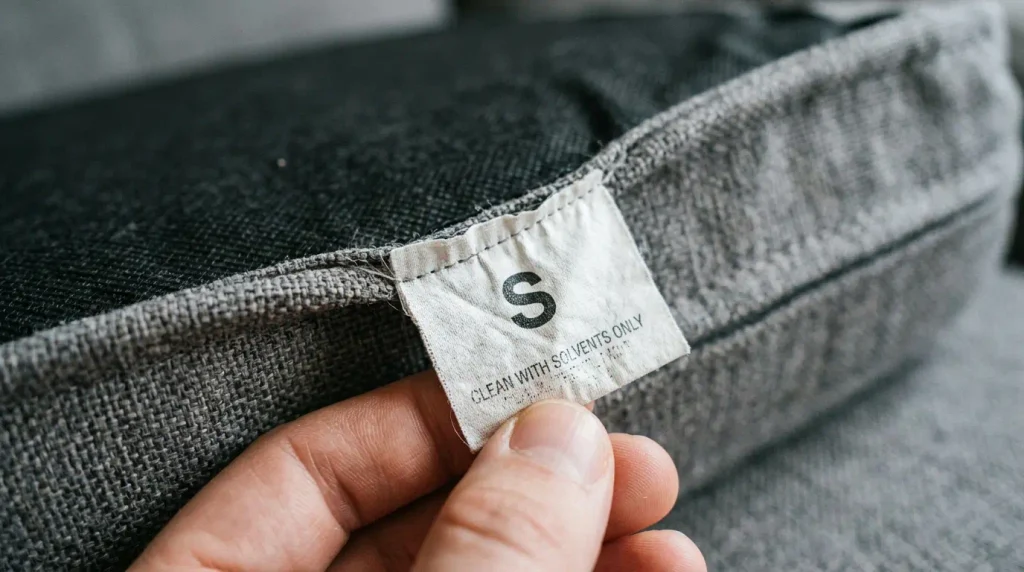
| Code | What it means | Safe method for ink |
| W | Water-based cleaners only | Washing-up liquid and cool water |
| S | Solvent-based cleaners only, no water | Isopropyl alcohol or a solvent upholstery cleaner, with no water rinse |
| WS or SW | Water or solvent cleaners | Isopropyl alcohol, then a light rinse with a damp cloth |
| X | Vacuum or brush only | No liquids at all, call a professional |
If there’s no label, test water and alcohol on separate hidden areas and only use the one that causes no change. If neither feels safe, leave it to a professional.
What You’ll Need
- White cloths, cotton pads or cotton buds (white, so you can see the ink lifting and no dye transfers)
- Isopropyl alcohol, often sold as rubbing alcohol or IPA
- Clear washing-up liquid and cool water
- A dry towel
- A soft brush, such as a clean toothbrush, for textured or pile fabrics

Surgical spirit also works on ink, but it contains a little oil, so dab the area with a clean damp cloth afterwards if your sofa’s code allows water. Professional cleaners use dedicated solvent spotters for ink, which we explain in our guide to carpet cleaning chemicals.
Isopropyl alcohol is flammable. Open a window, keep it away from flames and heaters, and never mix it with other cleaning products.
How to Remove Ink From a Fabric Sofa, Step by Step
Step 1: Blot Fresh Ink Straight Away
If the ink is still wet, press a dry white cloth or kitchen roll onto it to soak up as much as you can. Don’t rub. Rubbing spreads wet ink into a bigger mark and pushes it deeper into the fabric.
Step 2: Patch Test on a Hidden Area
Dab a little of your chosen cleaner on a hidden spot, such as the back of a seat cushion or under the skirt of the sofa. Wait 10 minutes, then press a white cloth on it. If colour comes off, the fabric looks paler or a ring appears, don’t use that product.
Step 3: Dab the Stain With the Right Cleaner
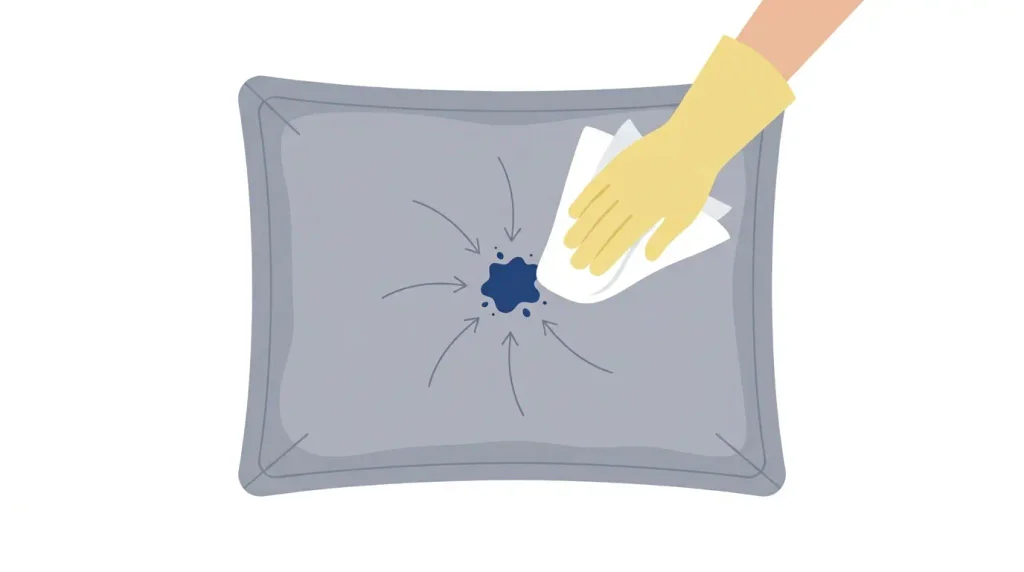
For S or WS sofas, put isopropyl alcohol on a white cloth or cotton bud, not straight onto the sofa. For W sofas, mix ¼ teaspoon of clear washing-up liquid into 250ml of cool water and dampen a cloth with it.
Dab the stain from the outside edge towards the middle, so the ink doesn’t spread outwards. As ink moves onto the cloth, turn to a clean section so you’re not putting it back on the sofa.
Step 4: Repeat, Little and Often
Ink rarely comes out in one go. Keep dabbing in short rounds, letting the fabric settle for a minute between them. Stop straight away if the sofa’s own colour starts coming off on the cloth.
Step 5: Rinse Away the Residue
On W and WS sofas, dab the area with a cloth dampened with clean, cool water to remove any soap or alcohol, then blot. On S sofas, skip the water. The alcohol evaporates on its own.
Step 6: Dry It Properly
Press a dry towel firmly onto the area to soak up moisture, then leave it to air dry with a window open or a fan running. Don’t use a hairdryer, as heat can set any ink that’s left. Once dry, brush the fibres gently so the texture matches the rest of the sofa.
To avoid a water ring, lightly dampen the area just beyond the stain’s edge as you rinse, so it dries evenly rather than leaving a hard line.
How to Remove Different Types of Ink
Different inks need different removers. Use this table to find the right one for your pen and your sofa’s cleaning code:
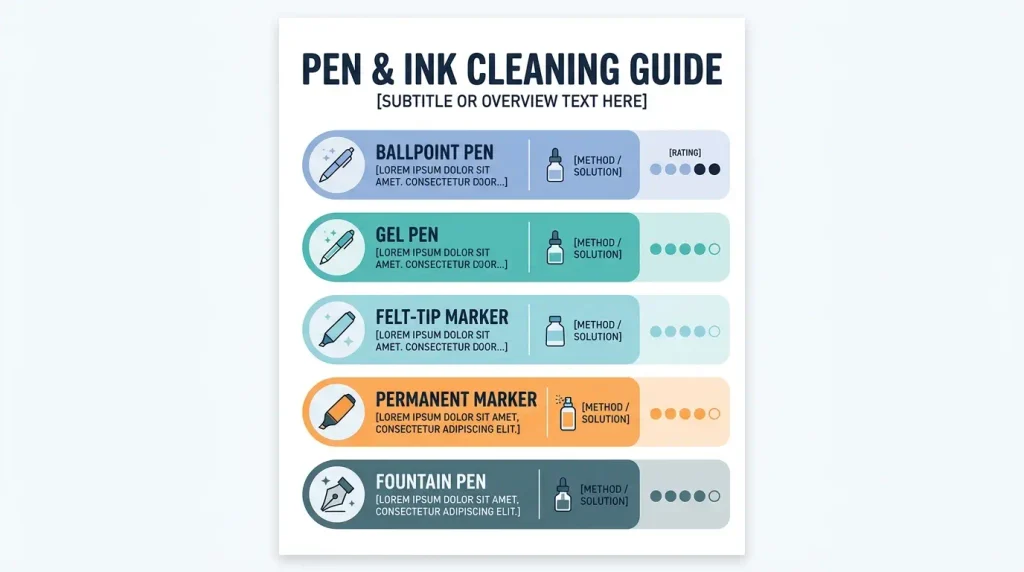
| Type of ink | Best remover | Safe on codes |
| Ballpoint pen (biro) | Isopropyl alcohol | S, WS |
| Gel pen | Washing-up liquid, then isopropyl alcohol | W (washing-up liquid only), S, WS |
| Felt-tip and washable marker | Washing-up liquid and cool water | W, WS |
| Permanent marker | Isopropyl alcohol | S, WS |
| Fountain pen ink | Washing-up liquid and cool water | W, WS |
On a W-code sofa, ballpoint and permanent marker may only partly respond to washing-up liquid. If they don’t shift, call a professional rather than reaching for alcohol. X-code sofas need a professional for any ink.
Ballpoint Pen (Biro)
Ballpoint ink is oil-based, so isopropyl alcohol is the most effective option. It usually comes out well with the step-by-step method above, especially if you treat it within a day or two.
Gel Pen
Gel ink sits in a thicker, water-based gel that often contains pigment, which makes it stubborn. Start with the washing-up liquid solution to break down the gel, then follow with isopropyl alcohol if your code allows it. Expect to need several rounds.
Felt-Tip and Washable Marker
Most children’s felt-tips and washable markers are water-based. Washing-up liquid and cool water usually shift them, which is good news for W-code sofas. Use alcohol only if a shadow remains and the code allows it.
Permanent Marker
Permanent marker uses alcohol-based ink, so isopropyl alcohol is the best match. Dab patiently and change your cloth often, as the ink transfers quickly. On older marks, the stain may fade to a faint shadow rather than vanish completely.
Fountain Pen Ink
Fountain pen ink is usually a water-based dye. Blot it fast, then use the washing-up liquid solution with cool water. A large spill from a bottle or leaking cartridge can soak into the cushion foam, so that’s a job for a professional.
How to Get Dried Ink Out of a Sofa
Dried ink can still come out, but it takes more patience:
- Loosen it. Hold a cotton pad dampened with isopropyl alcohol (or the washing-up liquid solution on W sofas) against the stain for two to three minutes. Don’t soak the fabric.
- Lift it. Blot firmly with a clean white cloth to pull the softened ink out.
- Work it gently. On sturdy, flat-weave fabrics, a soft toothbrush moved in one direction can help. Skip this on velvet and chenille.
- Repeat. Three or four rounds are normal for old ink.
- Rinse and dry as in Steps 5 and 6.
If there’s no change after several rounds, stop. More product and scrubbing will damage the fabric before it removes the stain.
Last Resort: Non-Acetone Nail Polish Remover
Before calling a professional, there’s one more option for synthetic fabrics such as polyester. If isopropyl alcohol has stopped working on an S or WS sofa, dab a little non-acetone nail polish remover onto the stain with a cotton bud. Patch test first, dab rather than rub, then blot with a clean cloth and let the area air dry.
Never use it on natural fibres, velvet or acetate fabrics, and never use ordinary acetone remover, which can damage synthetic fibres and strip colour.
Ink on Velvet, Microfibre and Other Delicate Fabrics
- Velvet. Blot only, with the lightest pressure, and keep it as dry as possible. When it’s dry, brush the pile in its natural direction. Silk and cotton velvet are best left to a professional.
- Microfibre. Many microfibre sofas carry an S code. Isopropyl alcohol works well on them, and brushing afterwards brings back the soft finish.
- Linen and cotton. They’re prone to water marks and shrinking, so use as little liquid as possible and dry the area evenly.
- Chenille. The raised pile distorts easily. Dab, never brush hard, and let it dry naturally.
- Wool blends. Use cool water and mild products only, and avoid anything alkaline or bleaching.
What Not to Use on an Ink Stain
| Avoid | Why |
| Hairspray | Modern formulas contain less alcohol and leave a sticky lacquer that attracts dirt |
| Acetone nail polish remover | Can dissolve some synthetic fibres and strip the sofa’s dye |
| Bleach | Leaves a permanent pale patch |
| Hot water, hairdryers or irons | Heat sets ink into the fibres |
| Rubbing or scrubbing | Spreads the ink and damages the weave or pile |
| Soaking the fabric | Pushes ink into the foam and causes water rings |
Melamine sponges are another one to avoid. They’re great on walls and tiles, as our list of things you can clean with a magic eraser shows, but they work like very fine sandpaper and can scuff upholstery fabric.
How to Prevent Ink Stains on Your Sofa
A few simple habits make ink stains far less likely, and much easier to deal with when they do happen:
- Use a fabric protector. A spray-on upholstery protector, or a professional protection treatment, helps ink and spills sit on the surface for longer so you can blot them away. Check it suits your fabric and cleaning code.
- Cover up for homework and crafts. A washable throw over the seat takes the hit instead of the sofa.
- Keep pens out of back pockets. A pen in a pocket is a common cause of ink marks on seat cushions.
- Choose washable markers for children, and keep caps on and pens off the sofa.
- Keep a stain kit ready. White cloths and a small bottle of isopropyl alcohol, stored out of children’s reach, mean you can treat ink while it’s fresh.
- Think about fabric when buying. Darker colours, patterns and performance fabrics hide and resist marks better than plain pale upholstery.
When to Call a Professional Upholstery Cleaner
Most small pen marks come out at home. It’s worth calling a professional when:
- Your sofa has an X code, or no label at all
- The fabric is velvet, silk, linen or a valuable piece
- The ink came from a large spill and has soaked into the cushion
- The stain has spread or left a ring
- The sofa’s colour came off during your patch test
- You’ve tried two or three rounds with no improvement
Professional upholstery cleaning uses solvent spotters matched to the fabric, then low-moisture extraction to lift the ink and residue without soaking the cushion. If you’re weighing it up, our guide to how much it costs to clean a sofa gives typical UK prices.
Professional Sofa Cleaning in Nottingham
If an ink stain won’t shift, or you’d rather not risk your sofa, Buon Cleaning can help. Our team provides professional sofa and upholstery cleaning across Nottingham, either as a one-off stain treatment or as part of a full deep clean.
FAQs
Can I Use Hand Sanitiser to Remove Ink From a Sofa?
It can work in a pinch, as most hand sanitisers contain a high level of alcohol. They also contain gel thickeners, moisturisers and fragrance that can leave a sticky residue, though. Plain isopropyl alcohol is the better choice, and hand sanitiser should only be used on fabrics that can take a water rinse afterwards.
How Do I Remove Ink From a Leather Sofa?
Not the same way. Alcohol can dry out leather and strip its finish, so don’t use it. Try a dedicated leather cleaner or leather ink remover, testing it on a hidden area first. Untreated aniline leather marks very easily, so get professional help for that.
Will Rubbing Alcohol Damage My Sofa?
Not on most S and WS fabrics, as long as you dab rather than soak and patch test first. It can lift dye from fabrics that aren’t colourfast, and it isn’t suitable for W-code or X-code sofas. Stop if colour comes off on your cloth.
Why Has the Ink Stain Got Bigger?
Usually because the stain was rubbed, or too much liquid was used. Wet ink travels outwards through the fabric. Blot the area dry, then work from the outside edge inwards with a barely damp cloth so the ink moves towards the centre instead.
Can I Put Removable Sofa Covers in the Washing Machine?
Only if the care label says so. Many sofa covers are dry clean only, and washing can shrink them so they no longer fit. If washing is allowed, use a cool wash and wash every cover from the sofa together so the colours stay even.
Does Milk Remove Ink Stains?
It’s an old home remedy, but there’s little evidence it works better than alcohol or washing-up liquid. On a sofa, milk also soaks into the foam and can leave a sour smell. You’ll get better results from the methods above.

Leave a Reply