
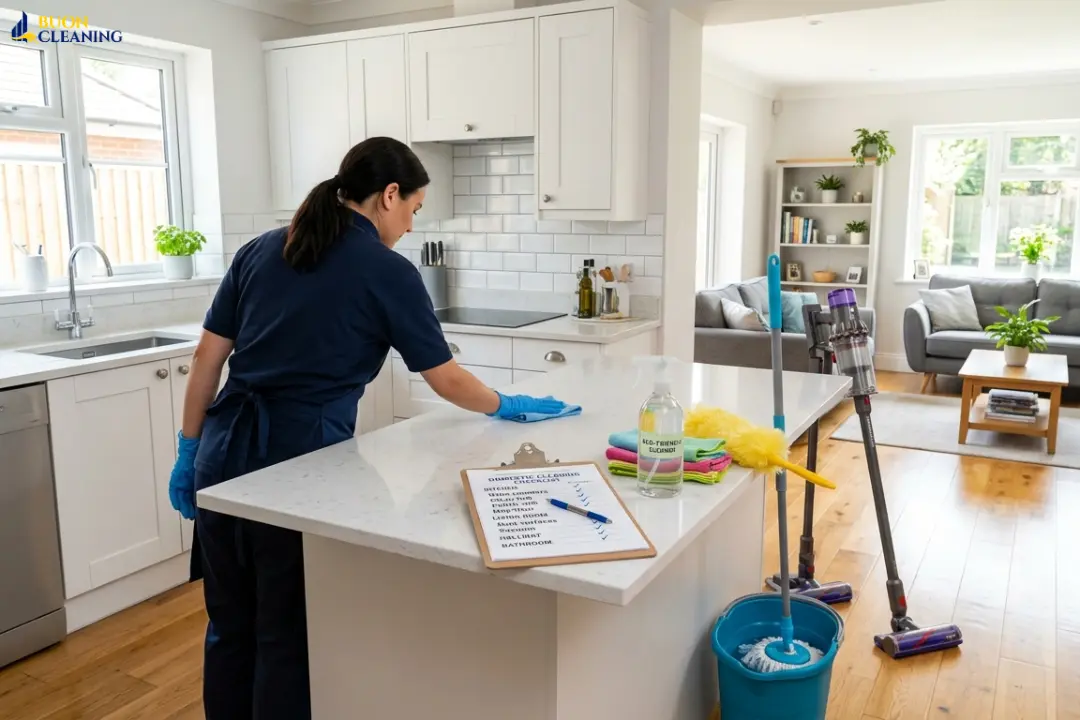
Domestic Cleaning Checklist: A Step-by-Step Professional Guide
A cluttered home can quickly become mentally overwhelming.When every room needs attention, deciding where to start often creates more stress than the cleaning itself. A structured Domestic Cleaning Checklist removes that pressure by giving you a clear order of tasks, helping you create a cleaner house with less wasted effort.
This step-by-step guide is designed around practical home management experience and professional cleaning methods. By following a clear system, you can organise your routine, maintain hygiene standards, and avoid missing important areas that are often overlooked during regular cleaning.
Whether you are preparing for a fresh start, following a moving into a new house checklist, or simply improving your current routine, this guide provides a simple structure you can follow. You can also customise it into your own printable house cleaning checklist for convenient use throughout your home.
Table of Contents
Quick Answer: The Core Domestic Cleaning Checklist at a Glance
A complete home cleaning routine should cover kitchens, bathrooms, living spaces, bedrooms, and high-traffic areas. Focus on removing dust, sanitising key surfaces, managing clutter, and maintaining floors regularly. A consistent checklist helps you clean faster, stay organised, and keep your home fresh.
Copyable Domestic Cleaning Checklist:
- Kitchen: Wipe worktops, sanitise sink, scrub hob, mop floor.
- Bathrooms: Clean the toilet, sanitise the sink, descale taps and shower glass, and mop the floor.
- Living Areas: Dust surfaces, vacuum upholstery, tidy clutter, vacuum/mop floors.
- Bedrooms: Change linens, dust bedside tables, vacuum floor.
- Hallways/Stairs: Clear pathways, vacuum high-traffic stairs.
The Golden Rules of Cleaning: How Professionals Save Hours
Professional cleaners do not rely on cleaning harder; they rely on cleaning smarter. A well-planned workflow reduces repeated effort, prevents re-cleaning areas, and helps achieve better results in less time.
Following a professional cleaning sequence also makes your Domestic Cleaning Checklist more effective because each task supports the next step.
Top-to-Bottom, Left-to-Right
One of the most important professional cleaning principles is working from top to bottom. Start with higher areas such as shelves, ceiling fans, light fittings, and cupboards before moving towards lower surfaces.
Dust naturally falls as you clean, so starting with floors first can undo your work. Cleaning higher surfaces first allows debris to settle before you vacuum or mop, creating a more efficient routine.
A left-to-right approach also keeps you organised. Instead of moving randomly around a room, you create a consistent pattern that reduces missed spots and unnecessary movement.
Dry Tasks First, Wet Tasks Second
Professional cleaners separate dry cleaning tasks from wet cleaning tasks. Dusting, vacuuming, and removing loose dirt should always happen before using water or liquid cleaners.
When dust mixes with moisture, it can create a sticky residue that spreads across surfaces and makes cleaning more difficult. Completing dry tasks first allows cleaning products to work properly on genuinely dirty areas.
For example, vacuum carpets and floors before mopping hard surfaces. Dust furniture and shelves before wiping them with a damp cloth. This simple order creates better results with less effort.
The Safe Color-Coding System
Many professional cleaning teams use a colour-coded microfiber system to reduce the risk of cross-contamination between different areas of a property.
Using separate cloth colours helps ensure that bacteria and cleaning residues are not transferred from one surface to another.
A common professional approach includes:
- Red cloths: Toilets and bathroom hygiene areas.
- Blue cloths: Glass surfaces, mirrors, and windows.
- Green cloths: Kitchen surfaces and food preparation areas.
- Yellow cloths: General household surfaces.
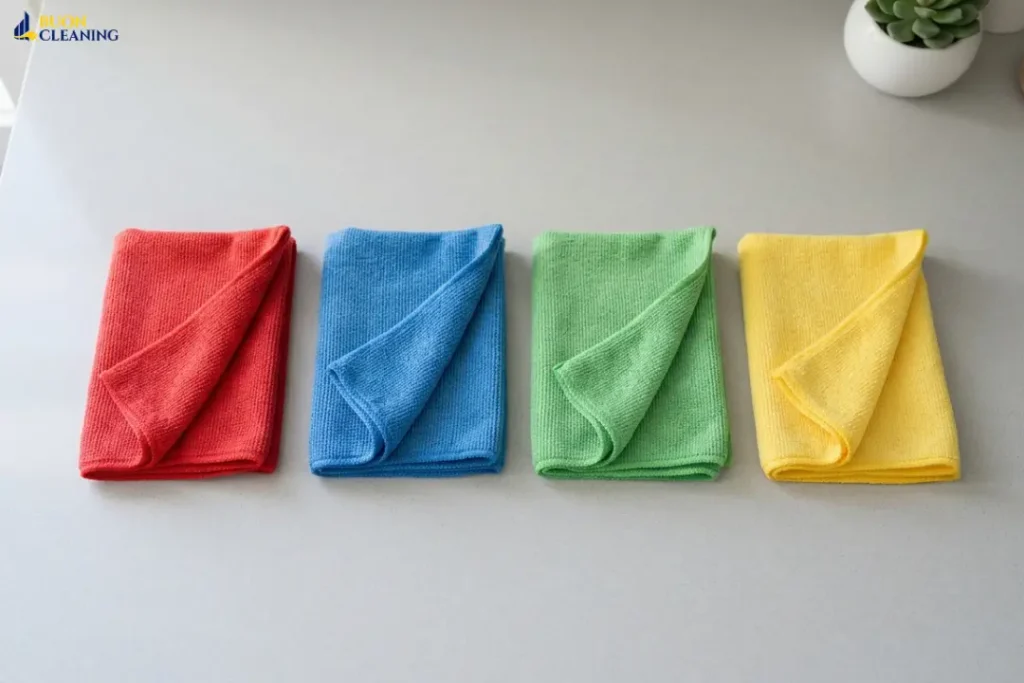
Keeping your cleaning tools organised in this way makes your routine safer and easier to manage. A simple portable cleaning caddy with labelled cloths can turn a basic cleaning checklist into a professional-level system.
Comprehensive Room-by-Room Checklist
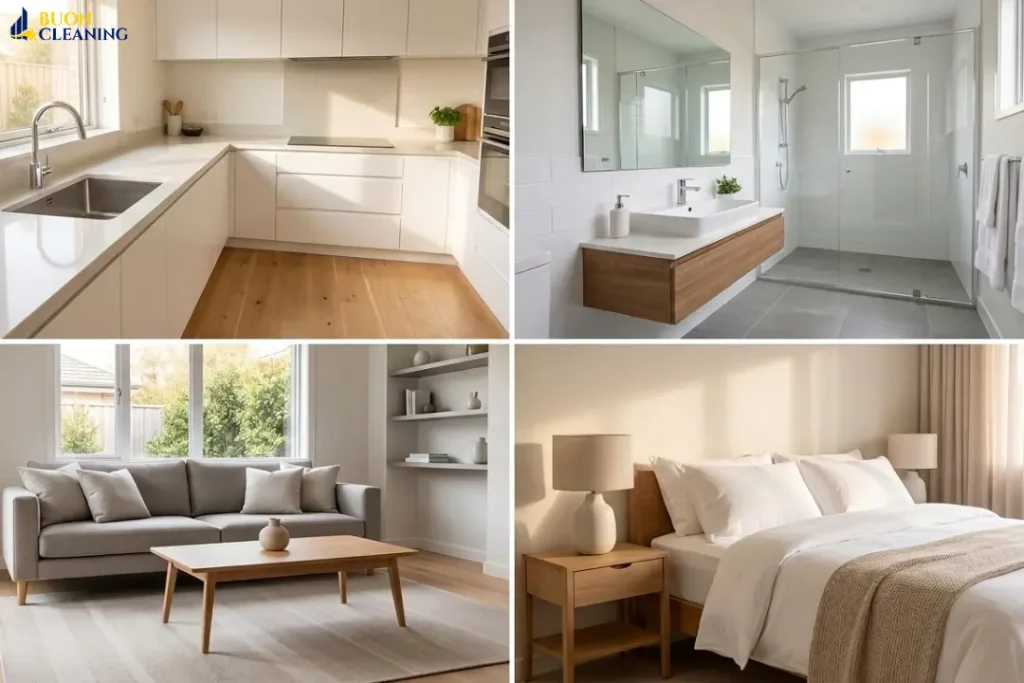
A room-by-room approach makes cleaning more manageable because each area has different hygiene needs. Instead of treating the whole home as one large task, divide your routine into smaller sections and follow a clear order.
This method helps you maintain a cleaner house while ensuring important areas are not forgotten during your regular cleaning routine.
1. The Kitchen (The Hygiene Hotspot)
The kitchen requires extra attention because it combines food preparation, moisture, and frequent daily use. A thorough kitchen clean should focus on removing grease, food residue, and hidden areas where odours can develop.
Use this kitchen cleaning checklist:
- Clean worktops and splashbacks: Remove food marks, grease, and spills after preparation.
- Sanitise the sink: Clean around the drain, taps, and edges where residue can collect.
- Scrub the hob: Remove burnt-on food and grease from cooking surfaces.
- Clean appliance exteriors: Wipe down the fridge, dishwasher, kettle, toaster, and other frequently touched surfaces.
- Empty and clean the toaster crumb tray: Small crumbs can build up and attract unwanted smells.
- Clean microwave splatters: Wipe the inside walls, plate, and door seal to remove food residue.
- Mop the floor: Remove dirt and spills from high-use areas around counters and cooking spaces.
One commonly overlooked area is the bottom of the rubbish bin, where dirt, bacteria, and unpleasant odours can accumulate over time. During professional house cleaning, checking and disinfecting the inside and outside of the bin helps prevent hidden odours caused by leaked liquids, food residue, and bacteria build-up.
2. The Bathrooms (The Descaling & Disinfecting Protocol)
Bathrooms need a combination of disinfecting and limescale removal because they are exposed to moisture, soap residue, and frequent use.
Follow this bathroom cleaning checklist:
- Sanitise the toilet completely: Clean the bowl, seat, lid, flush handle, and the area around the base.
- Scrub the basin: Remove toothpaste marks, soap residue, and water spots.
- Clean taps and fixtures: Remove fingerprints and mineral deposits.
- Descale shower glass: Treat water marks and limescale build-up to restore clarity.
- Wipe mirrors and surfaces: Remove streaks for a fresh finish.
- Mop the floor: Pay attention to corners and areas around the toilet and sink.
For stubborn limescale, many homeowners use a mixture of white vinegar and water as a simple cleaning solution. Always test any homemade solution on a small hidden area first and avoid using vinegar on surfaces that can be damaged by acids, such as some natural stones.
3. Living Rooms & Hallways (The High-Traffic Reset)
Living areas collect dust, clutter, and daily debris because they are used frequently. A consistent reset keeps these spaces comfortable and welcoming.
Include these tasks in your cleaning checklist:
- Remove clutter: Return books, toys, cables, and personal items to their correct places.
- Dust surfaces: Clean shelves, tables, ornaments, and furniture edges.
- Clean electronics carefully: Remove dust from TV screens, remote controls, and devices using suitable cloths.
- Fluff cushions and straighten soft furnishings: Restore a tidy appearance.
- Vacuum upholstery: Remove dust, crumbs, and pet hair from sofas and chairs.
- Vacuum high-traffic areas: Focus on entrances, hallways, and frequently used pathways.
- Clean floors: Vacuum carpets or mop suitable hard flooring.
Hallways and stairs often collect the highest amount of tracked-in dirt. Giving these areas regular attention creates an immediate improvement in how fresh the entire home feels.
4. Bedrooms (The Restful Sleep Sanctuary)
Bedrooms should feel calm, fresh, and comfortable. Regular cleaning reduces dust build-up and creates a more pleasant sleeping environment.
Include these bedroom tasks:
- Change bed linen: Replace sheets and pillowcases regularly based on your household routine.
- Dust bedside tables: Remove dust from lamps, books, chargers, and decorative items.
- Clean visible surfaces: Wipe wardrobes, drawers, and furniture tops.
- Vacuum under the bed: Remove hidden dust and debris from hard-to-reach spaces.
- Organise personal items: Keep surfaces clear to make future cleaning easier.
A simple bedroom routine takes only a short time but makes a noticeable difference. Keeping floors clear and surfaces organised reduces the effort needed during each cleaning session.
Time-Based Cleaning Cycles: Daily vs. Weekly vs. Monthly
A successful cleaning routine does not require spending hours every day. The most effective approach is to divide tasks based on how often they need attention.
A structured schedule prevents cleaning fatigue and helps you maintain a cleaner house without feeling overwhelmed. By separating daily maintenance, weekly cleaning, and monthly deep tasks, you can keep your home consistently fresh.
Daily Maintenance (The 15-Minute Daily Reset)
Small daily habits prevent dirt and clutter from building up. A quick reset at the end of the day keeps your home organised and reduces the amount of work needed later.
Your daily cleaning routine can include:
- Wipe kitchen worktops after use: Remove food residue, spills, and crumbs before they become harder to clean.
- Wash dishes or load the dishwasher: Prevent dirty dishes from creating odours and clutter.
- Put away stray items: Return shoes, clothing, toys, and personal belongings to their correct places.
- Clean high-use areas: Quickly wipe frequently touched surfaces when needed.
- Sweep visible dirt: Focus on kitchen floors, entrances, and other busy areas.
A short daily reset supports your wider Domestic Cleaning Checklist by keeping everyday mess under control. This allows your deeper cleaning sessions to focus on areas that need more attention.
Weekly Deeper Clean (The Consistent Core)
Weekly cleaning covers the essential tasks that maintain hygiene and appearance throughout your home.
A weekly cleaning checklist should include:
- Vacuum all floors: Remove dust, dirt, hair, and debris from carpets and hard flooring.
- Mop hard surfaces: Clean areas such as kitchens, bathrooms, and hallways.
- Scrub bathrooms thoroughly: Clean toilets, sinks, showers, taps, and mirrors.
- Change bed linen: Refresh sleeping areas and maintain comfort.
- Dust furniture and surfaces: Clean shelves, tables, skirting boards, and visible areas.
- Clean frequently touched items: Wipe handles, switches, and remote controls.
Completing these tasks weekly creates a strong foundation for your home cleaning routine and reduces the need for emergency cleaning before guests arrive.
Monthly Deep Maintenance (The Invisible Areas)
Some areas do not require weekly cleaning but still collect dirt, dust, and residue over time. Monthly maintenance targets these hidden spaces.
Include these deeper cleaning tasks:
- Clean inside appliances: Wipe areas such as the oven interior, fridge shelves, and washing machine seals.
- Clean skirting boards: Remove accumulated dust along walls and corners.
- Dust blinds and hard-to-reach areas: Prevent long-term dust build-up.
- Disinfect rubbish bins: Remove hidden bacteria and unwanted smells.
- Check neglected spaces: Clean behind furniture, inside cupboards, and other overlooked areas.
A balanced cleaning cycle makes your routine easier to manage. Instead of completing every task at once, you create a practical system that keeps your home maintained throughout the year.
Standard Clean vs. Deep Clean vs. End of Tenancy: What’s the Difference?
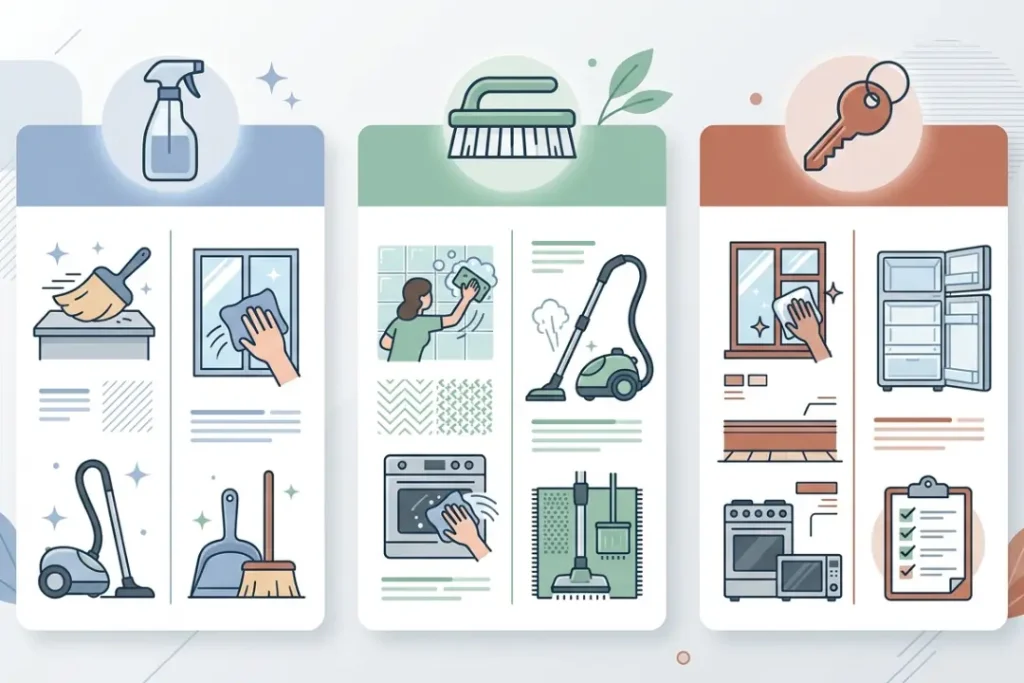
Not every cleaning situation requires the same level of effort. A regular home routine, a seasonal refresh, and a property handover each have different cleaning requirements.
Understanding the difference helps you choose the right service level and avoid paying for tasks you do not need. A standard clean maintains your home, while deeper services focus on areas that need extra attention.
| Cleaning Type | Frequency | Primary Focus Areas |
| Standard Clean | Weekly or bi-weekly | Surface dusting, vacuuming floors, mopping hard surfaces, routine bathroom cleaning, kitchen wipe-downs, and general tidying. |
| Deep Clean | Every 3 to 6 months | Detailed cleaning of overlooked areas, inside appliances, limescale removal, grout cleaning, skirting boards, and hard-to-reach spaces. |
| End of Tenancy Clean | When moving out | Cleaning inside cupboards, wall spot-cleaning, detailed window sills, appliance interiors, and preparing the property for inspection. |
Standard Cleaning: Maintaining Your Home
A standard clean focuses on keeping your home fresh and hygienic through regular maintenance. It covers the tasks that prevent everyday dirt, dust, and clutter from building up.
This type of cleaning works well for homeowners who already follow a consistent cleaning checklist and want support maintaining their routine.
Deep Cleaning: Restoring Neglected Areas
A deep clean goes beyond visible surfaces. It targets areas that are often missed during normal weekly cleaning, such as behind furniture, inside appliances, and detailed bathroom areas.
Many households schedule a deep clean during seasonal changes, after busy periods, or when they want to refresh their entire property.
End of Tenancy Cleaning: Preparing a Property for Handover
An end of tenancy clean requires a more detailed approach because the property needs to meet inspection expectations. It focuses on returning the home to a clean condition for landlords, letting agents, or new occupants.
A complete end of tenancy service usually includes areas that are not part of everyday cleaning, such as inside kitchen cupboards, appliance interiors, and detailed bathroom sanitisation.
Choosing the correct cleaning level ensures your time and budget are used effectively. Whether you need regular maintenance or a full property refresh, a structured approach delivers better results.
The Essential Domestic Cleaning Toolkit (Eco-Friendly & Safe)
Having the right cleaning tools makes your routine faster, safer, and more effective. A well-organised cleaning kit prevents unnecessary trips around the house and helps you complete each task with the correct equipment.
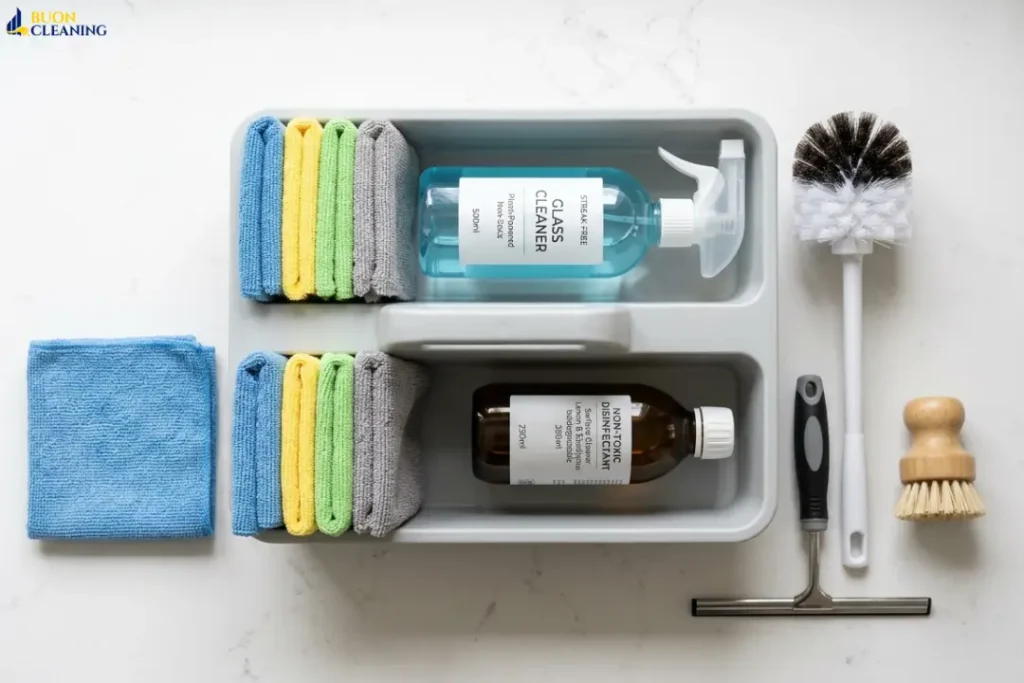
Professional cleaners often use a simple system with reliable products rather than a large collection of unnecessary items. A portable cleaning caddy keeps everything together, making it easier to follow your Domestic Cleaning Checklist from room to room.
Must-Have Cleaning Supplies for Every Home
A practical cleaning toolkit should include:
- Microfiber cloths: Ideal for dusting, wiping surfaces, and reducing streaks on glass and polished areas.
- Glass cleaner: Helps remove fingerprints, marks, and residue from mirrors and windows.
- Non-toxic disinfectant: Useful for sanitising frequently touched areas such as handles, switches, and kitchen surfaces.
- Toilet brush: Essential for maintaining bathroom hygiene and cleaning the toilet bowl effectively.
- High-efficiency vacuum cleaner: Helps remove dust, dirt, pet hair, and debris from carpets and hard floors.
- Portable cleaning caddy: Keeps products and tools organised so you can move easily between rooms.
Choosing Safer Cleaning Solutions
Many homeowners prefer eco-friendly cleaning products because they reduce the use of harsh chemicals inside the home. Always follow product instructions, avoid mixing different cleaning chemicals, and ensure rooms are properly ventilated while cleaning.
Simple solutions can also work well for everyday tasks. For example, a mixture of water and white vinegar is commonly used for cleaning mirrors and creating a clearer finish. However, it should not be used on acid-sensitive materials such as some natural stone surfaces.
Keep Your Cleaning System Organised
A tidy cleaning setup saves time before you even begin. Store your supplies together, label products clearly, and replace worn tools when needed.
A well-prepared toolkit turns cleaning from a stressful chore into a simple routine. Combined with a professional house cleaning checklist printable, the right equipment helps you maintain a cleaner and more organised home with less effort.
Why Choose Buon Cleaning for Your Domestic Cleaning Needs?
At Buon Cleaning, we help homeowners maintain clean, comfortable, and hygienic living spaces through reliable domestic cleaning services. Our approach focuses on attention to detail, consistent results, and cleaning solutions tailored to each home’s requirements. Whether you need regular cleaning support or a more detailed deep clean, our professional team helps take the stress out of household maintenance.
With a structured cleaning process and a commitment to quality service, Buon Cleaning makes it easier to enjoy a fresher home without spending your valuable time managing every task yourself.
Conclusion
A well-organised cleaning routine makes maintaining your home simpler and less stressful. A clear Domestic Cleaning Checklist helps you focus on essential tasks, save time, and create a healthier, more comfortable living space.
You do not need to clean everything at once. Start with a single 15-minute cleaning session, complete the most important tasks first, and build a routine that works for your lifestyle.
Keep your checklist accessible and update it based on your home’s needs. Whether you are maintaining your current property or creating a moving into a new house checklist, a structured approach helps you stay consistent.
For easier planning, turn this guide into your own professional house cleaning checklist printable and use it as a simple reference during your weekly routine.
A cleaner home starts with small, regular actions. Follow a proven system, stay consistent, and enjoy a fresher home with less effort.
FAQs
What is the first room you should clean in a house?
Start with the kitchen because it usually requires the most detailed cleaning. Completing this area first helps you handle the hardest tasks while your energy is highest.
What do professional cleaners never skip?
Professional cleaners focus on overlooked areas such as light switches, door handles, skirting boards, remote controls, and spaces behind the toilet.
How do I maintain a clean house when I am busy?
Use a simple daily reset by clearing clutter, wiping key surfaces, and keeping cleaning supplies organised for quick access.
How often should I deep clean my home?
Most homes benefit from a deep clean every few months to tackle areas missed during regular cleaning routines.
What should be included in a domestic cleaning checklist?
A complete checklist should cover kitchens, bathrooms, bedrooms, living areas, floors, dusting, sanitising, and high-touch surfaces.
Is a printable cleaning checklist useful?
Yes, a professional house cleaning checklist printable helps organise tasks, track progress, and maintain a consistent cleaning routine.

Leave a Reply