
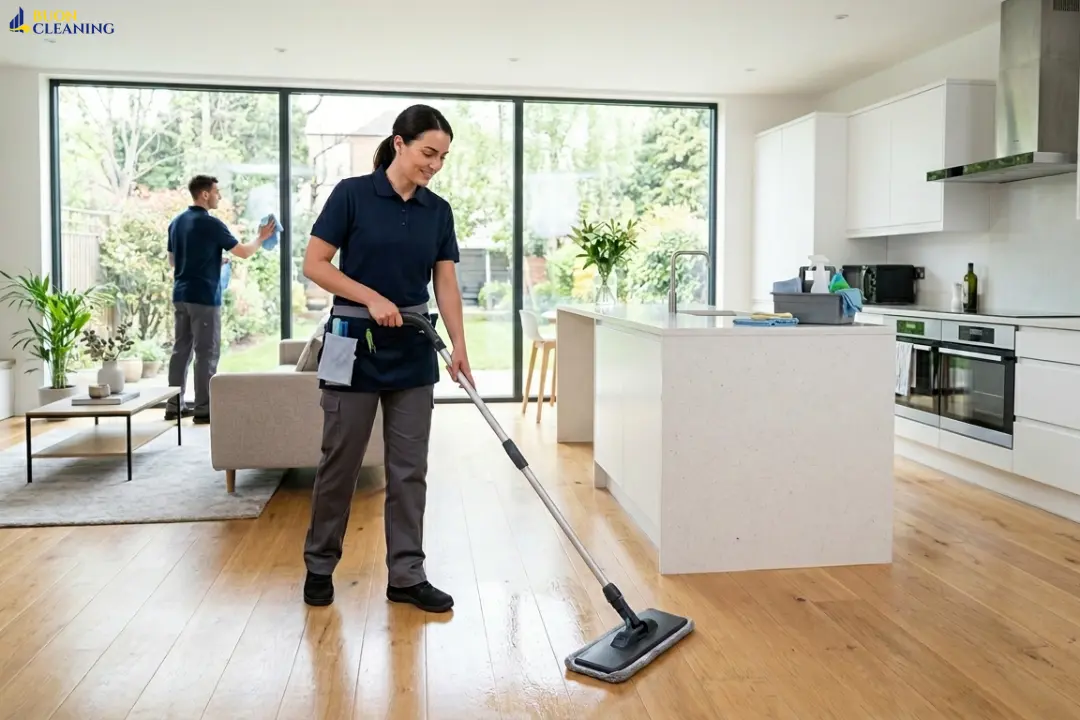
What’s Included in a Professional Deep Clean? Home vs Office Explained
A professional deep clean tackles the dirt and build-up that routine cleaning often misses. This can include grease, limescale, dust behind furniture, skirting boards, appliances, fixtures and frequently touched surfaces.
The exact checklist depends on the property. In homes, cleaners usually focus on kitchens, bathrooms, bedrooms and living areas. In offices, the priority shifts to desks, shared facilities, washrooms, flooring and high-contact points such as handles, switches and communal equipment.
This guide explains what is typically included in a home or office deep clean, how the two services differ and which tasks may need to be booked separately.
Table of Contents
What Is a Professional Deep Clean?
A professional deep clean is a more detailed service than routine cleaning. It targets built-up dirt, grease, limescale, stains and dust in areas that are often overlooked during regular visits.
Professional cleaners work through a property using suitable products, equipment and a room-by-room checklist. Typical tasks include:
- Cleaning behind and beneath furniture
- Removing grease and limescale build-up
- Wiping high-contact surfaces
- Cleaning skirting boards, fixtures and fittings
- Treating floors and carpets where included
- Reaching corners, edges and other neglected areas
Homeowners may book a deep clean when a property needs a thorough reset. Landlords often use it before new tenants move in, while businesses may arrange one to clean workspaces, communal areas and facilities beyond the usual maintenance routine.
How We Plan a Deep Clean
At Buon Cleaning, each deep clean is planned around the property’s size, condition, layout and access requirements. The checklist and any separately priced tasks are confirmed before work begins, so the customer knows exactly what the service covers.
Home Deep Cleaning: What Is Included?
A home deep clean covers built-up dirt and neglected areas that are not usually addressed during routine cleaning. The checklist varies by property and provider, so any specialist or additional tasks should be confirmed before booking.
Kitchen Deep Cleaning Checklist
Kitchens often require extra attention because grease, food residue and limescale can build up across appliances and work surfaces.
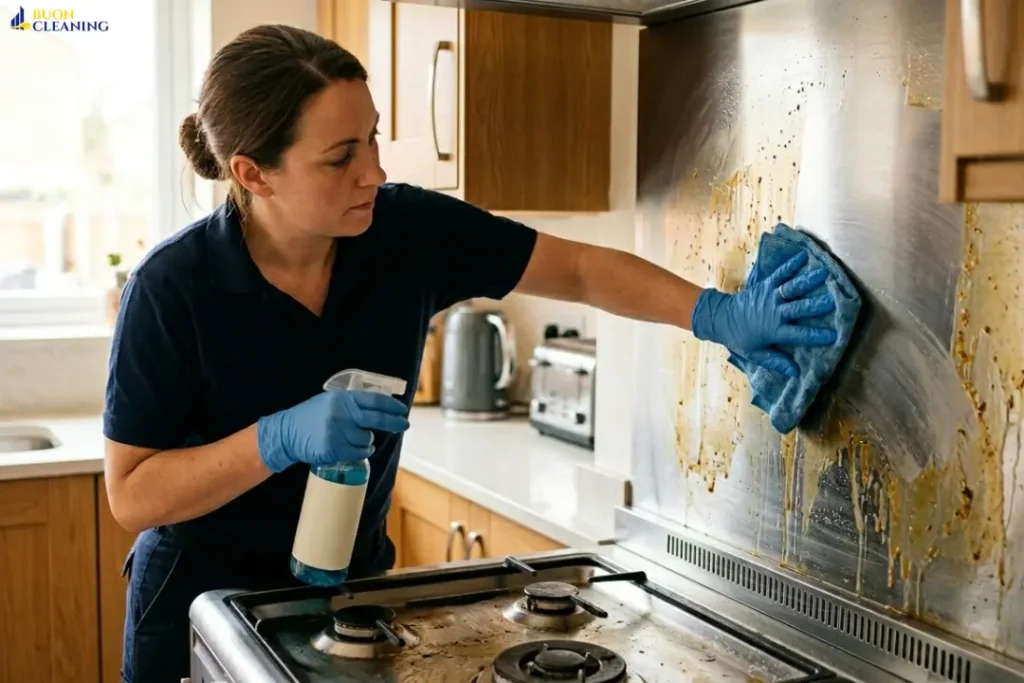
A kitchen deep clean may include:
- Degreasing cooker hoods, hobs and splashbacks
- Cleaning worktops, sinks and taps
- Removing limescale and food residue
- Wiping cupboard fronts, handles and kickboards
- Cleaning tiles, skirting boards and accessible wall surfaces
- Cleaning behind or beneath movable appliances
- Wiping appliance exteriors
- Emptying and cleaning bins
Bathroom Deep Cleaning Checklist
Bathrooms are prone to soap residue, limescale and moisture-related build-up, particularly around taps, tiles and shower fittings.
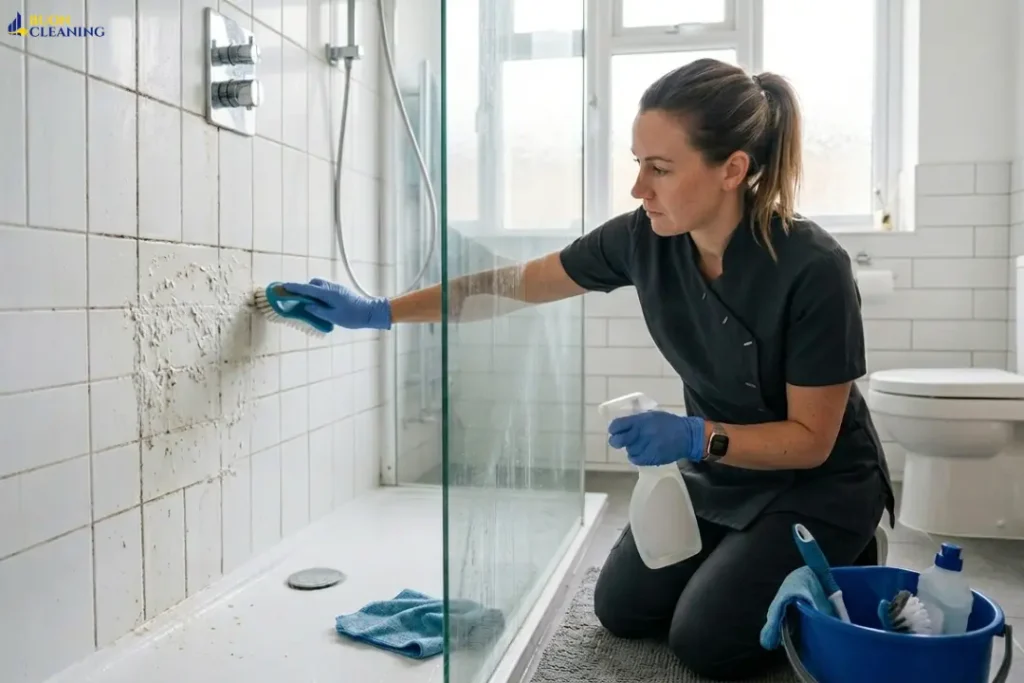
Tasks may include:
- Cleaning toilets, sinks, baths and showers
- Removing soap residue and limescale
- Scrubbing tiles and grout
- Cleaning mirrors, screens and glass surfaces
- Wiping taps, handles and fittings
- Cleaning extractor fan covers
- Wiping skirting boards, doors and frames
- Cleaning behind toilets and other accessible fixtures
Significant mould treatment may require a separate service, particularly where the cause is linked to leaks, ventilation or damp. Mould linked to leaks, damp or poor ventilation may need specialist treatment rather than routine cleaning.
Living Rooms and Bedrooms
Living spaces can collect dust beneath furniture, along edges and on surfaces that are missed during regular cleaning.
A deep clean may cover:
- Dusting furniture, shelves and decorative items
- Cleaning skirting boards, doors and frames
- Wiping switches, sockets and handles
- Cleaning radiators and accessible vents
- Vacuuming beneath beds and movable furniture
- Removing cobwebs from ceilings and corners
- Vacuuming carpets and mopping hard floors
- Cleaning internal window glass, frames and sills where included
Hallways, Stairs and Other Areas
A full home deep clean may also include:
- Vacuuming stairs and landings
- Cleaning bannisters and handrails
- Wiping entrance doors and high-contact areas
- Cleaning utility rooms and storage areas
- Dusting high-level ledges and reachable light fittings
The final checklist should reflect the size, condition and layout of the home, along with any agreed extras.
Office Deep Cleaning: What Does It Include?
An office deep clean targets built-up dirt in workspaces, shared facilities and high-traffic areas that routine cleaning may not fully address. The checklist depends on the building layout, number of employees, floor type and how each area is used.
Typical tasks may include:
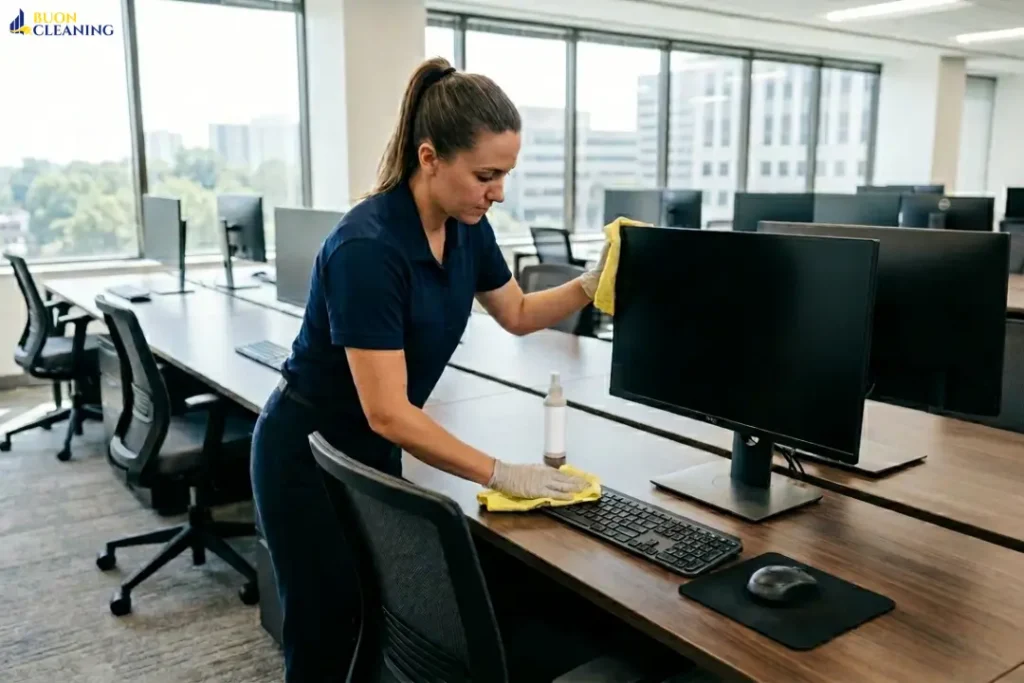
- Cleaning desks and workstations
- Wiping phones, keyboards and shared equipment
- Cleaning handles, switches and other frequently touched surfaces
- Deep cleaning staff kitchens and break areas
- Cleaning washrooms and accessible fixtures
- Vacuuming carpets and washing hard floors
- Cleaning reception areas and meeting rooms
- Emptying and cleaning waste bins
- Dusting skirting boards, ledges, vents and accessible high surfaces
- Cleaning internal glass, doors and partitions where included
Workstations and Shared Equipment
Desks, phones, keyboards, printers and meeting-room equipment are handled throughout the working day. Cleaners wipe these areas using methods and products suitable for office furniture and electronic equipment.
Personal paperwork, confidential documents and employees’ belongings are usually left untouched unless agreed in advance.
Staff Kitchens and Communal Areas
Shared kitchens and break rooms can collect grease, crumbs, spills and food residue.
A deep clean may cover:
- Worktops, sinks and taps
- Cupboard fronts and handles
- Appliance exteriors
- Tables and seating
- Splashbacks and accessible wall surfaces
- Bins and surrounding floor areas
Washrooms
Office washroom cleaning may include:
- Toilets, urinals, sinks and taps
- Cubicle doors and partitions
- Mirrors and dispensers
- Tiles, floors and skirting boards
- Handles, switches and other touchpoints
- Bins and sanitary waste areas where included
Restocking soap, toilet paper and other supplies is normally only included when this forms part of the agreed service.
Commercial Floors and Carpets
Office flooring receives heavier use than most residential floors. A deep clean may involve edge vacuuming, spot treatment, hard-floor washing and cleaning beneath movable furniture.
Reception Areas and Meeting Rooms
Client-facing areas usually receive detailed attention to maintain a clean and presentable appearance. This may include furniture, tables, internal glass, doors, flooring and shared presentation equipment.
The final office deep cleaning checklist should be agreed before work begins, particularly where the building has specialist flooring, restricted areas, sensitive equipment or industry-specific cleaning requirements.
Home Deep Clean vs Office Deep Clean: Key Differences
Home and office deep cleaning cover many of the same basic tasks, but the priorities differ.
A home deep clean is shaped by the way the household uses each room. It usually focuses on kitchens, bathrooms, bedrooms, living areas and built-up dirt in overlooked spaces.
An office deep clean is planned around shared use, heavier foot traffic and business operations. Greater attention is usually given to workstations, communal areas, washrooms, reception spaces and frequently touched surfaces.
| Area | Home Deep Clean | Office Deep Clean |
| Main purpose | Refresh living spaces and tackle built-up dirt | Clean shared, high-use and client-facing areas |
| Main focus | Kitchens, bathrooms, bedrooms and living rooms | Desks, meeting rooms, washrooms, kitchens and reception areas |
| Common issues | Grease, limescale, dust, pet hair and neglected areas | Floor traffic, shared equipment, waste areas and touchpoints |
| Equipment | Household cleaning tools and task-specific equipment | Equipment suited to larger floors, carpets and commercial spaces |
| Planning | Based on the property’s condition and household needs | Based on occupancy, access, working hours and building use |
The final checklist should reflect the property, its condition and the tasks agreed before the clean begins.
What Is Usually Not Included in a Deep Clean?
Deep-cleaning packages vary between providers. Some tasks require extra time, specialist equipment or separate treatment and may not be included in the standard price.
These can include:
- Oven and appliance interiors
- Fridge and cupboard interiors
- Carpet extraction and upholstery cleaning
- Machine scrubbing or polishing of floors
- External window cleaning
- Heavy mould treatment
- Moving heavy furniture
- Clearing or organising personal belongings
- Restocking office washroom supplies
Ask for a written checklist and itemised quote before booking so you know what is included and what will be charged separately.
Step-by-Step Professional Deep Cleaning Process
A professional deep clean should follow an agreed checklist rather than a general cleaning routine. The exact process varies by property, but it usually includes the following stages.
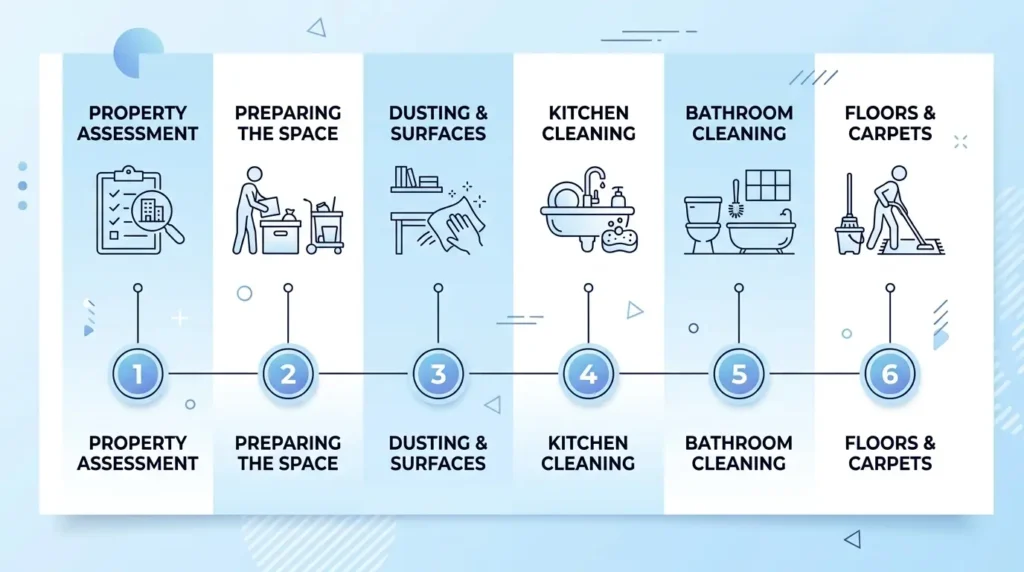
1. Property Assessment
The cleaner reviews the size, condition and layout of the property before work begins.
For homes, this may involve checking kitchens, bathrooms, flooring, built-up dirt and any requested extras. In offices, the assessment may also cover staff numbers, shared facilities, high-traffic areas, access restrictions and suitable cleaning times.
This allows the provider to confirm the scope, required equipment and expected completion time.
2. Preparing the Space
Surfaces and floors need to be accessible before detailed cleaning can begin.
Homeowners may be asked to remove personal belongings, clear worktops and provide access beneath movable furniture. Office staff may need to clear desks, secure confidential documents and make meeting rooms or restricted areas available.
Tidying, organising and moving heavy furniture are not always included in the service.
3. Dusting and Detailed Surface Cleaning
Cleaners usually work from high areas downwards to avoid spreading dust onto surfaces that have already been cleaned.
This stage may include:
- Removing cobwebs
- Dusting ledges, frames and accessible fittings
- Cleaning doors, skirting boards and radiators
- Wiping handles, switches and other touchpoints
- Removing marks from suitable washable surfaces
- Cleaning behind or beneath accessible furniture
Products should be chosen according to the material being cleaned, particularly for wood, natural stone, glass and electronic equipment.
4. Kitchens and Shared Food Areas
Kitchen cleaning usually focuses on grease, food residue and limescale around worktops, sinks, taps, splashbacks and appliance exteriors.
In office kitchens and break rooms, cleaners may also cover tables, shared appliances, cupboard fronts, bins and surrounding floor areas.
5. Bathrooms and Washrooms
Bathrooms and office washrooms are cleaned in detail, including toilets, sinks, taps, showers, mirrors, tiles and floors.
Office washrooms may also require cleaning dispensers, cubicle partitions, sanitary waste areas and frequently touched surfaces. Restocking supplies is only included where agreed.
6. Floors and Carpets
The final stages usually include vacuuming carpets, cleaning edges and mopping suitable hard floors.
Common Deep Cleaning Mistakes
Using Unsuitable Products
Strong chemicals are not suitable for every surface. The wrong product can mark wood, discolour fabric, damage natural stone or affect specialist floor finishes.
Cleaning Only What Is Visible
Areas behind furniture, beneath appliances, around skirting boards and along floor edges are easy to miss. These neglected spaces are often what separate a deep clean from routine cleaning.
Assuming Every Task Is Included
Deep-cleaning packages differ between providers. Compare the written checklist with the quote before work begins, particularly if you need specialist appliances, carpet, upholstery, floor or mould treatment.
Conclusion
A professional deep clean goes beyond routine maintenance by tackling built-up dirt and areas that are often missed during regular cleaning. Homes usually require more attention in kitchens, bathrooms and living spaces, while offices focus more on shared facilities, workstations, floors and high-use areas.
Before booking, ask for a clear checklist so you know what is included, what requires separate treatment and whether any additional charges apply.
Choosing a cleaner based on the property type, condition and required tasks helps avoid unexpected costs and ensures the service matches what the space actually needs.
FAQs
What is included in a professional deep clean?
A professional deep clean usually covers built-up dirt and areas that routine cleaning may miss. Common tasks include cleaning skirting boards, fixtures, doors, handles, work surfaces, bathrooms, kitchens, floor edges and accessible spaces behind or beneath furniture.
The exact checklist depends on the property and cleaning provider. Specialist services such as oven cleaning, carpet extraction and upholstery cleaning may need to be booked separately.
What does office deep cleaning involve?
Office deep cleaning usually covers workstations, meeting rooms, reception areas, staff kitchens, washrooms, floors and frequently touched surfaces.
The cleaner may also address ledges, skirting boards, internal glass, accessible vents and areas beneath movable furniture. Restricted spaces, sensitive equipment and confidential documents should be discussed before the clean begins.
How is deep cleaning different from regular cleaning?
Regular cleaning handles routine tasks such as dusting accessible surfaces, vacuuming, mopping and emptying bins.
Deep cleaning gives more attention to built-up dirt, floor edges, fixtures, skirting boards, neglected surfaces and spaces that are not normally covered during regular visits.
How often should a property be deep cleaned?
There is no fixed schedule that suits every home or office. The right frequency depends on occupancy, foot traffic, pets, flooring, property use, routine cleaning and the overall condition of the space.
A deep clean may also be useful before moving in, after moving out, following building work, before an inspection or when routine cleaning no longer addresses the build-up.
Are ovens, carpets and upholstery included?
Not always. Oven interiors, carpet extraction, upholstery cleaning and specialist floor treatments often require additional equipment and may be quoted separately.
Check the provider’s written checklist before booking rather than assuming these tasks are included.
Is professional deep cleaning useful for landlords?
A deep clean can help prepare a rental property for inspection or for new tenants by addressing built-up dirt and neglected areas.
However, professional cleaning does not guarantee the return of a tenancy deposit. Any cleaning requirements should be checked against the tenancy agreement, inventory and condition recorded at the start of the tenancy.

Leave a Reply