

The Ultimate Area Rug Cleaning Guide (UK Household Edition)
There’s something subtly satisfying about a carefully chosen area rug cleaning routine. It anchors a living room, softens hard floors, and in a British home, it takes an absolute beating. After muddy wellingtons from a countryside walk, a golden retriever shaking off rain by the entrance, and children dragging in that unmistakable East Midlands wet clay, your rug takes it all in without a single complaint.
Rugs function as passive air filters, trapping dust, pet dander, pollen, and fine grit within their fibres so these particles do not circulate freely through your home’s air. Research from the Carpet and Rug Institute confirms that properly cleaned carpets and rugs help trap allergens and other particles, preventing them from circulating in the air you breathe. This protective function is a genuine benefit but only when the rug is maintained properly. A neglected rug does not just look tired; it becomes a reservoir of allergens and grit that slowly grinds down the fibre structure from within, shortening the life of what could be a multi-decade investment.
This is where regular care becomes non-negotiable. Removing abrasive particles through consistent vacuuming and periodic deep cleaning prevents the kind of fibre-level wear that causes premature ageing, dull colours, and fraying edges. Specialist rug cleaners such as Buon Cleaning, trusted carpet and rug restoration experts in Nottingham, regularly see the effects of delayed maintenance rugs that could have been solved with a simple deep clean six months earlier now requiring full restoration work instead.
The guide below walks through everything you need to know: understanding your fibre type, building a weekly routine, tackling common British household stains, and crucially recognising when a rug needs professional attention before DIY methods cause permanent damage.
Table of Contents
Know Your Fibres: The Golden Rule of Rug Care
Before using any cleaning solution, it’s important to understand the material your rug is made from. The single most common mistake UK homeowners make is applying a high-street supermarket cleaner formulated for synthetic wall-to-wall carpeting to a delicate wool, viscose, or jute rug. The consequences can be irreversible: stripped lanolin oils, bled dyes, or a rug that dries stiff and misshapen.
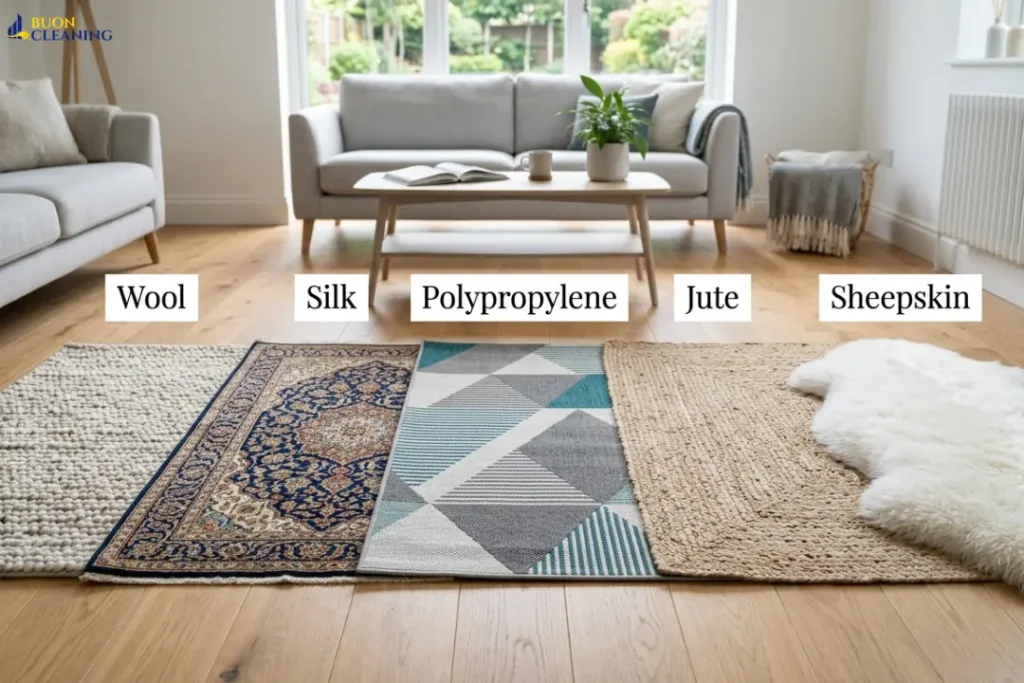
Wool and Silk Rugs (Natural Fibres)
Wool is considered one of the most durable natural fibres used in flooring. A well-maintained hand-knotted wool rug can last anywhere from 20 to 100 years. However, resilience does not mean invincibility. Wool is acutely sensitive to high-pH detergents anything strongly alkaline will strip the natural lanolin from the fibre, causing brittleness and colour loss. Experts regularly advise using pH-neutral cleaning solutions, typically between pH 5 and 9, for wool and other natural fibres.
Actionable tip: When vacuuming a wool rug, disengage or turn off the beater bar (the rotating brush bar in most upright hoovers). The harsh bristles of a strong beater bar can tug at wool loops, leading to pilling, shedding, and fuzz buildup. Use suction only, or set the beater bar to its highest position so it barely grazes the pile. Vacuum specialist Rug Chick advises turning the brush off entirely on woven and hand-tufted wool rugs to avoid pulling out fibres that would otherwise settle naturally.
Silk rugs are far more delicate than wool and should rarely be cleaned with DIY wet cleaning methods. The dyes used in hand-knotted silk Oriental rugs are frequently unstable in water, making catastrophic dye bleeding a genuine risk.
Synthetic Rugs (Polypropylene, Polyester, Nylon)
Good news for owners of polypropylene, polyester, and nylon rugs: these materials are considerably more robust than natural fibres. Synthetic fibres are inherently stain-resistant and generally tolerate mild, water-based DIY cleaning far better. They do not contain the lanolin oils that make wool sensitive to alkaline solutions, and their dyes are typically more stable.
Polypropylene rugs in particular are popular in UK homes precisely because of their hardwearing nature and resistance to moisture. That said, synthetic rugs are not indestructible excessive heat (from steam cleaners or radiators used for rapid drying) can cause warping, and aggressive scrubbing will still damage the pile over time. Treat them firmly but sensibly.
Specialist Materials: Sheepskin, Jute, and Shag Pile
These three categories need individualised care because their construction or fibre composition creates specific vulnerabilities.
Shag pile rugs have long, deep fibres that trap grit not at the surface but at the very base of the pile, closest to the backing. Regular surface vacuuming often misses this deep-seated debris entirely. Upright vacuums with aggressive beater bars should never be used on shag rugs the long fibres can catch in the rotating mechanism and cause serious damage. Instead, flip the rug regularly, vacuum the backing from underneath, and consider hand-shaking the rug outdoors to dislodge particles from the base.
Jute rugs are produced from natural plant-based cellulosic fibres, making them particularly prone to moisture damage.
When jute becomes saturated, the natural oils and tannins within the fibre are released, causing irreversible dark brown discolouration a process known as cellulosic browning. According to fibre chemistry experts, cellulosic browning is a yellow, brown, or reddish discolouration caused by the breakdown of cellulose when exposed to moisture. This is not a stain that can be cleaned off; it is a permanent chemical change within the fibre itself. The best approach for jute is to keep it as dry as possible and limit any wet cleaning to an absolute minimum.
Sheepskin rugs need specialised detergents designed specifically for suede and leather. Even standard non-bio washing detergents can strip the natural oils from the hide, causing the backing to become stiff and brittle. Always choose a cleaning product specifically designed for sheepskin or suede.
Routine Maintenance: The Weekly British Battle Against Dust and Mud
In the United Kingdom, mud is a year-round companion. Between October and April, it is almost unavoidable; between May and September, we simply get different kinds of mud. Consistent weekly maintenance is what separates a rug that looks good for thirty years from one that looks tired after five.
Step 1: The Dual-Sided Vacuuming Technique
Most people vacuum only the top face of their rug. This is understandable but insufficient. Fine dust particles do not stay at the surface they filter downward through the pile and settle at the base of the fibres and on the backing. Over time, this compacted layer of fine grit acts like sandpaper on the structural yarns every time someone walks on the rug.
The correct technique is to vacuum the top surface of the rug, then flip the rug over and vacuum the backing as well. This dislodges the fine particles that have settled below the pile and are invisible from above. Dust them out onto the floor and then vacuum the floor before flipping the rug back.
Step 2: The Traditional Line Bash
For rugs that can be moved anything up to a medium-sized hallway runner the line bash remains one of the most effective ways to dislodge deeply embedded dry grit that a vacuum alone cannot reach.
Drape the rug over a sturdy washing line, fence, or balcony railing. Using the back of a broom or a dedicated rug beater, work along the surface in firm, even strokes. You will be surprised by the volume of fine dust that falls away, particularly from rugs in hallways and living rooms with heavy foot traffic.
A note of caution: Avoid vigorous beating on latex-backed rugs or heavily glued tufted rugs. The impact can cause the latex layer to crack and separate from the pile, which is both unattractive and irreparable.
The golden rule of this entire step and indeed of most rug cleaning is to remove all dry particulate matter before any liquid is applied. Applying water or cleaning solution to a rug still carrying dry soil simply turns that soil into mud, pushes it deeper into the fibres, and makes it far harder to remove.
How to Clean an Area Rug at Home (UK Step-by-Step)
When routine vacuuming is no longer enough and a rug needs a proper clean, the following process works safely on most synthetic and wool rugs in moderate condition. Always read care labels first, and treat any specialist or high-value rug with extra caution.
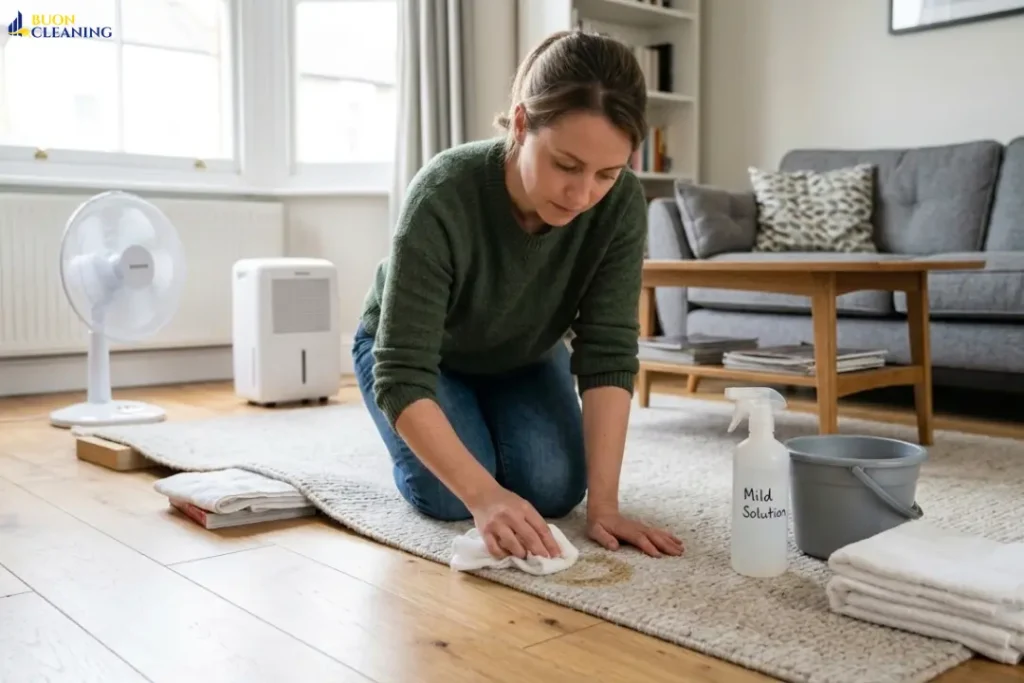
Step 1: The Inconspicuous Patch Test
Before applying any cleaning solution homemade or commercial to a visible area of the rug, test it on a hidden corner or underneath the rug at the edge. Dampen a clean white microfibre cloth with the solution and press it firmly onto the test area for thirty seconds. Then check the cloth for any colour transfer. If dye has bled onto the cloth, stop immediately and call a professional. Dye bleeding that occurs during cleaning will only get worse, and there is no reliable DIY fix once the colours have run.
This test is non-negotiable for any rug with rich or dark colours, any hand-knotted piece, or any rug you are not certain about.
Step 2: Preparing a Fibre-Safe Solution
For most domestic cleaning tasks, a simple homemade solution is both effective and safe: mix one teaspoon of mild washing-up liquid or non-bio laundry liquid into approximately 500ml of lukewarm water. The water should be warm but not hot heat can cause natural fibres to shrink or dyes to become unstable.
Do not use bleach, ammonia-based products, or any cleaner with optical brighteners on a wool, silk, or jute rug. If in doubt, use less solution rather than more.
Step 3: The “Dab, Don’t Scrub” Application
This is the step most people get wrong. Scrubbing a stain does not remove it it spreads it outward, pushes it deeper into the fibre, and damages the pile structure. The correct method is to work with a damp sponge or clean cloth using gentle, circular dabbing motions, starting from the outer edge of the stained area and working inward. This prevents the stain from spreading further.
Apply the cleaning solution sparingly. The aim is to dampen the fibres of the rug, not to saturate the backing. Saturation of the backing especially on rugs placed over wood or laminate floors creates several serious problems: it causes dye transfer between the rug and the floor, it encourages mould and mildew growth within the backing material, and on laminate in particular it can cause warping and swelling of the floor underneath. According to SharkNinja UK home care guidance, non-saturation methods are specifically recommended to prevent moisture-related damage to both the rug and the floor beneath.
Apply the solution in small amounts, blot with a dry cloth, and repeat rather than applying a large amount all at once.
Step 4: The Critical UK Drying Phase
Drying is arguably the most important step of the entire process and the one most frequently mishandled in the British climate. A rug that is cleaned and dried quickly will look and smell good. A rug that is left damp will develop mould, mildew, and a persistent sour odour that no amount of surface cleaning will remove.
Given that the UK doesn’t always offer the kind of dry, sunny conditions ideal for outdoor drying, indoor drying methods are often required:
- Dehumidifier: Running a dehumidifier in the room significantly accelerates drying by drawing moisture out of the air. This is the single most effective indoor drying method.
- Elevated drying: Prop the rug up on drying racks or chairs so that air can circulate underneath as well as above. Flat drying on a solid floor traps moisture against the backing.
- Fan or open window: A gentle airflow across the rug speeds evaporation. Position a fan to blow across the surface of the rug rather than directly at it to avoid disturbing the pile.
- Avoid radiators: Placing a rug directly on or immediately in front of a radiator dries it unevenly and can cause shrinkage or rippling in natural fibres.
Do not replace the rug on the floor until both the pile and the backing are completely dry to the touch.
The UK Stain Guide: How to Treat Common Household Spills
When it comes to stain removal, speed is the most critical factor. The faster you act, the less the staining compound has penetrated the fibre, and the easier it will be to lift. Always blot never scrub.
Red Wine and Coffee Spills
Both red wine and coffee contain strong pigments tannins and anthocyanins in wine, and melanoidins in coffee that can permanently bind to rug fibres if allowed to dry.
Immediate action: Blot up as much of the liquid as possible using a clean white cloth or white kitchen roll. Use a gentle press-and-lift technique instead of rubbing. Keep blotting until the cloth no longer picks up any colour.
Baking soda paste treatment: Mix three parts baking soda to one part cold water to form a thick paste. Apply the solution generously to the affected area and gently work it into the fibres by pressing it in. The alkalinity of the baking soda draws the pigment upward out of the fibre. Leave the paste in place until it is completely dry several hours or overnight and then vacuum it away. This method is well-documented by UK cleaning professionals and is safe on most rug types including wool.
If a faint stain remains after vacuuming the paste, gently blot the area with a diluted white vinegar solution (one part vinegar to two parts water) to help lift any remaining pigment. Blot, do not saturate, and dry thoroughly.
Dried Mud and Outdoor Grime
The golden rule for mud and it goes against every instinct is to leave it alone until it has dried completely. Attempting to clean wet mud pushes the soil deeper into the fibre structure and spreads the affected area considerably. Cleaning specialists and UK carpet care professionals are unanimous on this point: wet mud spreads easily, dragging dirt and oils deeper into the pile. Letting it dry first allows it to harden and lift off cleanly.
Once the mud has dried fully (allow at least 24 hours), gently break up the dried crust with a soft brush and vacuum the debris away using a strong suction setting. For any remaining marks or discolouration, use a gentle solution of equal parts white vinegar and water, apply it with a damp cloth, blot rather than scrub, and then dry the area thoroughly as described in Step 4 above.
Pet Accidents and Odour Eradication
Pet urine presents a dual challenge: the visible stain and the persistent odour caused by uric acid crystals that bond to fibre as the urine dries.
For fresh accidents: Blot up as much liquid as possible immediately using a thick layer of white kitchen roll or a clean white cloth. Press firmly and continue blotting, using clean sections of the cloth each time, until you’ve removed as much moisture as possible.
For odour: A spray solution of equal parts white vinegar and water can help neutralise the ammonia in fresh urine and reduce the immediate smell. Apply the solution, let it sit for five to ten minutes, and then blot the area dry. The acidity of white vinegar works against the alkaline salts in urine, helping to break them down.
However and this is important white vinegar alone does not fully eliminate the deep-set odour from dried urine. The uric acid crystals responsible for the lingering odour need an enzymatic cleaner to effectively break them down. Enzymatic cleaners contain live bacteria that digest the organic compounds in urine, neutralising the odour at its source rather than merely masking it. These are widely available in UK pet shops and online. Always check that any enzymatic product is safe for use on your specific rug fibre type before applying.
For pet stains on valuable rugs, or when urine has soaked through to the backing or underlay, professional extraction is usually the most effective solution.
When to Step Back: Recognising When Your Rug Needs Professional Intervention
DIY cleaning is appropriate for routine maintenance and for treating fresh, minor stains on robust synthetic or wool rugs. But there is a category of situations where attempting home cleaning is more likely to cause permanent damage than to solve the problem.
Cellulosic Browning
As discussed in the fibre section, any rug with a cotton, jute, or rayon component whether in the pile or the backing is at risk of cellulosic browning when exposed to excessive moisture. This manifests as yellow, brown, or orange discolouration that appears during or after cleaning. It is not a surface stain; it is a chemical reaction within the fibre caused by moisture activating the natural tannins and lignins in the cellulose. Professional cleaners with specialist drying equipment and acidic rinse agents can mitigate this risk in ways that are simply not possible with home cleaning methods.
Dye Bleeding
Many hand-knotted Oriental, Persian, and antique rugs use natural vegetable dyes or older synthetic dyes that are sensitive to water and pH changes. Once dye has bled particularly when dark colours migrate into cream or ivory fields the result is typically irreversible without professional restoration. If a patch test shows any dye transfer whatsoever, do not proceed. A professional rug cleaning Nottingham specialist will assess dye stability before cleaning begins and adjust their approach accordingly.
Shrinkage and Rippling
Wool and natural fibre rugs that are over-wetted or subjected to heat during drying can shrink, causing the rug to buckle, ripple, and lose its flat shape. A rippled rug is not only unsightly but becomes a trip hazard. Professional rug cleaning facilities use controlled immersion, temperature-regulated washing, and specialist drying frames that maintain the rug’s dimensions throughout the process.
Investment and Heirloom Pieces
Antique wool rugs, hand-knotted silk Orientals, and heirloom pieces that have been passed through a family should be cleaned professionally every two to five years, depending on placement and foot traffic. The value both financial and sentimental of these pieces makes the professional rug cleaning cost a straightforward investment in protection. The Carpet and Rug Institute’s research reinforces that regular professional cleaning removes the abrasive particles that degrade fibre integrity over time, extending the rug’s functional lifespan considerably.
Conclusion
A well-maintained area rug is one of the few home furnishings that genuinely improves with age but only if it is cared for correctly. The principles distilled throughout this guide come down to three habits: act immediately when spills happen, maintain a consistent dry routine to stop grit from accumulating, and know the limits of what DIY cleaning can safely achieve.
For UK homeowners in Nottingham and the surrounding areas, Buon Cleaning offers specialist deep extraction cleaning for rugs and carpets of all fibre types and origins. Whether it is a modern polypropylene runner that needs refreshing or a hand-knotted Persian that has not been professionally cleaned in a decade, their team assesses each piece individually before any cleaning begins.
Get a free, no-obligation quote today at buoncleaning.co.uk and give your rugs the care they deserve.
FAQs
Can I wash an area rug with a carpet cleaner machine?
Yes, but only for suitable synthetic rugs. Avoid using machines on wool, silk, or antique rugs as they may cause damage.
How do you deep clean a large rug without taking it outside?
Vacuum thoroughly, lightly spot clean with mild detergent, and dry the rug with fans or a dehumidifier to prevent dampness.
How much does it cost to get a rug cleaned professionally in the UK?
Costs vary by size and material. Professional rug cleaning services provide tailored quotes based on your rug’s specific needs.
Is baking soda safe for cleaning all types of rugs?
Baking soda works for some synthetic rugs but should be used carefully on wool rugs to avoid fibre damage.
How often should household area rugs be deep cleaned?
Most rugs need professional cleaning every 12–18 months, or more often for homes with pets, children, or heavy foot traffic.

Leave a Reply