
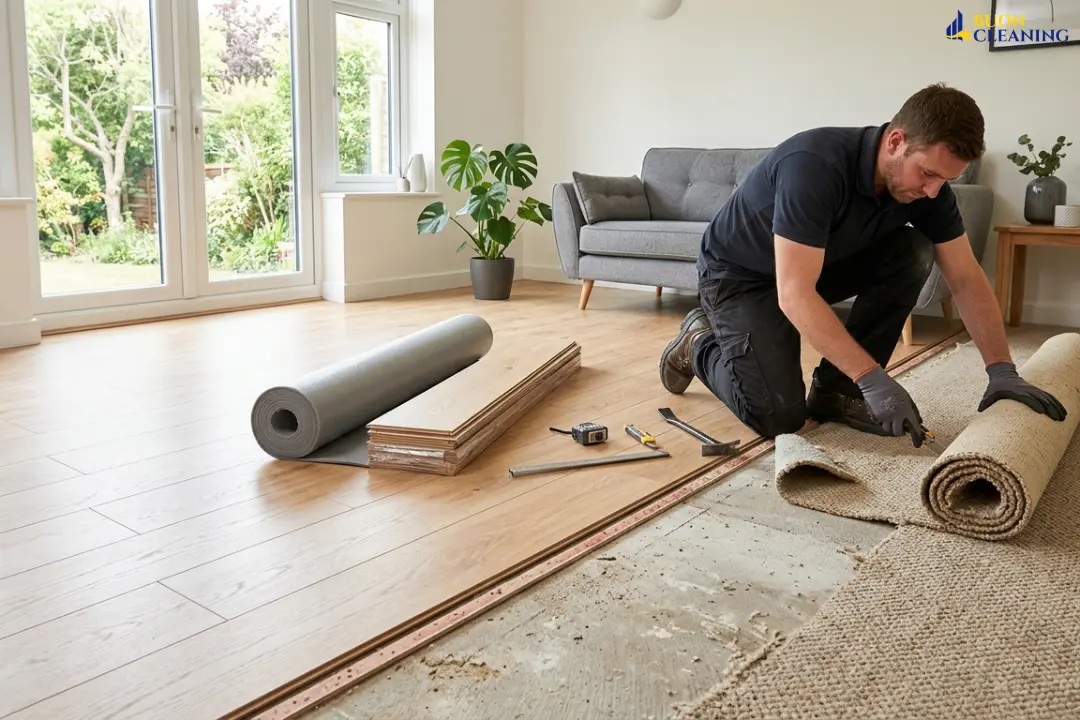
How Long Does It Take to Remove Carpet and Fit Laminate Flooring?
Removing carpet and fitting laminate takes around one day for a single average room and two to four days for a three bedroom house. Add 48 hours before any of that for the laminate to acclimatise in the room, which is the step most people find out about too late.
So a job you expected to finish on Saturday usually needs the boards delivered on Thursday.
Worth saying upfront: Buon Cleaning is a cleaning company, not a flooring fitter. What follows is the realistic timeline and what tends to go wrong with it, plus the parts we deal with every week, which is the carpet coming up and the mess it leaves behind afterwards.
Table of Contents
How Long the Whole Job Takes
Fitting time comes down to room size and how straight the walls are. Carpet removal is faster than most people expect. Preparation is what eats the days.
| Job | Time needed |
| Laminate acclimatising in the room | 48 hours, before fitting starts |
| Removing carpet from one room | 30 to 60 minutes |
| Fitting laminate in one room (15 m²) | 4 to 6 hours for a fitter |
| Same room, DIY first time | A full day |
| Whole three bedroom house | 2 to 4 days |
| Levelling an uneven subfloor | Add 1 day, plus drying time |
| Stairs | Add half a day to a full day |
A fitter working alone on a straightforward rectangular room will be done by mid-afternoon. A first-timer working from YouTube on that same room will be at it until evening. Neither is a problem, but only one of them fits into a weekend without stress.
The 48 Hour Step Everyone Forgets
Laminate needs to sit in the room it is going into, packs unopened and laid flat, for at least 48 hours before anyone starts fitting.
The boards expand and contract with temperature and humidity. Lay them straight off a cold delivery van and they will do that adjusting after they are down, which means buckling in the middle of the room or gaps opening along the edges within a few weeks. Neither is fixable without lifting the floor again.
Most manufacturers write it into the warranty terms too, so skipping it can cost you the cover as well as the floor. Check the pack, because a few brands want 72 hours.
In practice this just means ordering the flooring two or three days before you plan to start, rather than collecting it on the morning.
Removing the Old Carpet
The part everyone dreads, and genuinely the easiest stage of the job.
How Long Carpet Removal Takes
Roughly 30 to 60 minutes for an average bedroom, including the underlay and the gripper rods. A living room takes longer, though most of that is shifting furniture rather than dealing with the carpet.
Cut it into strips about a metre wide with a sharp utility knife before you start pulling. A whole room of carpet is surprisingly heavy and close to impossible to get through a doorway in one piece.
Gripper Rods, Staples and Underlay
Under the carpet there is underlay, usually stapled down, and gripper rods nailed around the edges of the room with tacks pointing up.
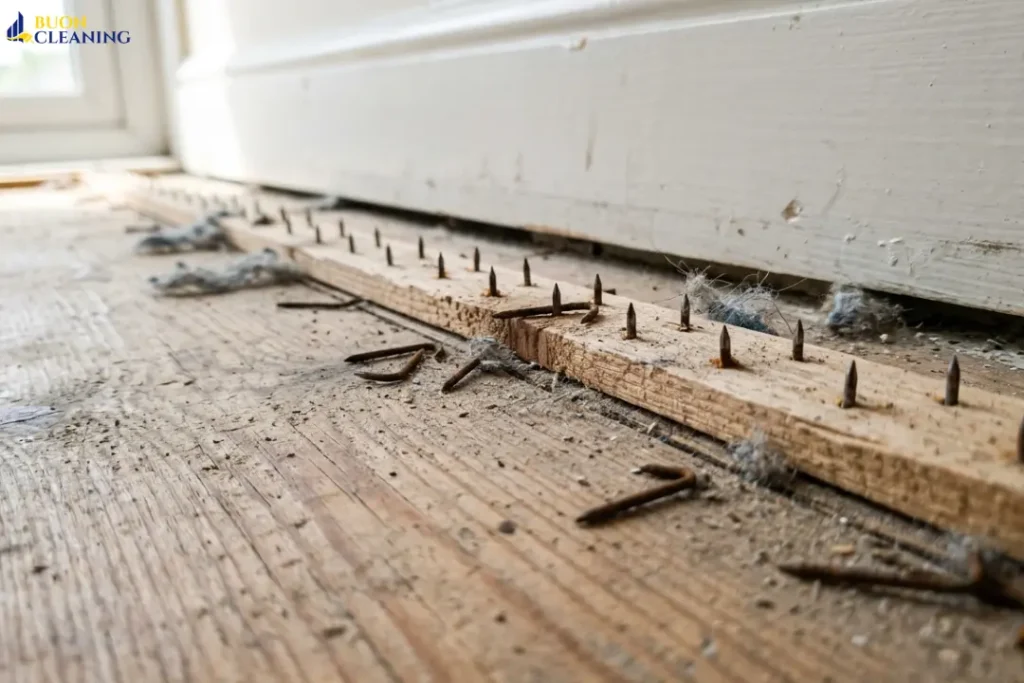
Take the underlay up first. Old foam underlay tends to crumble rather than lift, so expect to be sweeping as you go. Then lever the gripper rods off with a pry bar, using a scrap of wood underneath to protect the floor. Wear gloves. Gripper rod tacks are sharp and they do not care how careful you were being.
Pull or knock down every staple left behind. Anything sitting proud will telegraph through the new underlay and you will feel it underfoot for the next fifteen years.
What to Do With the Old Carpet
Nobody warns you about this one, and it is what stalls the job.
Rolled and taped carpet from a three bedroom house will not go in a wheelie bin, and plenty of UK councils classify carpet as construction waste at the tip. That means either a charge or a flat refusal, so check your own council’s rules before loading the car.
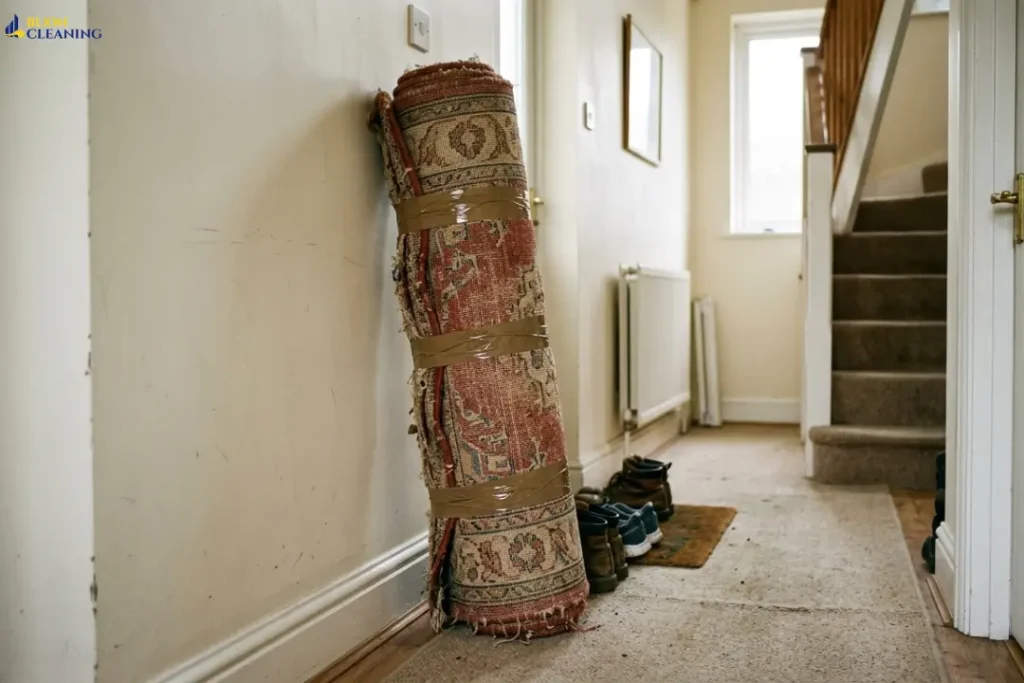
Your options:
- Council bulky waste collection. Usually £15 to £40 for a few items, booked online, often a week or two of waiting.
- Household waste recycling centre. Free at some councils, charged at others. Ring first.
- Skip hire. £150 to £300 for a small skip, only worth it if you are clearing other things at the same time.
- Ask the fitter. Many include removal and disposal in their quote. Worth asking before you assume it is your problem.
Clearing a larger amount? Our guide to house clearance costs covers the pricing.
What Slows the Job Down
An Uneven Subfloor
The biggest single cause of overruns. Laminate needs a flat base, and old floorboards are rarely flat once the carpet comes off them.
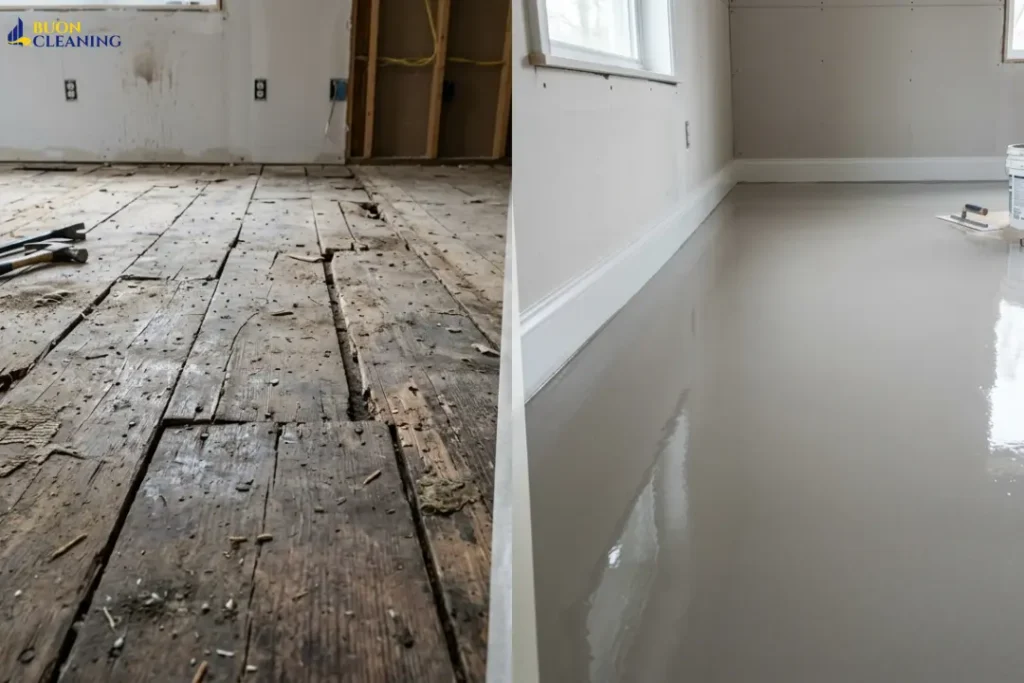
Minor dips can be sorted with hardboard or plywood sheeting laid over the top, which adds a few hours. Anything worse needs self levelling compound, which adds a day to apply and at least another 24 hours of drying before you can put anything on it.
You will not know which one you are dealing with until the carpet is up. Build a contingency day into the plan.
Doors That No Longer Close
Laminate plus underlay adds roughly 10mm to 15mm to your floor height. Carpet squashed down under a door. Laminate does not, so internal doors that used to clear the floor will catch on the new one.
Each door has to come off, get trimmed along the bottom, and go back on. Allow 30 minutes a door, more with a hand saw than a circular saw.
Skirting Boards and Beading
Two ways to handle it. Take the skirting off, fit the floor, then refit the skirting over the expansion gap, which looks far better and takes much longer. Or leave the skirting where it is and cover the gap with scotia beading, which is quick and visibly a compromise.
Removing and refitting skirting adds most of a day to a whole-house job, plus filling and repainting afterwards.
Awkward Rooms and Stairs
Bay windows, alcoves, fireplaces and radiator pipes all mean cut boards, and every cut costs time. A square bedroom goes fast. A living room with a bay and a chimney breast can take twice as long for the same floor area.
Stairs are a job in their own right. Budget half a day to a full day, and be aware that most fitters price stairs separately from the rest of the house.
What It Costs
| Item | Typical UK cost |
| Laminate boards | £8 to £30 per m² |
| Premium water resistant boards | £30 to £45 per m² |
| Underlay | £3 to £8 per m² |
| Fitting labour | £8 to £20 per m² |
| Carpet removal and disposal | £2 to £5 per m², or £50 to £150 per job |
| Subfloor levelling | £5 to £15 per m² |
| Scotia beading | £3 to £6 per metre |
| Threshold bars | £10 to £20 each |
For whole rooms, a 20 m² living room lands at roughly £400 to £900 supplied and fitted. A three bedroom house at around 60 m² comes to £1,000 to £2,700, depending on board quality and how much subfloor work turns up.
Doing it yourself saves the labour, which is usually 40 to 50 per cent of the total. It costs you a weekend and the risk of an expensive mistake on a floor you will be looking at for a decade.
Should You Replace the Carpet or Clean It?
Worth asking honestly before you commit, because these two options are nowhere near the same money.
| Option | Cost per room | Lifespan gained |
| Professional carpet clean | £25 to £75 | 12 to 24 months |
| New laminate, supplied and fitted | £400 to £900 | 15 to 20 years |
Cleaning costs about a tenth of replacing. On carpets that are dirty rather than worn out, it usually gets them back to something you are happy to live with. Traffic lane greying, general dulling and most staining all come out. Our carpet cleaning cost guide has the full pricing.
Replacing is the right call when the pile has been walked flat and no longer stands up, when the backing has delaminated and the carpet ripples, when pet contamination has reached the subfloor, or when you simply want a hard floor for allergies or pets.
Not sure which camp yours is in? A professional clean is a cheap way to find out. Worst case you spend £60 and confirm it needs replacing. Best case you keep the carpet another two years, and there is more on stretching that out in our guide to keeping carpet looking new.
The Mess Afterwards
The part nobody puts in the plan, and the part we get called about.
Why Carpet Removal Makes So Much Dust
A carpet that has been down ten years is holding a decade of dust, skin cells, dust mite allergen and grit at the base of the pile and in the underlay beneath it. Vacuuming never reached most of it.
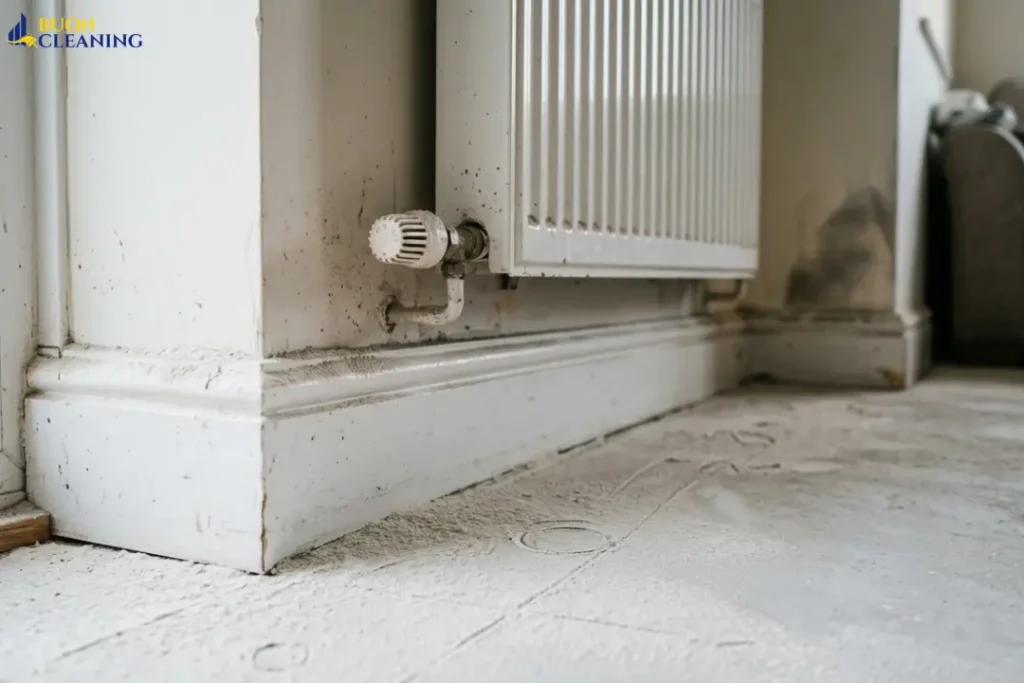
Lifting that carpet puts a good share of it into the air all at once. Old foam underlay is the worst culprit, because it breaks down over time into a fine orange-yellow powder that gets absolutely everywhere.
Before you start: shut internal doors, tape plastic sheeting across the doorways of rooms you are not working in, open the windows, and get curtains and soft furnishings out of the room if you can. Anyone in the house with asthma or a dust allergy is better off somewhere else for the day.
What Needs Cleaning Once the Floor Is Down
Cutting laminate throws out very fine board dust that drifts well past the room you are working in. Expect to find it on top of door frames, along picture rails, on radiators and inside light fittings.
Plan on cleaning twice. Once straight away, then again a day or two later once everything still hanging in the air has landed.
Use a vacuum with a HEPA filter if you have one, because a standard filter puts the fine particles straight back into the room. Work top down, shelves and frames first, then surfaces, floor last. Wipe rather than dust, since dry dusting just relaunches it.
If it was a bigger job across several rooms, our guides to deep cleaning before moving in and cleaning a neglected house cover the same approach at scale.
Looking After Laminate Once It Is Fitted
Laminate is easy to keep clean and easy to ruin. The difference is water.
Never soak it. Laminate has a fibreboard core, and water getting into the joints swells that core permanently, lifting the edges of the boards. Once that happens the only fix is replacing the affected planks.
The practical rules:
- Sweep or vacuum on the hard floor setting, brush roll off
- Mop with a barely damp microfibre mop, wrung out properly
- Wipe spills as they happen rather than leaving them
- Do not use a steam mop. Steam forces moisture into the joints, and most manufacturers void the warranty over it regardless of what the mop packaging claims
- Felt pads under furniture legs, and a doormat at every external door to stop grit being dragged across it
Done properly, a decent laminate floor still looks good after fifteen years. Most of the ones that fail early failed because somebody mopped them wet.
Pulling up carpet in the next few weeks? Buon Cleaning handles the deep clean afterwards across Nottingham, West Bridgford, Beeston, Arnold and Mapperley, including the fine dust that settles everywhere once the boards have been cut. See our cleaning services.
FAQs
Can I lay laminate directly over carpet?
No. Laminate needs a firm, flat base and carpet compresses under weight. Lay boards over it and the click joints flex every time someone walks across, working them loose and eventually splitting them. The carpet and underlay both have to come up first. The only exception is very thin, hard-backed contract carpet, and even then most manufacturers void the warranty over it.
Do I need underlay with laminate flooring?
Yes, in almost every case. Underlay evens out small imperfections in the subfloor, cushions the boards so they do not flex on the joints, adds insulation, and cuts the hollow sound laminate makes underfoot. Fit laminate straight onto floorboards or concrete without it and the floor will feel hard and sound loud within weeks.
The exception is laminate with underlay already attached to the boards. Adding a second layer under that makes the floor too soft and causes the same joint problems as laying over carpet. On concrete you also need a damp proof membrane, which some underlays have built in.
Can you fit laminate flooring in a kitchen or bathroom?
Kitchens yes, with care. Bathrooms no.
Standard laminate has a fibreboard core that swells permanently once water reaches it, and swollen boards cannot be repaired, only replaced. In a kitchen you can get away with it using water resistant laminate and wiping spills straight away, though most fitters would steer you towards vinyl or LVT instead.
For bathrooms, almost every manufacturer excludes them from the warranty outright. Standing water, splashing and steam will find the joints eventually. Vinyl, LVT or tile are the right choices there.
Does laminate flooring make a room colder or noisier than carpet?
Yes to both, and it is the most common regret people have after making the switch.
Carpet and its underlay insulate a room and absorb sound. Laminate does neither to the same degree, so a room that felt warm underfoot in winter will feel noticeably cooler, and footsteps, voices and pets all carry more.
Both are manageable. Acoustic underlay costs a little more and makes a real difference to noise, particularly upstairs and in flats. Rugs bring back the warmth and soften the sound. And if your floorboards have gaps, fill them while the carpet is up, because the carpet was hiding those draughts and laminate will not.
Plan for it before the carpet comes up rather than after.
How long before you can walk on new laminate flooring?
Straight away with click-fit laminate, which is what most modern flooring is. No adhesive, nothing to cure, so you can walk on it as soon as the last board goes down.
Glued laminate is different and needs 24 hours before any foot traffic. Furniture can go back the same day on a click-fit floor, though lift it rather than dragging it, and keep everything clear of the expansion gaps around the edges so the boards can still move.
If the subfloor was levelled with compound first, that needs its own drying time, usually at least 24 hours and longer in a cold room.
Can laminate be laid over existing floorboards?
Yes, as long as the boards are sound and reasonably level. Most UK homes with carpet upstairs have floorboards underneath and they generally take laminate fine.
Three things to sort first. Screw down any board that creaks or moves, since laminate will not fix a loose board and you will hear it forever. Punch down any nails sitting proud, because they telegraph through underlay and you will feel them. And check for level, since old boards often cup or dip. Minor unevenness is solved with a hardboard or plywood overlay. Anything worse needs self levelling compound.
Concrete subfloors always need a damp proof membrane, either built into the underlay or laid separately.

Leave a Reply