
UK Office Cleaning Checklist 2026: Complete Compliance Guide
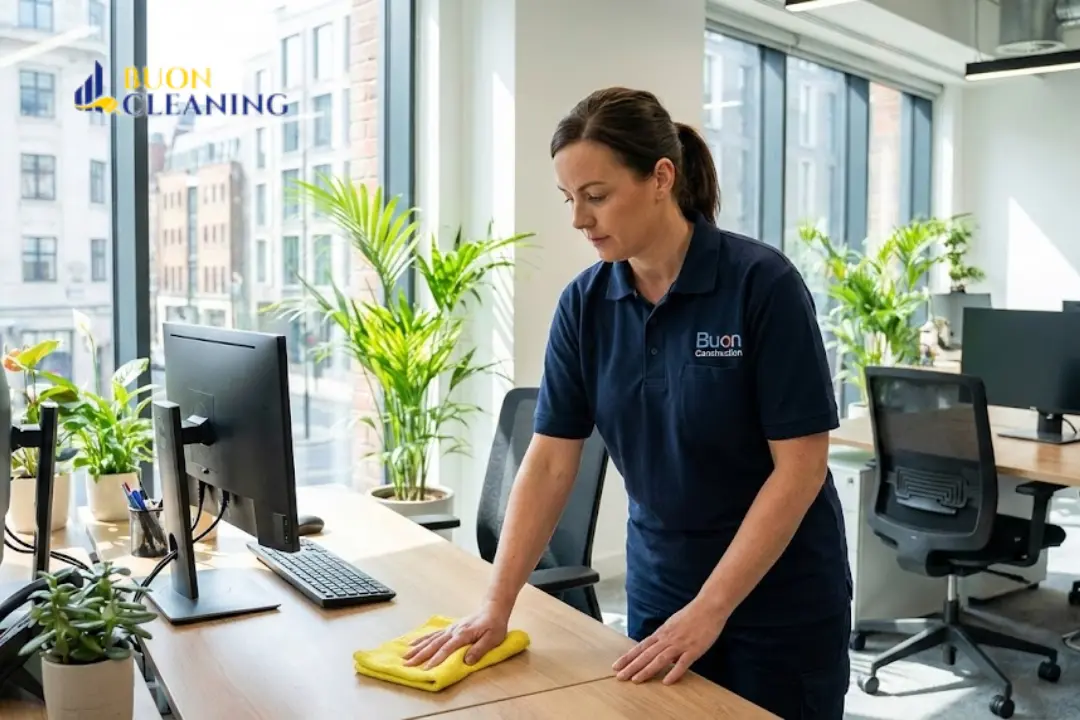
Office desks are among the most bacteria-prone surfaces in any workplace. Maintaining workplace hygiene in UK offices requires structured routines that meet legal and health compliance standards.
Maintaining a clean and healthy office in the UK goes far beyond dusting desks and emptying bins. A professionally structured checklist ensures compliance with health regulations, minimises the spread of illness, and creates a safer, more productive workplace. Here’s what a compliant, health-focused UK office hygiene checklist and cleaning schedule typically includes.
Table of Contents
2026 Office Cleaning Checklist UK: At-a-Glance (Daily, Weekly, Monthly)
If you just want the schedule without the detail, this is the cleaning rhythm most UK offices use to stay hygienic and audit-ready.
- Daily (minimum hygiene standard): desks + touchpoints, washrooms, kitchen surfaces, floors, bins
- Weekly (deep-touch focus): appliance handles/interiors, skirting/wall marks, internal glass, drawers/cabinets in shared zones
- Monthly (air + build-up control): vents/HVAC filters, carpets (extraction/low-moisture), high dust zones, blinds/windows, light fittings
- Quarterly/Annual (compliance reset): full deep clean under/behind furniture, COSHH review, pest checks, upholstery/chair maintenance, external windows/signage
Quick rule: more people + shared desks + public visitors = increase frequency (especially kitchens and washrooms).
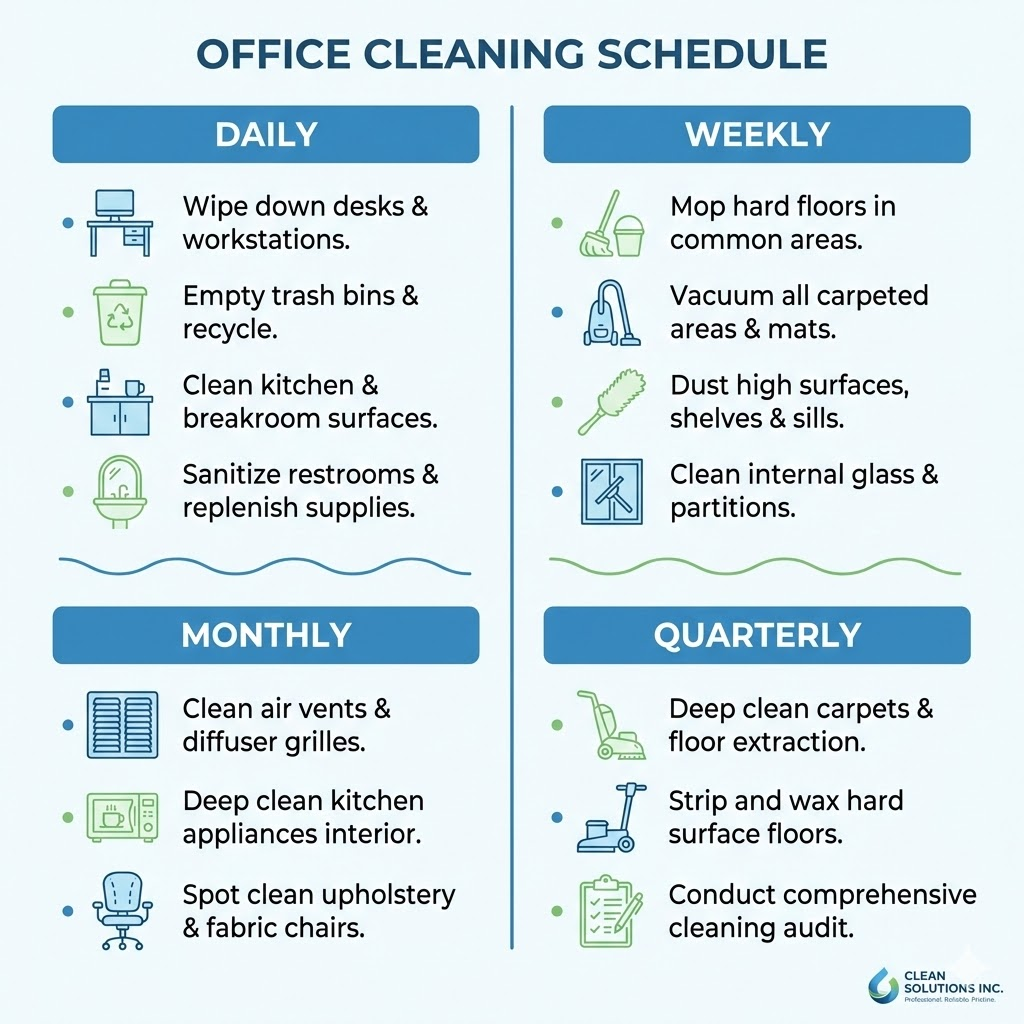
1. Daily Office Cleaning Routine UK
A consistent daily routine helps maintain hygiene and compliance across all office areas. This routine supports both appearance and regulatory standards in daily workplace disinfection across UK offices. Below are key tasks to include in your daily office cleaning checklist:
| Task Category | Daily Maintenance (Hygiene Focus) | Weekly Deep-Touch (Detail Focus) |
| Workstations | Disinfect desks, keyboards, mice & phones. | Wipe monitors, cable tidy & clean chair arms. |
| Kitchen | Sanitise surfaces, sinks & cupboard handles. | Descale kettle, clean the microwave & fridge interior. |
| Floors | Vacuum carpets & mop hard floors (antibacterial). | Spot-clean marks on walls and skirting boards. |
| Waste | Empty all bins and replace liners. | Sanitise internal/external bin housing. |
| Washrooms | Full disinfection of toilets, taps & mirrors. | Deep-clean tiles and descale showerheads. |
| Touchpoints | Sanitise light switches, handles & lift buttons. | Clean internal glass partitions & window sills. |
Professional Tip: Use colour-coded cloths to avoid cross-contamination; red for toilets, blue for general low-risk areas, green for kitchen zones, and yellow for washbasins.
Free Download: UK Office Cleaning Checklist PDF (2026)

Estimated Cost (2026):
Typical daily cleaning service for a medium-sized office (2000–3000 sq ft) in London: £45–£60 per visit. Each section below includes a quick UK office cleaning action checklist (best practice) plus common mistakes to avoid, so you can stay hygienic and compliant without overthinking it.
Daily Office Cleaning Best Practice (UK): Hygiene & Compliance
- Use antiviral disinfectants certified to the EN 14476 standard
- Schedule cleanings before or after work hours to avoid disruption
- Keep logs for compliance (especially in healthcare and education sectors)
Daily Office Cleaning Mistakes That Increase Germ Spread
- Mix kitchen and bathroom cloths
- Skip disinfection of shared electronics, a top source of bacteria
2. Weekly Cleaning Tasks
Designed to go deeper than the daily wipe-downs.
- Deep clean microwave interiors and refrigerator handles
- Descale kitchen kettles and coffee machines
- Wipe inside window sills and glass partitions
- Clean inside drawers and cabinets (communal areas)
- Spot-clean wall marks and skirting boards
Insight: Weekly tasks often uncover hygiene risks that go unnoticed, like sticky coffee residue or food spills behind furniture.
3. Monthly Cleaning Tasks
Essential for maintaining air quality and long-term cleanliness.
- Clean air vents and change HVAC filters
- Deep-clean carpets with hot water extraction or low-moisture methods
- Polish wood furniture and desk legs
- Wash interior windows and blinds
- Clean ceiling light fittings and remove cobwebs
- Audit stock of consumables and janitorial supplies
Professional Tip: Consider ATP testing once a month to verify biological cleanliness, especially for desks, phones, and kitchen counters.
4. Quarterly & Annual Tasks
These ensure full compliance with occupational hygiene standards.
- Full deep-clean of the office, including under furniture and storage units
- Pest inspection and prevention treatment, if necessary
- COSHH review and update (Control of Substances Hazardous to Health)
- Cleaning and reproofing of office chairs and fabric partitions
- Exterior window cleaning and signage wash
- Repaint or retouch scuffed walls or floors
Compliance Reminder: HSE requires businesses to maintain good indoor air quality and sanitary conditions under the Workplace (Health, Safety and Welfare) Regulations 1992.
Pros & Cons of a Structured Cleaning Checklist
Pros:
- Ensures legal compliance and hygiene standards
- Increases employee trust and productivity
- Reduces illness and absenteeism
- Helps streamline operations for FM teams
Cons:
- Requires consistent oversight and documentation
- May increase operational costs without proper scheduling
- Misuse of chemicals can pose health risks (see COSHH section)
How Often Should a Professional Office Be Cleaned for Hygiene?
The frequency of professional office cleaning in the UK depends on the size of the space, the number of employees, foot traffic, and the type of work conducted. However, to maintain a healthy and compliant workspace, especially post-pandemic, hygiene-focused scheduling is key.
Daily Cleaning: The Minimum Standard
For most offices, daily cleaning is non-negotiable, especially for:
- Desks and high-touch areas
- Washrooms and kitchens
- Bins and floors
Why it matters:
Offices are breeding grounds for bacteria, and research shows that desks can harbour 400x more bacteria than a toilet seat if not cleaned daily. A missed day increases microbial growth and employee exposure to germs.
Recommended for:
- Offices with 10+ staff
- Shared desk environments (hot desking)
- Spaces with public access or client meetings
Twice-Weekly Cleaning: Low Footfall Offices
If your office is used by fewer than 5 people and doesn’t include shared workstations or kitchen use, twice-weekly cleaning may suffice for hygiene purposes, but key touchpoints must still be cleaned daily by staff or assigned cleaners.
Weekly Deep Touchpoint Sanitation
Even with daily cleaning, weekly targeted disinfection of overlooked areas is vital:
- Behind monitors, chair arms, and under desks
- Fridge handles, microwave buttons, cupboard grips
- Light switches and shared control panels
Professional Tip: Use a rota to rotate these into weekly schedules, or tag in your cleaning service provider to structure the workflow.
Monthly Deep Cleans
A monthly deep clean should include:
- Carpets
- Air vents
- High-up surfaces
- Storage zones
This also allows for inspection of potential pest risks, mould in hidden areas, and mechanical hygiene (e.g. HVAC).
Quarterly Audits and Refresh
Every 3 months, reassess:
- Cleaning product effectiveness
- Hygiene logs (for audits)
- Staff feedback on cleanliness levels
- Supplies and PPE stock
- COSHH risk file accuracy
Cost Insight (2026):
- Daily professional cleaning (5 days/week): £200–£300/month for a small office
- Monthly deep clean (carpet, vents, behind furniture): £100–£180 per session
Based on London rates via buoncleaning.co.uk and industry average
Office Cleaning Frequency UK (2026): Scheduling Best Practice
- Match frequency to usage, not just budget
- Schedule more cleaning during flu season (autumn-winter)
- Use signage or logs to show cleaning history as it improves confidence
Cleaning Frequency Mistakes That Cause Hygiene Failures
- Skip cleaning on Fridays, weekend buildup is worse than midweek
- Assume once a week is enough for shared spaces
What Does COSHH Stand For in the Cleaning Industry?
COSHH stands for Control of Substances Hazardous to Health, a UK legal framework that regulates how businesses manage and use chemicals or hazardous substances in the workplace. For cleaning, this includes detergents, bleaches, disinfectants, and any chemical agent used during janitorial services.

Why It Matters
Improper storage or use of cleaning chemicals can cause:
- Respiratory issues
- Skin burns or allergic reactions
- Toxic exposure through aerosols
- Slip hazards from spillage
COSHH ensures that employers take reasonable steps to protect employees, cleaners, and visitors from these risks.
What COSHH Requires from Your Business:
Risk Assessments:
- Identify which cleaning substances are hazardous.
- Evaluate how staff may be exposed (e.g. inhalation, skin contact)
- Define protective measures (PPE, ventilation, training)
Label & Storage Compliance:
- All chemicals must be correctly labelled (hazard pictograms, safety data)
- Store securely in designated cupboards, not with food or paper supplies
Staff Training:
- Cleaners must be trained in safe handling, dilution, and emergency response
- Clear signage and instructions for spill management
Data Sheets (SDS):
- Safety Data Sheets must be available for every chemical on site
- These explain how to use and respond to accidents involving each product
COSHH and Cleaning Contractors
If you hire a cleaning company, they must provide COSHH-compliant procedures and documentation. As the business owner, you’re still responsible for ensuring their methods do not endanger your staff.
Ask to see:
- Their COSHH policy and training records
- SDS for each cleaning chemical used in your premises
- PPE practices (e.g. gloves, goggles, masks)
Cost-Free Tip:
Create a COSHH file and keep it near your janitorial storage cupboard, with laminated chemical lists, SDS, and instructions. This impresses inspectors and protects your team.
Legal Reference:
- HSE COSHH Regulations 2002
- Workplace (Health, Safety and Welfare) Regulations 1992
COSHH Compliance for Cleaning Chemicals: What UK Businesses Must Do
- Audit all cleaning products annually
- Use non-toxic or eco-certified alternatives where possible
- Ensure all spray bottles are clearly labelled
COSHH Breaches to Avoid (Chemical Safety & Storage)
- Mixing chemicals like bleach and ammonia creates toxic gas
- Leave unlabeled containers in shared areas
Why Is a Clean Office Important for Employee Productivity?
Cleanliness isn’t just a visual standard; it has a measurable impact on focus, well-being, and output. Numerous UK studies and workplace health audits have shown that a well-maintained office leads to fewer sick days, better concentration, and stronger morale.
The Productivity Link: What the Data Shows
- Sickness absence cost UK businesses £43 billion in 2023, much of it linked to hygiene-spread illnesses like colds, flu, and norovirus.
- A dirty office can lead to a 31% drop in productivity, according to BIFM reports.
- Cluttered, dusty spaces raise cognitive stress and lower attention spans
Key Ways Clean Offices Improve Output
Fewer Sick Days
- Clean desks, shared surfaces, and washrooms reduce pathogen spread
- Fewer germs = fewer seasonal illnesses
- Especially crucial in winter months or post-pandemic recovery phases
Mental Clarity
- Messy environments increase anxiety, according to workplace psychology studies.
- Tidy surroundings support focus and task completion
Staff Morale and Engagement
- A clean, fresh-smelling environment creates a positive impression
- Signals to staff that their well-being is valued
- Boosts team pride in the workspace
Better First Impressions
- Clean meeting rooms and reception areas affect client perception
- Professional environments encourage professionalism in behaviour
Office Layouts That Benefit Most
- Open-plan offices with shared desks have a higher hygiene risk, and cleaning is essential.
- Hot-desking setups require stricter daily disinfection
- Creative agencies with physical assets (props, equipment, print materials) benefit from reduced dust levels
Professional Tip:
Installing a low-cost air purifier in open-plan offices improves air quality, reduces allergens and increases alertness.
Best Practice for UK Office Cleaning (2026): What to Do
- Create a “Clean Desk” policy with end-of-day tidying
- Schedule daily wipe-downs of desks, phones, and keyboards
- Prioritise breakrooms and bathrooms; they impact perception and morale
Common Office Cleaning Mistakes to Avoid (UK Checklist)
- Don’t rely on visual cleanliness, as surfaces can look clean but test positive for bacteria.
- Don’t let clutter accumulate in underused areas (storage, meeting corners)
Insight for Managers:
According to CIPD and HSE data, the ROI of preventive hygiene far outweighs the cost of reactive sick leave cover or staff disengagement.
What Are the Primary High-Touch Surfaces in an Office?
High-touch surfaces are objects and areas that multiple people contact frequently throughout the day. These surfaces can quickly become breeding grounds for bacteria and viruses, making them a priority in any health-based cleaning plan.
Top High-Touch Areas in UK Offices
Door Handles and Push Plates
- Entrance doors, toilet doors, and meeting room handles
- Frequently touched with unwashed hands
Light Switches
Especially those in shared spaces like toilets or meeting rooms
Desktops
Even personal desks require daily cleaning. Studies show desks can host over 20,000 germs per square inch.
Keyboards and Mice
- One of the dirtiest areas in the office, especially in hot-desking setups
- Often missed in regular cleans
Telephones and Headsets
Office phones are used repeatedly throughout the day, often without handwashing.
Lift Buttons and Handrails
Touch frequency is high and often by multiple people in quick succession.
Printers, Copiers, and Scanners
Touchscreens and buttons are often neglected during cleaning routines.
Kitchen Equipment
Fridge handles, microwaves, cupboard knobs, kettles, and coffee machines.
Bathroom Fixtures
Tap handles, soap dispensers, hand dryers, toilet flush handles, and sanitary bins.
Shared Office Supplies
Pens, staplers, clipboards, and whiteboard markers in meeting rooms.
Tips for Managing High-Touch Areas
Daily vs Deep Cleaning UK: What’s Included (and What Gets Missed)
- Include a high-touch surface checklist in your daily cleaning schedule
- Use alcohol-based or antiviral disinfectants (EN 1276 and EN 14476 certified)
- Place hand sanitiser near high-contact areas (e.g. next to printers or kitchen entrances)
Deep Cleaning Mistakes UK Offices Make (Odours, Dust, Missed Areas)
- Assume staff clean their own areas, and provide clear responsibilities
- Use the same cloth across different surfaces. Use colour-coded cleaning cloths to reduce cross-contamination
Professional Tip:
Request ATP (adenosine triphosphate) testing from your cleaning provider once a month on high-touch surfaces to verify biological cleanliness.
Why It Matters
Ignoring high-touch areas undermines your entire cleaning strategy. These spots are the main transmission vectors for illness in office settings, and addressing them reduces sick leave, protects vulnerable employees, and ensures compliance with health standards.
What Is the Difference Between a Daily Clean and a Deep Clean?
Understanding the distinction between daily cleaning and deep cleaning is key to maintaining a hygienic, compliant office environment. Each serves a different purpose and frequency, and both are essential in a holistic cleaning strategy.
Daily Cleaning: Routine Maintenance
Purpose:
To keep the office presentable, hygienic, and safe on a day-to-day basis.
What’s Included:
- Emptying bins and replacing liners
- Vacuuming or mopping floors
- Wiping desks and communal surfaces
- Cleaning kitchen counters and sinks
- Disinfecting high-touch points (door handles, phones)
- Sanitising toilets and restocking supplies
Frequency:
Usually performed 5 days a week (Mon–Fri) before or after working hours.
Best For:
- Preventing bacterial build-up
- Maintaining hygiene compliance (especially for shared desks and washrooms)
- Reducing clutter and visible dirt
Deep Cleaning: Intensive Disinfection
Purpose:
To remove hidden dirt, built-up grime, and biological contaminants that daily cleaning can’t reach.
What’s Included:
- Steam cleaning or hot water extraction of carpets and upholstery
- Disinfecting behind furniture, under desks, vents
- Cleaning walls, ceilings, and light fittings
- Sanitising inside fridges, microwaves, and storage units
- Descaling taps, kettles, and appliances
- Pressure washing external areas (entry points, signage)
- Deep disinfection using fogging or electrostatic spray (if needed)
Frequency:
- Monthly or quarterly
- After an outbreak (e.g. COVID, norovirus)
- Before/after inspections or audits
- After renovations or major works
Legal & Compliance Implications
- Daily cleaning keeps your workplace within HSE cleanliness expectations
- Deep cleaning helps meet CQC, Ofsted, or client audit standards
- Failing to deep clean regularly can result in microbial hotspots that aren’t visible but violate hygiene codes
Cost Comparison (London 2026):
- Daily Cleaning: £12–£18/hour
- Deep Cleaning: £25–£50/hour or £2–£3.50 per sq. metre
Sources: buoncleaning.co.uk and UK facilities management firms
Best Practice for UK Office Cleaning (2026): What to Do
- Plan quarterly deep cleans into your annual budget
- Use deep cleaning as a reset for problem areas (kitchens, carpets)
- Ask your provider for a pre-clean inspection to prioritise tasks
Common Office Cleaning Mistakes to Avoid (UK Checklist)
- Assume daily cleaning is enough for infection prevention
- Skip deep cleaning to save costs, and it often prevents larger bills later (pests, mould, equipment degradation)
Professional Insight:
If your staff report unpleasant odours or frequent dust buildup despite daily cleaning, it’s a sign your office is overdue for a deep clean.
Do I Need a Written Cleaning Policy for My Business?
Yes, if you manage or operate a business in the UK, a written cleaning policy isn’t just good practice; it’s a compliance tool. It outlines expectations, responsibilities, schedules, and legal requirements to ensure a clean and safe working environment.
Why a Written Policy Matters
Legal Accountability
- Under the Health and Safety at Work Act 1974, employers have a legal duty to provide a safe and hygienic workplace.
- A written policy helps prove you’re meeting this obligation.
Consistency Across Teams or Sites
- Avoids confusion about who’s responsible for what
- Especially crucial if you have rotating cleaners, shared responsibilities, or external contractors
Support for Cleaning Contractors
- Makes expectations clear
- Forms the basis of a Service Level Agreement (SLA)
Inspection-Ready Documentation
For Ofsted, CQC, or HSE inspections, written procedures show that cleaning is systematic, not ad hoc
What Should Be in Your Cleaning Policy?
- Scope: Areas covered (e.g. offices, kitchens, washrooms, breakout spaces)
- Roles & Responsibilities: Staff, facilities team, third-party cleaners
- Frequencies: Daily, weekly, monthly, deep cleans
- COSHH Handling: Where chemicals are stored, how they are used
- Equipment Use: Colour-coded systems, PPE requirements
- Cleaning Log Templates: Sign-off sheets for cleaners or staff
- Response Protocols: What to do in the event of a spill, infection outbreak, or biohazard
- Audit Schedules: How often are cleaning standards reviewed
Format Tip
Keep the document short and clear (2–4 pages max). Add checklists or logs as appendices so they can be printed separately.
Who Should Sign Off?
- Facilities Manager
- Health & Safety Officer
- Business Owner or Director
Written Office Cleaning Policy UK: What to Include
- Review the policy quarterly or after any incident
- Involve cleaning staff in updates; they’ll know what’s realistic
- Store digitally and in physical form (especially near cleaning cupboards)
Cleaning Policy Mistakes That Fail Audits and Cause Disputes
- Assuming verbal agreements are enough, without written standards, enforcement is difficult.
- Forget to update when contractors or suppliers change
Professional Tip:
Ask your cleaning company if they offer a pre-written template you can customise. Many BICSc-accredited firms include this in their onboarding process.
What Are the 4 Cs of Kitchen Hygiene?
In office kitchens, where multiple people handle food, drinks, and appliances daily, hygiene risks are high. The 4 Cs of Kitchen Hygiene are a simple framework promoted by the Food Standards Agency (FSA) to prevent contamination and ensure food safety, even in non-commercial kitchens like staff breakrooms.
The 4 Cs of kitchen hygiene: Cleaning, Cooking, Chilling, and Cross-contamination are essential for maintaining office kitchen hygiene UK-wide. Follow these to align with UK food safety and office sanitation policies.
The 4 Cs of Kitchen Hygiene Explained:
Cleaning
- Regular cleaning of all kitchen surfaces, appliances, and equipment
- Washing utensils, mugs, and dishes thoroughly
- Sanitising fridges, microwaves, cupboard handles, and sinks
Cooking
- Ensuring any reheated food (e.g. leftovers, ready meals) is heated evenly and thoroughly.
- Office microwaves often fail to reheat evenly. Also, educate staff on proper warming and checking temperatures.
Chilling
- Storing perishable items (milk, yoghurt, sandwiches) at safe temperatures.
- Office fridges must be kept below 5°C.
- Discourage overfilling and ensure the fridge is cleaned weekly.
Cross-Contamination Prevention
- Keeping raw foods away from cooked or ready-to-eat items (even in the fridge).
- Using separate cloths for counters, hands, and dishes.
- Avoiding shared sponges (a hotspot for bacteria).
Why It Matters in Offices
While offices aren’t food businesses, poor hygiene in shared kitchens can still cause:
- Food poisoning outbreaks
- Cross-staff illness from bacteria like Salmonella or Listeria
- Pest infestations due to crumbs, spills, and uncleaned appliances
Recommended Kitchen Cleaning Practices:
- Clean inside microwaves daily (food splatter = bacterial growth)
- Empty fridge weekly and discard expired or unlabelled items
- Sanitise kettle handles and buttons on shared machines
- Provide antibacterial wipes for self-cleaning after use
- Use signage to remind staff to clean up after themselves
Office Kitchen Hygiene UK: Best Practice for Shared Kitchens
- Train staff on fridge storage and labelling
- Add fridge thermometers and check weekly
- Appoint a rotating “kitchen monitor” if no cleaner enters the kitchen daily
Office Kitchen Hygiene Mistakes (Cross-Contamination + Pest Triggers)
- Let dirty cups or dishes sit overnight
- Share unwashed cutlery or mugs
- Leave wet cloths in sinks as they breed bacteria
Professional Tip:
Install a small dishwasher if possible. It reduces arguments over dishes and ensures a sanitised clean at high temperatures (65–70°C).
These principles are crucial in UK office kitchens, especially for compliance with food safety and workplace sanitation policies.
What Is Colour-Coded Cleaning and Why Does It Matter?
Colour-coded cleaning is a system used across the UK to prevent cross-contamination in cleaning processes. It assigns specific colours to different areas or tasks, ensuring that cloths, mops, gloves, and tools used in high-risk zones (like toilets) aren’t reused in food areas or general spaces.
Why It’s Critical
Using the same cloth to clean a toilet and then a kitchen counter, even by accident, can spread bacteria like E. coli, norovirus, or MRSA. Colour coding helps eliminate this risk and ensures compliance with health, safety, and infection control guidelines.
UK Standard Colour Chart (BICSc / NHS-Recommended)
| Colour | Designated Area |
| Red | Toilets, urinals, washroom floors |
| Blue | General low-risk areas (offices, desks, meeting rooms) |
| Green | Kitchens, food prep areas |
| Yellow | Wash basins, mirrors, sinks (non-toilet areas) |

Note: You can use additional colours for site-specific zones, like black for IT rooms or white for clean rooms, but the above four are standard.
Tools That Should Be Colour-Coded
- Cloths and rags
- Mop heads and buckets
- Gloves and aprons
- Brushes and dustpans
- Cleaning signs (e.g. wet floor signs)
Legal and Best Practice Compliance
While not a legal requirement, colour-coded cleaning is considered best practice by:
- The British Institute of Cleaning Science (BICSc)
- NHS cleaning protocols
- HSE workplace hygiene guidance
Failure to use a system can be considered negligent in audits, especially in healthcare, education, or food-adjacent environments.
How to Implement It
- Train all cleaners (internal or contracted) on the colour system
- Use wall charts in cleaning cupboards
- Store colour-specific tools separately
- Check that your cleaning supplier complies with BICSc or NHS recommendations.
Colour-Coded Cleaning System UK: Best Practice for Cross-Contamination
- Replace clothes regularly and don’t rely solely on colour coding
- Review compliance during internal audits or health checks
- Choose commercial-grade cloths with stitched-in colour tags to avoid confusion
Colour-Coding Mistakes That Break Infection Control
- Let clothes sit wet overnight, as they breed germs regardless of colour
- Use faded or discoloured cloths that make colour identification difficult
Professional Tip:
Use a laminated colour-coding poster in each cleaner’s cupboard or utility area. It serves as a visual reminder and helps onboard new staff quickly.
How Do I Find a Reputable Office Cleaning Company in London?
Choosing a trustworthy cleaning provider is one of the most important decisions for maintaining a healthy, compliant workplace. In London, the commercial cleaning industry is highly competitive, but not all providers offer the same standards, safety, or professionalism.
What to Look For
Certifications and Accreditation
- Look for BICSc (British Institute of Cleaning Science) accreditation
- ISO 9001 or ISO 14001 for quality and environmental management
- SafeContractor, CHAS, or Constructionline certification
Transparent Service Agreements
- They should offer a clear scope of work, schedule, and cleaning checklist
- Ask for sample Service Level Agreements (SLAs) or contract templates
COSHH Compliance
The company should provide evidence of risk assessments, safety data sheets (SDS), and staff training on chemical handling.
Tailored Proposals
- Avoid “one-size-fits-all” quotes
- Reputable providers will inspect your site before issuing a proposal
Insured and Vetted Staff
- Check that cleaners are DBS-checked and trained
- Ensure the company holds public liability insurance (ideally £5M or more) and employer’s liability insurance.
Flexible Scheduling
- A good provider will offer early morning, evening, or weekend slots
- Ask if they offer emergency call-outs or deep cleans
Eco-Friendly Options
- More London-based firms now offer green cleaning products and waste reduction policies
- Confirm what chemicals they use and whether they’re EN 14476-certified
Local References and Reviews
- Look for testimonials on Google, Trustpilot, or Yell
- Ask for 2–3 business contacts you can call to confirm service quality
Pro Tip: If you’re in Nottingham, search for “professional office cleaning services Nottingham” to find vetted, location-specific providers like Buon Cleaning who understand East Midlands regional standards.
Suggested Provider: Buon Cleaning
- Nottingham-Headquartered with UK Coverage: Buon Cleaning is established as a leading commercial cleaning partner across Nottinghamshire and the East Midlands, with regional capacity for larger contracts.
- BicsC Certified & COSHH Compliant: Fully accredited for professional office and restaurant hygiene standards.
- Specialised Services: Expert commercial rug, carpet, and upholstery cleaning tailored for high-traffic office environments.
- Customised SLAs: Tailored site-specific agreements with transparent pricing and no hidden charges.
- Vetted Staff: All personnel are insured, vetted, and trained in modern, sustainable cleaning techniques.
Estimated Price Ranges (Nottingham, 2026):
| Service Type | Typical Rate |
| Daily Office Cleaning | £14–£18/hour |
| Deep Cleaning | £2.50–£3.50 per m² |
| Washroom Sanitation | From £25 per session |
| Carpet Cleaning | £1.80–£3 per m² |
Note: Pricing depends on office size, access, schedule, and risk profile.
How to Vet a Commercial Cleaning Company (London/UK): Best Practice
- Visit the company’s site for service breakdowns or call for an office cleaning quote (e.g. buoncleaning.co.uk)
- Request a trial period or a month-to-month contract before committing long-term
- Ensure all staff have clear ID and uniforms for accountability
Red Flags When Hiring Office Cleaners (Contracts, Insurance, COSHH)
- Choose based on price alone, and the lowest bidders often skip essential hygiene steps
- Accept verbal-only agreements and always request written documentation
Professional Tip:
Ask for a cleaning logbook system that cleaners update after every visit. It’s useful for compliance and resolving complaints.
Are Office Desks Really Dirtier Than Toilet Seats?
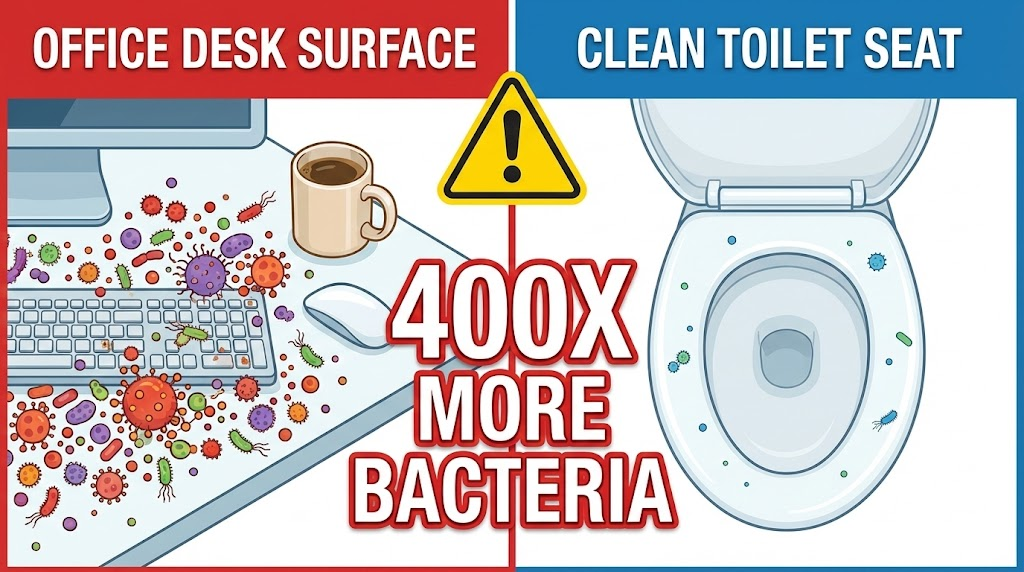
Office desks often top the list of bacterial hotspots, especially when shared or rarely disinfected. Regular workplace disinfection in UK offices should prioritise workstations, keyboards, and phones.
What the Research Shows
- A typical office desk contains 400x more germs than a toilet seat, according to research cited by the BBC and Healthline.
- Items like keyboards, mice, and phones are rarely cleaned, allowing bacteria like Staphylococcus aureus, E. coli, and Enterococcus to thrive.
- Coffee cups left unwashed and food crumbs attract mould, yeast, and pests
Top Contaminated Desk Items in the Office
Keyboard
- Often contains food debris and skin particles
- One study found over 3,000 microorganisms per key
Mouse
Shared devices or poorly cleaned surfaces trap bacteria in crevices
Phone/Headset
Close contact with the mouth and infrequent cleaning = high germ load
Paper Files and Stationery
Frequently touched but rarely disinfected.
Reusable Cups and Bottles
Rinsed but not sanitised, bacteria cling to moisture and sugar residues
Why It Happens
- People clean toilets routinely with disinfectants
- Desks are personal or assumed to be someone else’s responsibility
- Cleaning staff may avoid touching electronics or paperwork
- Hot desking and hybrid work mean shared bacteria with no consistent hygiene routine
Risk Factors
- Eating at the desk (encourages microbial and pest growth)
- Touching your face or mouth frequently while working
- Lack of regular handwashing or sanitiser use
Prevention Strategies
Do:
- Wipe desks and devices daily with antiviral wipes (EN 14476 certified)
- Encourage a “clean desk” policy where all surfaces are cleared at day’s end
- Provide screen-safe alcohol wipes for self-service
Don’t:
- Allow eating directly on surfaces without cleaning afterwards
- Assume cleaning contractors will touch personal desks; they often avoid them unless instructed
Professional Tip:
Include a weekly “desk hygiene moment”, even 5 minutes per employee to clean their workspace, can significantly reduce bacteria levels across the office.
Why It Matters:
A dirty desk isn’t just unprofessional; it directly impacts health, productivity, and the reputation of your workspace. By addressing desk hygiene as seriously as toilets or kitchens, you reduce absenteeism and raise morale.
What Is Included in a Basic Commercial Cleaning Service?
A basic commercial cleaning service covers essential daily hygiene tasks to keep your office safe, presentable, and compliant. It forms the foundation of any workplace cleaning schedule, whether in a small shared office or a multi-floor operation.
Typical Inclusions in a Standard Package
General Area Cleaning
- Vacuuming carpets and rugs
- Mopping hard floors with an antibacterial solution
- Dusting desks, shelves, and skirting boards
- Cleaning light switches and door handles
- Removing cobwebs and spot-cleaning walls
Desk and Workspace Sanitation
- Wiping desk surfaces (if cleared)
- Cleaning keyboards, mice, and phones (if included in the brief)
- Emptying personal and communal bins
Washroom Cleaning
- Cleaning and disinfecting toilets and urinals
- Wiping mirrors, sinks, and dispensers
- Restocking soap, toilet rolls, and paper towels
- Emptying sanitary bins (may be an optional add-on)
Kitchen/Breakroom Maintenance
- Cleaning countertops, cupboard doors, and appliances
- Wiping fridge handles, kettle, microwave (interior optional)
- Washing dishes or loading/unloading the dishwasher
Reception and Common Areas
- Dusting furniture, brochure stands, and the reception desk
- Mopping entry points and sanitising door push plates
- Emptying bins and removing litter
Optional Add-Ons (Often at Extra Cost)
- Carpet steam cleaning
- Deep cleaning of toilets or kitchens
- Interior window cleaning
- Fridge interior cleans
- Disinfection fogging or electrostatic spray
- Biohazard waste removal
- Supply of consumables (toilet paper, hand towels, etc.)
What to Clarify in Your Contract:
- Which areas are included and which are excluded
- Frequency of service (daily, bi-weekly, weekly)
- Whether personal desk cleaning is included
- Who supplies the equipment and consumables
- Response times for ad hoc requests or emergency cleans
Average Cost (London 2026):
- £14–£18/hour for standard cleaning (2-hour minimum)
- £250–£350/month for a 5-day-a-week service in a small office
Do:
- Walk through your office with the cleaning provider to define all tasks clearly
- Request a printed or digital checklist to be signed after each clean
- Opt for companies that supply their own COSHH-compliant cleaning products
Don’t:
- Assume every “basic” service is the same, so always get a breakdown
- Overlook the need for restocking consumables and clarify who’s responsible
Professional Tip:
Ask if the company uses GPS or mobile app check-ins for their staff; this improves accountability and ensures visits are completed as scheduled.
Who Provides the Cleaning Equipment: the Business or the Cleaner?
This depends on your service agreement. In the UK, most professional commercial cleaning companies bring their own equipment and chemicals, but there are exceptions based on the contract, office type, or special needs.
Reputable cleaning firms (like Buon Cleaning) typically provide all essential equipment:
- Commercial vacuums, mops, and buckets
- Microfibre cloths (colour-coded)
- COSHH-compliant cleaning products
- PPE (gloves, masks, aprons)
- Trolleys, signage (e.g. wet floor)
- They also often include transport and storage of these items, so nothing clutters your office space.
When the Business Might Provide Equipment
In-House Cleaning Staff
- If you hire your own cleaner(s), you’ll need to supply all tools and chemicals.
- You’re also responsible for COSHH compliance and product safety sheets.
Small Contracts or Shared Buildings
- Some flexible or short-term cleaners ask to use on-site equipment
- Especially in co-working spaces or serviced offices
Eco-Specific Requests
If you prefer certified green products or chemical-free solutions, you may need to supply them unless your contractor offers eco packages.
Sensitive Environments
Laboratories, food-grade areas, or high-tech offices may require pre-approved cleaning agents or tools.
Key Questions to Ask Before Signing a Contract
- Do you supply your own cleaning equipment and consumables?
- What brands or types of cleaning products do you use?
- Are your tools compliant with COSHH and industry standards?
- Will we need to store any of your equipment on-site?
Do:
- Choose a provider that brings their own tested, reliable equipment
- Request a list of cleaning agents used, especially if staff have allergies
- Clarify who replaces worn items like mop heads or cloths
Don’t:
- Assume cleaners will use your vacuum or cloths; this leads to confusion and liability gaps
- Let unknown products be stored on-site without SDS or training
Professional Tip:
If your business operates across multiple sites, ask for a mobile cleaning unit or site-specific kits to reduce cross-contamination and logistics delays.
How to Choose a Reputable Office Cleaning Company in the UK
If you’re comparing professional office cleaning services in London or other UK cities, focus on BICSc-certified cleaning companies with verified COSHH compliance.
- Certifications: Look for BICSc, ISO 9001, or SafeContractor accreditation.
- Insurance: Ensure they hold public liability and employer’s liability insurance.
- COSHH Awareness: They should understand and comply with COSHH regulations.
- Trained Staff: Ask if their cleaners receive routine safety and compliance training.
- Client References: Request testimonials or case studies from other UK businesses.
- Flexibility: Choose a provider who offers cleaning outside of working hours and can scale with your needs.
- Green Options: If sustainability matters, ask about eco-certified products and waste reduction practices.
Pro Tip: If you’re in London or other major cities, search for professional office cleaning services to find vetted, location-specific providers like Buon Cleaning.
Buon Cleaning Standards Checklist
According to Buon Cleaning, a trusted commercial cleaning provider in the UK, businesses should evaluate cleaning partners based on these pillars:
- Health & Safety Compliance: Risk assessments and COSHH documentation provided
- BICSc-Trained Staff: All cleaners follow British Institute of Cleaning Science standards
- Tailored Cleaning Plans: Each site receives a custom schedule based on risk and footfall
- Eco-Conscious Products: EN 1276 and EN 14476 compliant, non-toxic options used
- Regular Supervision & Audits: Cleaning performance is reviewed with real-time reports
These benchmarks help ensure legal compliance, consistent hygiene, and long-term value.
Is It Better to Clean the Office During or After Working Hours?
Both options are viable, but the right choice depends on your office layout, schedule, staff preferences, and operational needs. In the UK, most medium to large offices opt for after-hours cleaning, but smaller offices often benefit from in-hours cleaning for cost or convenience.
After-Hours Cleaning (Before 8 am or After 6 pm)
Pros:
- No disruption to meetings, calls, or work focus
- Allows cleaners to move freely and clean more thoroughly
- Ideal for vacuuming, mopping, and other noisy tasks
- More privacy for staff with sensitive data or tasks
Cons:
- Slightly higher costs due to unsociable hours
- Less opportunity for staff to interact with or monitor cleaners
- Emergencies (spills, messes) can’t be handled immediately
Best For:
- Large offices
- Client-facing businesses
- Confidential or high-focus environments
- Offices with heavy foot traffic
In-Hours Cleaning (9 am–5 pm)
Pros:
- Cost-effective and avoids after-hours surcharges
- Allows for immediate cleaning of spills, washrooms, and kitchens
- Cleaner presence can improve hygiene culture (“clean as you go” mindset)
Cons:
- Cleaners may need to navigate occupied desks, meeting rooms
- Risk of disruption from noise or chemical odours
- Staff may feel uncomfortable with cleaners present
Best For:
- Small offices or startups
- Co-working spaces
- Offices without confidential work
- Locations with low visitor volume
Hybrid Approach
Some companies adopt a split model:
- Core tasks (dusting, vacuuming, bins) done after hours
- Touchpoint disinfection, washroom top-ups, and kitchen cleaning are done during the day
- Useful during flu season or in shared workspaces where hygiene risks are higher
Cost Insight:
- After-hours cleaning may cost £1–£3/hour more than daytime rates
- Some providers (like Buon Cleaning) offer flexible schedules to balance cost with convenience
Do:
- Consider staff preferences and confidentiality when scheduling
- Communicate clearly to cleaners about quiet zones and high-risk times
- Schedule daily touchpoint disinfection during mid-day breaks if possible
Don’t:
- Assume one-time-per-day cleaning is enough for high-traffic areas, which often need refreshes
- Allow noisy or chemical-heavy tasks (e.g. deep carpet cleaning) during core hours unless necessary
Professional Tip:
Install quiet cordless vacuums and use fragrance-free products for in-hours cleaning to minimise disruption.
How to Conduct a COSHH Risk Assessment for My Office
A COSHH (Control of Substances Hazardous to Health) risk assessment is a legal requirement for UK employers who use or store hazardous substances, including common cleaning chemicals. Even if you outsource cleaning, you still share responsibility for ensuring a safe environment. Every business handling cleaning substances should conduct a COSHH risk assessment to ensure legal and safe usage.
Step-by-Step: Conducting a COSHH Risk Assessment
Step 1: Identify Hazardous Substances
Walk through your office and clean the storage areas. Look for:
- Disinfectants, bleaches, descalers
- Aerosols and sprays
- Detergents and polishes
- Hand sanitiser (alcohol-based)
- Printer toner and ink (for larger offices)
Check labels for hazard symbols, and anything with a CLP (Classification, Labelling and Packaging) symbol must be reviewed.
Step 2: Assess the Risks
Ask:
- Who uses the substance? (Cleaners, staff, contractors?)
- How might people be exposed? (Inhalation, skin, ingestion?)
- What harm could it cause? (Burns, asthma, slips?)
- How often is it used or stored?
Step 3: Decide on Precautions
Use the hierarchy of control:
- Can you eliminate the substance?
- Can you substitute it with a less hazardous product?
- What PPE is required? (Gloves, goggles, masks)
- Is ventilation adequate?
- Are spill kits or eye-wash stations needed?
Step 4: Keep and Use Safety Data Sheets (SDS)
Every product should have a manufacturer-supplied SDS, which outlines:
- Composition and hazards
- Safe handling
- Emergency response
- Storage instructions
These must be available in print or digitally, ideally near cleaning cupboards or risk control folders.
Step 5: Document Everything
Use a standard COSHH risk assessment form or template (many are free from HSE or cleaning suppliers). Include:
- Substance name and supplier
- Risks identified
- Controls in place
- Training given
- Review dates
Step 6: Train Staff
Even if cleaning is outsourced, train your office team to:
- Recognise warning labels
- Know where to find COSHH documentation
- Handle accidental spills or exposure safely
Frequency of Review
- Annually (minimum)
- Immediately after any incident or change in cleaning materials
- When introducing new products or suppliers
Legal Note:
COSHH regulations fall under the Health and Safety at Work Act 1974 and are enforced by the Health and Safety Executive (HSE).
Non-compliance can lead to enforcement notices, fines, or liability in the event of harm.
Do:
- Store COSHH documents in an accessible, waterproof file
- Involve your cleaning contractor and ask for their COSHH assessments too
- Use signage (e.g. chemical hazard, PPE reminders) in storage areas
Don’t:
- Let unlabeled products remain on-site
- Assuming non-toxic or eco products are risk-free, even essential oils can cause allergic reactions.
What Should I Look for in a Cleaning Company’s Insurance Policy?
A reputable commercial cleaning company should carry robust insurance that protects both their business and yours. Verifying their coverage isn’t just best practice, as it shields you from financial and legal risk in case of accidents, damage, or injury during service.
Key Insurance Policies to Expect
Public Liability Insurance (Essential)
- Covers injury to a third party (e.g. your staff or visitors) or damage to your property
- Required for cleaners operating in any client space
- Recommended minimum: £5 million
Employer’s Liability Insurance (Legal Requirement)
- Required under UK law if the company has employees
- Covers injury or illness suffered by cleaning staff while working
- Must be at least £5 million and display the certificate clearly
Professional Indemnity Insurance (Optional but Valuable)
- Covers claims of negligence, poor advice, or breach of contract
- Useful if the cleaner damages data, sensitive items, or provides incorrect services
Tools and Equipment Insurance
- Covers accidental damage or theft of cleaning equipment on your premises
- While it protects the cleaner’s assets, it avoids disputes over lost time or stolen gear
Personal Accident Cover (Optional)
- Offers support if a self-employed cleaner gets injured
- More relevant for solo operators or small independent cleaners
What to Ask the Provider
- Can you provide a copy of your insurance certificates?
- What are your coverage limits and exclusions?
- Are your cleaners covered while on our premises, including out-of-hours?
- Do you have coverage for key loss, data damage, or confidential areas?
- When does your policy renew, and with which insurer?
Red Flags
- A company that hesitates to show documentation
- Insurance limited to very low cover (e.g. £1M public liability)
- No employer’s liability coverage despite having staff
- Lack of coverage for night work or multiple locations
Tips for Multi-Site or High-Risk Premises
If you operate across multiple locations or handle sensitive operations (legal, tech, medical), ask about:
- Fidelity Bonding (protection against employee theft)
- Specific endorsements for data-sensitive or confidential workspaces
- Key-holding or alarm system insurance
Professional Tip:
Make insurance verification part of your onboarding checklist for any cleaning provider. Store digital copies of certificates and diarise their renewal dates.
Cleaning Contractor Insurance UK: What to Check Before You Sign
- Require updated insurance documentation before starting a contract
- Check that coverage applies to subcontractors, not just employees
- Ensure the policy includes out-of-hours and weekend work if relevant
Insurance Mistakes That Increase Liability for Businesses
- Assume building insurance covers cleaning-related incidents, but it doesn’t
- Ignore policy exclusions, and some insurers won’t cover chemical damage or key loss unless specified
How Can I Prevent Cross-Contamination in the Office Kitchen?
The office kitchen is one of the most common sources of workplace illness. Shared food areas, appliances, and inconsistent cleaning habits make it easy for bacteria to spread. Cross-contamination, the transfer of harmful bacteria from one surface, object, or food to another, is preventable with the right systems.
High-Risk Areas in Office Kitchens
- Fridge handles and microwave buttons
- Shared cutlery and mugs
- Sinks and sponges
- Worktops used for both food prep and cleaning
- Milk bottles, water dispensers, and reusable bottles
Prevention Strategies That Work
1. Colour-Coded Cleaning Cloths and Tools
- Use green cloths for kitchen-only use. Store separately and clean daily.
- Provide disposable wipes for staff to clean after use.
2. One Sponge Policy: None
Sponges are germ traps. Replace them with:
- Disposable cloths
- Antibacterial wipes
- A dishwasher (sanitises at over 65°C)
3. Staff Education
Add signage in the kitchen that reminds staff to:
- Wash your hands before and after using shared items
- Label food and clean up spills immediately
- Avoid storing raw and cooked items together
4. Fridge Management
- Clean weekly, especially trays and door seals
- Add a thermometer to ensure the temperature is <5°C
- Assign a kitchen monitor if no cleaner enters this area
5. No Eating Near Shared Equipment
Eating near kettles or toasters encourages contamination. Designate areas for food prep and consumption.
6. Disinfect High-Touch Points Daily
- Fridge handles
- Kettle buttons
- Microwave door and timer dials
- Cupboard handles
What Cleaners Should Do
Professional cleaners should:
- Use a green-coded cleaning kit for kitchens only
- Clean appliance interiors on a weekly or monthly schedule
- Use EN 1276/EN 14476 certified disinfectants for food-safe areas
- Notify managers of pest signs, food spills, or appliance build-up
Do:
- Provide paper towels instead of shared cloth towels
- Empty bins daily and use liners to prevent leakage
- Install under-sink storage for chemical safety
Don’t:
- Allow food to build up at the back of fridges, as it attracts mould and pests.
- Use toilet cleaning supplies in the kitchen (cross-contamination hazard)
- Let expired food stay past its use-by date
Professional Tip:
If you can’t afford a daily kitchen clean, assign a rotating “kitchen duty” schedule. Pair this with a printed hygiene checklist and a quick 5-minute wipe routine at lunch and end-of-day.
What Are the Best Eco-Friendly Cleaning Products for Businesses?
With growing concern about workplace sustainability and staff health, many UK businesses are switching to eco-friendly cleaning products. These alternatives reduce exposure to harsh chemicals, lower environmental impact, and still meet hygiene standards when chosen carefully.
What Qualifies as “Eco-Friendly”?
An eco-friendly cleaning product should:
- Be biodegradable and break down safely in the environment
- Contain non-toxic, plant-based ingredients
- Use recyclable or refillable packaging
- Be certified by trusted bodies (e.g. EU Ecolabel, EcoCert, Cradle to Cradle, Vegan Society)
- Avoid ingredients like chlorine bleach, ammonia, SLS, and synthetic fragrances
Top-Rated Eco Cleaning Brands in the UK (2026)
Delphis Eco
- UK-made, used in government buildings and schools
- EN certified for hygiene (1276 & 14476)
- Packaging made from 100% recycled plastic
Ecover Professional
- Plant-based formulas, refillable options
- Great for general office cleaning and kitchen use
Bio-D
- Hypoallergenic and biodegradable
- Popular in healthcare and allergy-sensitive settings
Method Professional
- Known for design-forward products and mild scents
- Best for front-of-house or client-facing spaces
Bona
- Excellent eco floor cleaner, especially for wood and vinyl
- Leaves no residue and dries fast
Best Use by Area
| Area | Recommended Product |
| Desks & surfaces | Delphis Eco Multi-Purpose Cleaner |
| Kitchens | Bio-D All-Purpose Sanitiser |
| Bathrooms | Ecover Toilet Cleaner |
| Glass/Windows | Method Glass Cleaner |
| Floors | Bona Wood Floor Cleaner |
How to Implement Eco Cleaning in Your Office
- Ask your cleaning provider to switch to eco-certified alternatives
- Replace air fresheners with essential oil diffusers (if safe for all staff)
- Train cleaners and staff on correct dilution and usage
- Avoid overuse, even eco products can pollute if not used responsibly
Cost Insight:
Eco cleaning products may cost 10–25% more upfront, but offer long-term savings through:
- Less chemical damage to furniture
- Improved air quality = fewer sick days
- Refill models = lower packaging waste
Do:
- Choose products certified to both eco and hygiene standards (e.g. EN 1276 & 14476)
- Trial eco products in one zone first (e.g. meeting rooms)
- Include green cleaning as part of your sustainability or Net Zero policy
Don’t:
- Assume all “green” products disinfect and verify certification
- Use essential oils without allergy checks, so they can irritate some users
- Mix homemade and commercial eco solutions without safety checks
Professional Tip:
Create a mini “eco audit” sheet to review what chemicals are in use. Partner with your cleaner to phase out harsh products and replace them gradually.
How Much Does Office Cleaning Cost Per Hour in 2026?
Office cleaning costs in the UK vary based on location, frequency, scope, and provider credentials. In 2026, prices have risen slightly due to inflation, minimum wage increases, and higher demand for compliance-level cleaning, but competitive options remain for all business sizes.
Average Hourly Rates (UK-Wide)
| Type of Cleaning | Typical Rate (2026) |
| Basic Daily Cleaning | £14–£18/hour |
| Deep Cleaning | £25–£40/hour or £2.50–£3.50/m² |
| Carpet Cleaning | £1.80–£3.00/m² |
| Washroom Sanitation | From £25/session |
| Disinfection Fogging | £50–£120 per visit |
| Out-of-Hours Premium | +£1.50–£3/hour extra |

Price Factors to Consider
Location
- London and the South East = higher rates
- Midlands, North, and rural areas = slightly cheaper
Office Size and Layout
- Open-plan layouts are quicker and more cost-effective
- Multi-storey or split sites take more time and logistics
Frequency
- More frequent cleans = lower hourly rate
- One-off deep cleans = higher cost per hour
Special Requirements
- Eco-friendly products
- Security-cleared staff (DBS-checked)
- Confidential waste handling or data-safe zones
Contract Type
- Hourly rates for ad hoc cleaning
- Fixed monthly fees for long-term SLAs (more cost-stable)
Sample Monthly Cost (London, 2026)
| Office Size | Daily Cleaning (5x/week) | Approx. Monthly Cost |
| 1,000 sq. ft | 1.5–2 hrs/day | £650–£850/month |
| 2,500 sq. ft | 2–3 hrs/day | £900–£1,300/month |
| 5,000 sq. ft + | 4–6 hrs/day | £1,500–£2,400/month |
What’s Usually Included
- All labour and standard equipment
- General cleaning (desks, floors, bins)
- Basic kitchen and washroom sanitation
- Colour-coded cleaning, if requested
Not included unless specified:
- Consumables (toilet rolls, soap)
- Deep cleaning, fogging, carpet shampoo
- Fridge and appliance interiors
Office Cleaning Costs UK (2026): How to Get Accurate Quotes
- Request itemised quotes showing hourly rate, services included, and optional extras
- Ask for trial periods before long-term contracts
- Compare 3–4 providers and check reviews, accreditations, and insurance
Pricing Mistakes That Lead to Hidden Costs and Poor Standards
- Accept unusually low rates, as it often means underpaid staff or skipped compliance
- Sign long contracts without a clear service level breakdown
Professional Tip:
Look for cleaning companies that tie pricing to outcomes, not just time i.e., clean to a standard, not to a clock.
How Do I Write a Service Level Agreement (SLA) for Cleaning?
A Service Level Agreement (SLA) is a contract between your business and the cleaning provider that defines expectations, performance standards, responsibilities, and response times. In the UK, having a clear SLA protects you legally and ensures consistent service quality.
Why You Need an SLA
- Prevents scope creep or misunderstandings
- Sets measurable cleaning standards
- Ensures accountability and simplifies dispute resolution
- Helps you monitor performance and value for money
What to Include in a Cleaning SLA
Scope of Services
- List of areas to be cleaned (offices, kitchens, washrooms, breakrooms, etc.)
- Specific tasks (e.g. vacuuming, bin emptying, disinfection of high-touch surfaces)
- Frequency (daily, weekly, monthly)
Cleaning Standards
- Reference to measurable outcomes (e.g. no visible dirt, no missed bins)
- Acceptable products and methods (e.g. EN 14476 disinfectants, eco-certified)
- Colour-coded cleaning system compliance
- Inclusion of COSHH-compliant materials
Staffing and Access
- Number of staff per visit
- ID, uniforms, and DBS check requirements
- Agreed time slots (during/after working hours)
- Access procedures (keyholding, alarms, check-ins)
Equipment and Supplies
- Who provides what (equipment, consumables, PPE)
- List of approved cleaning products
Monitoring and Reporting
- Cleaning logbooks or mobile check-in apps
- Frequency of inspections (monthly, quarterly)
- How performance is reviewed and scored
Issue Resolution
- How to report missed cleans or poor performance
- Timeframe for response and corrective action
- Penalties or deductions for repeated issues
Insurance and Risk
- Evidence of public liability, employer’s liability, and other relevant cover
- Confirmation of COSHH risk assessments and staff training
Contract Duration and Exit Terms
- Initial term and notice periods
- Grounds for termination (e.g. repeated non-compliance)
- Trial period clause (e.g. 3-month probation)
Optional Inclusions
- Sustainability clauses (e.g. eco product use, waste reduction targets)
- Confidentiality agreements (for data-sensitive or legal workspaces)
- Holiday cover and staff absence policies
- Add-on services (e.g. pest control, fogging, carpet cleaning)
Cleaning SLA UK: Best Practice Terms for Consistent Standards
- Involve your facilities or compliance manager in SLA drafting
- Use plain, specific language and avoid generalities like “clean thoroughly”
- Request a digital version and update it annually
SLA Mistakes That Cause Scope Creep and Missed Cleans
- Assume verbal agreements are enforceable and always document them.
- Using vague language like “as needed” leads to disputes
- Forgot to outline what happens in emergencies (e.g. flood cleanup)
Professional Tip:
Attach a sample daily and monthly cleaning checklist as an SLA appendix. It visually reinforces expectations and gives cleaners a ready-to-use guide.
What Is the Best Way to Clean Computer Screens and Keyboards?
Screens and keyboards are some of the most frequently touched and least frequently cleaned items in an office. They accumulate dust, skin oils, food particles, and bacteria, posing both hygiene and hardware risks. Cleaning them properly protects staff health and extends equipment life.
Cleaning Computer Screens (Monitors and Laptops)
Do This:
- Turn off and unplug the device, and always start with a powered-down screen.
- Use a dry microfibre cloth to wipe dust and fingerprints.
- Dampen (not soak) a cloth with distilled water or a 50/50 mix of water and isopropyl alcohol (IPA) and gently wipe the surface.
- Avoid circular rubbing and wipe in straight, horizontal strokes to prevent streaking.
- Clean edges and bezels last, using a cotton swab for crevices.
Avoid:
- Using glass cleaners (like those with ammonia)
- Spraying liquid directly onto the screen
- Using paper towels or abrasive cloths
Cleaning Keyboards
Daily or Weekly Wipe-Down:
- Turn off or disconnect the keyboard.
- Hold it upside down and shake gently to dislodge debris.
- Use compressed air to remove particles between keys.
- Wipe with disinfectant wipes or a cloth dampened with isopropyl alcohol (70%+).
- Dry immediately with a clean cloth to prevent residue.
Deep Clean (Monthly or Quarterly):
- Remove keycaps if your model allows (and if staff consent is given)
- Clean beneath with cotton swabs and alcohol
- Wash keycaps in warm soapy water and air-dry completely before replacing
Avoid:
- Bleach or harsh chemicals (may wear lettering off keys)
- Excess liquid near USB ports or wireless receivers
- Using vacuum cleaners can cause static damage
Cleaning Mice and Touchpads
- Wipe top and sides with an alcohol-based wipe or a damp cloth
- Clean scroll wheels and crevices with a dry cotton swab
- For wireless mice, remove batteries before cleaning
Hygiene Protocol (Office-Wide)
- Disinfect shared keyboards and mice daily
- Provide screen-safe wipes for personal use
- Include keyboards in your high-touch point checklist
- Label electronic-safe cleaning products separately in the cleaning cupboard
Cleaning Office Electronics Safely: Screens, Keyboards, and Devices
- Use products labelled “screen-safe” or “electronics-safe”
- Clean keyboards before and after shared use
- Educate staff not to eat directly over keyboards
Electronics Cleaning Mistakes That Damage Equipment and Spread Germs
- Allow excess moisture to seep between keys or screen edges
- Use generic anti-bac sprays on monitors, as they damage coatings
- Let crumbs or dust build up under keys, since it shortens keyboard life
How Do I Handle a Cleaning Emergency or a Major Spill?
Accidents in the office, from spilt coffee to biohazard incidents, require immediate, safe, and compliant response. Whether it’s a minor liquid spill or a more serious contamination, knowing what to do (and what not to do) can prevent health risks, equipment damage, and legal exposure.
Types of Office Cleaning Emergencies
Spills on Hard Floors (water, drinks, soap)
- Slip hazard
- Must be addressed immediately under HSE regulations
Carpet Stains (coffee, ink, food)
Requires prompt attention to prevent permanent damage
Biohazards (vomit, blood, bodily fluids)
- Must be cleaned by trained personnel using PPE and disinfectants
- Treated as a contamination risk, not routine cleaning
Chemical Spills (e.g. cleaning agents)
- Refer to COSHH data sheets
- May require evacuation depending on exposure risk
Flooding or Water Leaks
- Turn off electricals
- Use wet vacs and ventilate immediately
- Report to building maintenance
Step-by-Step Spill Response Plan
Assess the Spill Type and Area
- Is it hazardous? (e.g. sharp objects, body fluid, flammable liquid)
- Is it near electronics, walkways, or air vents?
Block Off the Area
- Use safety signage or barriers
- Prevent slip injuries or electrical contact
Equip and Act
- Wear disposable gloves and PPE
- Use disposable absorbent pads or spill kits (keep stocked near kitchens and print rooms)
- Clean using an appropriate method: Detergent + warm water for food/drinks and EN 14476 certified disinfectant for biohazards.
Dispose of Waste Safely
- Use designated bags for biohazard waste
- Wash your hands thoroughly afterwards
- Report the incident to your H&S rep or facilities manager
5. Log the Incident
- Time, date, location
- What was spilt and how it was cleaned
- Any injuries or property damage
Who Handles It?
- Minor spills: Office staff or front-of-house
- Moderate spills: On-site cleaners if trained
- Major hazards: Professional cleaning company or emergency call-out service (must be certified in biohazard or chemical cleanup)
Spill Kit Checklist
- Absorbent pads or granules
- Disposable gloves, aprons, and shoe covers
- Waste bags (including biohazard red bags)
- Disinfectant spray (EN 14476)
- Signage: “Wet Floor,” “Do Not Enter”
Keep spill kits near:
- Kitchens
- Washrooms
- Printing stations
- Server rooms
Office Spill Response UK: Best Practice Emergency Cleaning Steps
- Train staff to identify and report spills properly
- Restock spill kits monthly
- Partner with a cleaning firm that offers emergency support
Emergency Cleaning Mistakes That Increase Risk and Liability
- Use the same mop for regular cleaning and spills
- Ignore spills near plug sockets or devices to isolate power first
- Allow biohazard spills to be cleaned without proper PPE and training
Professional Tip:
Establish an “Emergency Cleaning SOP” as part of your health & safety policy. Include escalation procedures and out-of-hours contact numbers for your cleaning provider.
Common Office Cleaning Mistakes UK (2026): What Causes Complaints, Germ Spread, and Failed Audits
If your office “looks clean” but still gets odours, recurring illness, or constant complaints, it’s usually one of these issues:
1) Skipping the real infection hotspots
- Door handles, kitchen appliance controls, keyboards, shared phones/headsets
- Meeting room tables and chair arms (high contact, often missed)
2) Cross-contamination (especially kitchens + washrooms)
- Reusing cloths/mops across zones
- Poor tool storage (wet cloths left in sinks, shared buckets)
3) Over-reliance on “quick wipes” instead of a schedule
- Daily cleaning without weekly deep-touch tasks
- Monthly tasks (vents, carpets, high dust zones) pushed back repeatedly
4) Chemical mistakes that create risk (COSHH)
- Unlabelled spray bottles
- Incorrect dilution
- Mixing products (bleach + ammonia risk)
- SDS missing on-site or not accessible
5) Contracts that look fine but fail in real life
- Vague scope (“standard clean”) with no measurable checklist
- No sign-off logs, no supervision, no response times for misses
- Confusion on who supplies consumables (soap, bin liners, paper towels)
Quick reality check: If you don’t have sign-off logs, zone-coded tools, and a monthly deep-clean rhythm, you’re relying on luck, and luck is not COSHH compliant.
What Are the Common Mistakes to Avoid in a Cleaning Contract?
A cleaning contract is more than just a pricing agreement; it’s a formal document that protects your workplace hygiene, compliance, and business reputation. But many businesses make avoidable mistakes that lead to poor service, legal exposure, or hidden costs.
Vague Scope of Work
Mistake: Using general terms like “clean the office” or “standard service” without defining areas or frequencies.
Avoid it by:
- Listing each area (e.g. washrooms, kitchens, reception)
- Specifying task frequency (e.g. vacuum daily, deep clean monthly)
- Including a written checklist and expected outcomes
No Performance or SLA Clauses
Mistake: Not setting service expectations, inspection processes, or response timelines.
Avoid it by:
- Adding a Service Level Agreement (SLA) with measurable benchmarks
- Including penalties or exit clauses for repeated poor performance
- Setting monthly review or feedback meetings
Unclear Equipment and Supply Responsibilities
Mistake: Assuming the cleaner will bring products, or not clarifying who provides bin liners, soap, or paper towels.
Avoid it by:
- Listing who supplies what, especially for consumables and PPE
- Specifying the brand/type of products if needed (e.g. eco-certified)
Overlooking Legal and Insurance Details
Mistake: Not verifying insurance coverage, COSHH compliance, or staff training.
Avoid it by:
- Asking for proof of public liability insurance and the employer’s liability
- Ensuring cleaners are COSHH-trained and DBS-checked if needed
- Stating that non-compliance voids the agreement
Ignoring Contract Term and Exit Clauses
Mistake: Committing to long-term contracts without trial periods or fair exit terms.
Avoid it by:
- Starting with a 3-month probation clause
- Including cancellation terms (e.g. 30 days’ notice without penalty)
- Avoiding auto-renewal traps without review
No Contingency Plan
Mistake: Not addressing holidays, staff sickness, or emergency call-outs.
Avoid it by:
- Clarifying whether the provider offers cover staff
- Defining response time for spills, outbreaks, or special requests
Failing to Align with H&S and Sustainability Policies
Mistake: Choosing a provider who doesn’t meet your internal ESG or safety goals.
Avoid it by:
- Requiring eco product use, waste tracking, or recycling support
- Confirming cleaners follow your site’s H&S induction
Do:
- Review the contract with legal or procurement before signing
- Include annexes like COSHH logs, cleaning schedules, and performance KPIs
- Conduct regular contract reviews (every 6–12 months)
Don’t:
- Sign vague or verbal-only agreements
- Forgot to define high-touch point disinfection protocols
- Let a contractor start without reviewing risk assessments and staff vetting
Professional Tip:
Use a simple checklist during contract negotiation. Include line items for training, insurance, dispute resolution, and environmental targets to prevent costly misunderstandings later.
How to Clean Office Carpets Without Damaging Them
Office carpets endure heavy foot traffic, spills, and dirt accumulation. They trap allergens, dust, and bacteria, which can affect air quality and staff health. However, improper cleaning can shrink, fade, or permanently damage carpet fibres. Knowing how to clean them correctly ensures hygiene without harming the flooring.
Daily and Weekly Maintenance
Vacuuming:
- Use commercial vacuums with HEPA filters to trap fine dust and allergens
- Vacuum daily in high-traffic areas (entrances, walkways, kitchens)
- Vacuum weekly in low-traffic areas (under desks, meeting rooms)
- Go slow because effective vacuuming requires multiple passes over each section
Spot Cleaning:
- Tackle spills immediately to avoid permanent stains
- Blot liquids and never rub
- Use an enzyme-based or pH-neutral carpet cleaner
- Avoid bleach or ammonia (can damage fibres and backing)
Monthly or Quarterly Deep Cleaning Methods
Hot Water Extraction (Steam Cleaning)
- Deep cleans with heated water and detergent
- Extracts dirt from deep within fibres
- Best for heavily used carpets
- Requires drying time (4–8 hours)
Low-Moisture Encapsulation
- Applies a polymer solution that traps dirt in crystals
- Crystals are vacuumed away when dry
- Fast-drying, suitable for offices that can’t shut down for long
- Less effective on deep-set stains
Dry Powder Cleaning
- Powder compound is brushed in and vacuumed out
- Minimal drying time
- Ideal for sensitive carpet types or busy areas
- May not reach deeply embedded dirt
Choosing the Right Method
| Carpet Type | Best Method |
| Nylon or Polyester | Steam or Encapsulation |
| Wool or Wool Blends | Dry Powder or Low Moisture |
| Carpet Tiles | Encapsulation or Steam |
Always refer to the manufacturer’s care instructions.
Preventative Strategies
- Use entrance mats to reduce dirt tracked inside
- Place runners in high-traffic corridors
- Implement a no-food policy in carpeted zones
- Rotate furniture occasionally to prevent permanent fibre compression
- Schedule deep cleans every 3–6 months, depending on footfall
Cost Guide (UK, 2026)
- Steam Cleaning: £2.50–£3.50 per m²
- Encapsulation: £2.00–£3.00 per m²
- Dry Powder: £2.50–£3.50 per m²
- Stain Removal (Spot Treatment): From £25 per stain
Office Carpet Cleaning UK: Best Practice for Hygiene Without Damage
- Blot spills immediately with clean paper towels
- Choose professional cleaners who test a small area first
- Use fan-assisted dryers to speed up drying time post-clean
Office Carpet Cleaning Mistakes (Shrinkage, Odours, Mould Risk)
- Oversaturating carpets causes shrinkage, odour, and mould
- Use household carpet sprays without checking fibre compatibility
- Allow furniture to be back too soon after deep cleaning, as it causes staining
Professional Tip:
Include carpet cleaning in your annual office maintenance plan with scheduled dates to ensure budgeting and consistency.
What Should Be in a Washroom Hygiene Checklist?
Washrooms are one of the most critical areas in any office for health, compliance, and perception. A well-maintained toilet facility not only supports staff wellbeing but also reduces sickness absence and reflects your organisation’s professionalism. In the UK, employers are legally obligated under The Workplace (Health, Safety and Welfare) Regulations 1992 to provide clean, hygienic toilets.
Daily Washroom Cleaning Checklist
Toilets and Urinals:
- Scrub inside bowls with disinfectant
- Wipe and disinfect flush handles/buttons
- Clean under toilet seats and rims
- Check for blockages or leaks
Sinks and Taps:
- Clean the basin and plughole with descaler
- Wipe taps and handles with antibacterial spray
- Polish chrome finishes with a dry cloth
Mirrors and Glass:
- Spray with glass-safe cleaner
- Buff to remove streaks or splash marks
Floors:
- Sweep and mop with disinfectant (pay attention to corners)
- Use a colour-coded red mop and bucket system
Disposables and Restocking:
- Empty bins and replace liners
- Refill toilet rolls, soap, and paper towels
- Check air fresheners and feminine hygiene supplies
Touchpoints:
- Disinfect door handles, cubicle locks, light switches, and baby changing areas
Weekly Tasks
- Deep clean tiles, grout, and skirting boards
- Descale taps and urinals
- Remove soap scum from dispensers
- Clean door tops and vent covers
Monthly Tasks
- Clean extractor fans and ceiling vents
- Polish tile grout and reseal edges if needed
- Audit hygiene supplies and stock levels
- Check water temperature and tap flow
Visual and Smell Checks
Clean doesn’t just mean germ-free; it must also look and smell clean.
Include visual checks for:
- Toilet paper on the floor
- Unpleasant odours
- Overflowing sanitary bins
- Stains or splash marks on walls or tiles
Staff and Visitor Facilities
For compliance, all washrooms must have:
- Hot and cold (or warm mixed) water
- Soap and drying facilities
- Sanitary bin provision (in female and gender-neutral facilities)
- Good ventilation (mechanical or natural)
- Regular cleaning log signed off daily
Office Washroom Cleaning UK: Best Practice Checklist for Compliance
- Use red-coded cleaning tools exclusively for the washroom
- Check and log cleaning completion at least twice daily in a busy office
- Display hygiene signage (“Please wash hands,” etc.) to encourage good habits
Washroom Cleaning Mistakes That Fail Hygiene Standards
- Cross-contaminate with cleaning tools from kitchens or desks
- Use heavily fragranced products so they can mask poor hygiene and trigger allergies
A compliant UK office washroom cleaning checklist includes frequent checks, soap refills, and monitoring of ATP-tested touchpoints where applicable.
Professional Tip:
Laminate and display a washroom cleaning checklist on the inside of each cupboard or wall. It acts as a guide for cleaners and proof during audits.
How Does ATP Testing Verify That a Surface Is Biologically Clean?
ATP testing is a fast, scientific method used to verify the cleanliness of surfaces in offices, healthcare settings, food facilities, and schools. It doesn’t just look for visible dirt, as it checks whether a surface is biologically safe by detecting organic contamination.

What Is ATP?
ATP stands for Adenosine Triphosphate, a molecule found in all living cells, including bacteria, mould, food residue, and bodily fluids.
If ATP is present on a surface, it means some level of biological contamination remains, even if the surface looks clean to the eye.
How the Test Works
Swabbing the Surface
- A technician swabs the area using a sterile swab stick
- Focus areas: keyboards, door handles, phones, desks, taps, kitchen counters
Inserting the Swab Into a Luminometer
- The luminometer is a handheld device that detects light produced by ATP reacting with a specific enzyme
- The result is expressed in RLU (Relative Light Units)
Reading the Results
- Low RLU = Clean (hygienic surface)
- High RLU = Contaminated (presence of organic material)
Typical Office Cleanliness Benchmarks:
| Surface | Pass Threshold (RLU) |
| Desk Surface | <100 |
| Keyboard | <150 |
| Washroom Tap | <200 |
| Phone Handset | <150 |
| Kitchen Counter | <100 |
Standards vary slightly depending on the equipment used
Why Use ATP in Offices?
- Verifies if your cleaning procedures are effective
- Provides objective data for compliance and audits
- Identifies hotspots for retraining or increased frequency
- Reassures staff that health-based cleaning is working
Who Uses It?
- CQC-registered organisations (healthcare, care homes)
- Ofsted-inspected premises (schools, nurseries)
- Facilities managers wanting to measure ROI on cleaning
- Cleaning contractors offering “verified hygiene” packages
Frequency of Use
- Monthly in high-risk zones (kitchens, toilets, shared desks)
- After deep cleaning, to verify thoroughness
- During outbreak response (e.g. norovirus, COVID)
- Before/after tenancy changeovers or handovers
Cost Insight (UK, 2026)
- Handheld ATP meter: £700–£1,200 (outright purchase)
- Swab tests: £3–£6 per test
- Cleaning companies may charge £80–£150 per ATP audit, including a report
ATP Testing for Office Cleaning: How to Use Results Properly
- Ask your cleaning provider if they offer ATP testing as part of a quarterly review
- Use test results to adjust cleaning focus or retrain staff
- Log results for compliance or ISO audits
ATP Testing Mistakes (How Audits Get Misread)
- Treat ATP as a one-off fix; it’s a monitoring tool, not a cleaning method
Use it without action failed zones; these must be recleaned and retested.
Professional Tip:
Use ATP results in your cleaning contract reviews. When providers know you’re measuring outcomes, performance and accountability often improve.
What Is the ROI of Professional Office Cleaning for a UK Business?
Professional office cleaning isn’t just an overhead; it’s an investment. When done properly, it returns measurable value across productivity, staff retention, brand perception, health compliance, and operational cost savings. Understanding the Return on Investment (ROI) helps justify cleaning budgets and prioritise quality providers.
1. Reduced Staff Absenteeism
- Poor hygiene contributes to viral outbreaks (flu, norovirus, colds)
- In 2023, UK businesses lost £43 billion due to staff illness
- Regular disinfection reduces the spread of illness, especially in winter
- A hygienic workspace reduces allergy triggers (dust, mould, VOCs)
ROI Insight:
Even reducing 1 sick day per employee per year saves hundreds per head annually in large teams.
2. Increased Productivity and Focus
- Clutter and unclean spaces are linked to mental fatigue, poor concentration, and higher error rates.
- Employees feel more valued in well-maintained offices
- Reduced distractions from mess or odours
ROI Insight:
According to BIFM, clean environments improve cognitive performance by up to 15% in office roles.
3. Better Staff Retention and Morale
- Clean offices reduce complaints and frustration
- In competitive sectors, workplace quality affects employee loyalty
- A clean, well-maintained kitchen or toilet directly improves staff satisfaction
ROI Insight:
The cost of replacing a single employee (recruitment + training) often exceeds £5,000 and better hygiene can help prevent unnecessary churn.
4. Enhanced Client Perception
- Visitors judge your professionalism by the reception, the washroom, and the meeting room cleanliness.
- A clean office boosts trust, especially in legal, financial, medical, or creative industries.
- Can influence investor impressions and regulatory inspections
ROI Insight:
Losing a contract or lead due to poor presentation can cost tens of thousands in revenue; cleaning is a controllable first impression.
5. Extended Asset Lifespan
- Regular cleaning prevents premature wear on carpets, furniture, and IT equipment.
- Prevents pest infestations and mould outbreaks that result in damage
- Reduces fire risks by managing dust in cables and electronics
ROI Insight:
Replacing office carpets or air conditioning due to dust damage is significantly more expensive than regular maintenance.
6. Compliance and Legal Protection
- Avoids fines, penalties, or legal liability (e.g. slip-and-fall claims, CQC non-compliance)
- Demonstrates due diligence in health & safety
- Supports sustainability or Net Zero reporting goals
Measuring ROI: What to Track
- Sick days and related costs
- Staff satisfaction surveys
- Client feedback scores
- Maintenance and repair frequency
- Cleaning logs and complaint reduction
- Productivity or focus-related metrics (e.g. output per employee)
ROI of Office Cleaning UK: How to Measure Value and Outcomes
- Treat cleaning as a strategic investment, not just a line item
- Choose providers that offer reporting and audit tools
- Tie hygiene improvements to tangible business outcomes
ROI Mistakes: Cutting Cleaning Budgets That Cost More Later
- Cutting corners on cleaning during cost-saving drives often creates hidden costs later.
- Neglect common areas like kitchens, toilets, or receptions; they impact multiple ROI levers.
Professional Tip:
Use a simple ROI dashboard to track hygiene-related outcomes quarterly. This keeps cleaning tied to performance metrics, not just maintenance.
The ROI of professional office cleaning in UK workplaces includes measurable productivity gains, reduced absenteeism, and a lower risk of compliance failures.
What Are the Hidden Costs of Hiring an Unvetted Cleaning Provider?
At first glance, a budget cleaning quote may seem appealing, especially for small businesses. But hiring an unvetted provider can introduce unexpected financial, legal, and reputational costs that far outweigh initial savings. Due diligence is essential when selecting who’s responsible for the health, safety, and appearance of your workplace.
Hidden Costs You May Not Expect
Property Damage
- Inexperienced cleaners may use the wrong chemicals on screens, flooring, or upholstery.
- Damaged carpets, stained furniture, or broken equipment may not be covered without proper insurance.
Example Cost: Replacing a ruined reception sofa: £600–£1,500
Insurance Gaps
- Many low-cost providers lack adequate public or employers’ liability insurance.
- If a cleaner is injured or damages property, your business could be liable
Example Cost: Personal injury claim without coverage: £5,000+
Non-Compliance Risks
- Inadequate COSHH training can lead to chemical misuse, health risks, and HSE penalties.
- If a CQC or Ofsted inspector finds hygiene logs or risk assessments missing, your rating may be downgraded.
Example Cost: Re-inspection, corrective works, or reputational damage
Staff Illness and Absenteeism
- Poor hygiene increases the spread of viruses and allergens
- Missed touchpoints, dirty washrooms, or shared equipment become hotbeds for illness
Example Cost: One week of sick leave per employee = ~£500 lost productivity
Disruption to Operations
- No-shows or irregular attendance cause gaps in service
- Poor scheduling can lead to clashes with staff, meetings, or security risks
Example Cost: Reactive cleaning costs or call-out fees = £80–£200 per incident
Legal and HR Exposure
- Improper vetting (e.g. no DBS checks) puts vulnerable persons or confidential data at risk.
- Allegations of misconduct or theft can escalate quickly
Example Cost: Legal consultations or settlement risk = £1,000s
7. Low Staff Morale and Complaints
- Dirty toilets, smelly kitchens, or dusty desks create resentment
- Cleanliness is linked directly to employee satisfaction and retention
Example Cost: Higher staff turnover and associated recruitment costs
Red Flags When Vetting Cleaners
- No public liability insurance (ask for certificate)
- No COSHH documentation or training records
- No references or verifiable reviews
- No clear scope of work or SLA
- Vague contracts or cash-only payment requests
- Staff without ID, uniforms, or DBS checks (where required)
How to Avoid Bad Cleaning Contractors: Vetting Best Practice
- Ask for insurance, certifications, and client references
- Visit other sites they service if possible
- Choose providers with formal SLAs, log systems, and consistent staff training
Unvetted Cleaner Red Flags That Cause Damage and Non-Compliance
- Base decisions solely on cost, but look at total value
- Sign without reviewing the cancellation policy or escalation path
- Ignore inconsistent attendance, product misuse, or frequent re-cleans
Professional Tip:
Add up the total cost of complaints, touch-up cleans, and downtime from hygiene issues over 3–6 months, as it often exceeds the price difference between vetted and unvetted providers.
How to Manage Biohazard Cleanup Like Needle Sweeps in Commercial Areas
Biohazard incidents, including discarded needles, blood, bodily fluids, or drug-related waste, present serious health and legal risks in commercial environments. Offices in city centres, retail parks, or areas with public access are most vulnerable. Managing these situations requires specialised cleaning, trained personnel, and strict adherence to UK health regulations.
What Qualifies as a Biohazard?
- Discarded needles, syringes, or drug paraphernalia
- Blood, vomit, urine, or faeces
- Used sanitary products or incontinence waste in non-washroom areas
- Deceased rodents or pest contamination
- Human waste in public access or staff areas
Why It Matters
Health Risks
- Exposure to bloodborne pathogens (Hepatitis B/C, HIV)
- Risk of cuts, punctures, or airborne disease from decomposition or faeces
Legal Duty of Care
- Under the Control of Substances Hazardous to Health (COSHH), employers must protect staff and contractors from biological agents.
- Improper disposal or handling can breach HSE and waste management laws
Reputation & Staff Safety
- A visible or recurring biohazard issue can cause anxiety, sick days, and staff complaints.
- Affects clients and visitors, especially in public-facing businesses
Emergency Response Protocol
Isolate the Area
- Secure the contaminated zone immediately
- Use cones, signs, or access control to block entry
Do Not Touch
- Never handle sharps, blood, or waste without PPE and training
- Cleaners must not remove needles unless licensed
Call a Licensed Biohazard Cleaning Team
Use specialists with:
- Sharps removal training
- Waste carriage licenses
- PPE (gloves, masks, biohazard suits)
- Bloodborne pathogen control experience
Decontaminate the Area
- Clean and disinfect using EN 1276 and EN 14476 compliant biocides
- Use ATP testing to verify cleanliness afterwards.
Document the Incident
- Complete a risk assessment and log the response
- Report to building management or authorities if needed
Ongoing Prevention Strategies
- Install sharps disposal units in public toilets or car parks
- Increase security lighting and CCTV in vulnerable areas
- Educate cleaning staff to report suspicious items, not handle them
- Include biohazard response in cleaning contracts for fast callout
Costs (UK Estimate 2026)
| Service | Approx. Cost |
| Needle sweep (small site) | £150–£250 |
| Biohazard bodily fluid cleanup | £200–£400 |
| Full decontamination w/ ATP | £350–£600+ |
| Emergency same-day callout | +£100–£200 surcharge |
Do:
- Use only licensed contractors for biohazards or sharps
- Train facilities staff on first-response protocol
- Keep disinfectant kits with gloves, masks, and signage on site
Don’t:
- Ask untrained cleaners or staff to handle biohazards
- Delayed response and pathogens can remain infectious for days
- Ignore recurring incidents and escalate to property or council services
Professional Tip:
If your office is in an at-risk area, include biohazard response in your SLA with clear response times and disposal documentation requirements.

Conclusion
A UK office cleaning checklist ensures workplace hygiene, legal compliance, and employee wellbeing. It includes daily tasks (wiping desks, emptying bins, sanitising touchpoints), weekly deep cleaning, COSHH-compliant practices, colour-coded equipment, and washroom and kitchen hygiene protocols. Businesses should use BICSc-certified providers and tailor schedules to site needs.
Download this checklist as a printable PDF or share it with your facilities team. For tailored cleaning services in London or the UK, visit buoncleaning.co.uk

Leave a Reply