
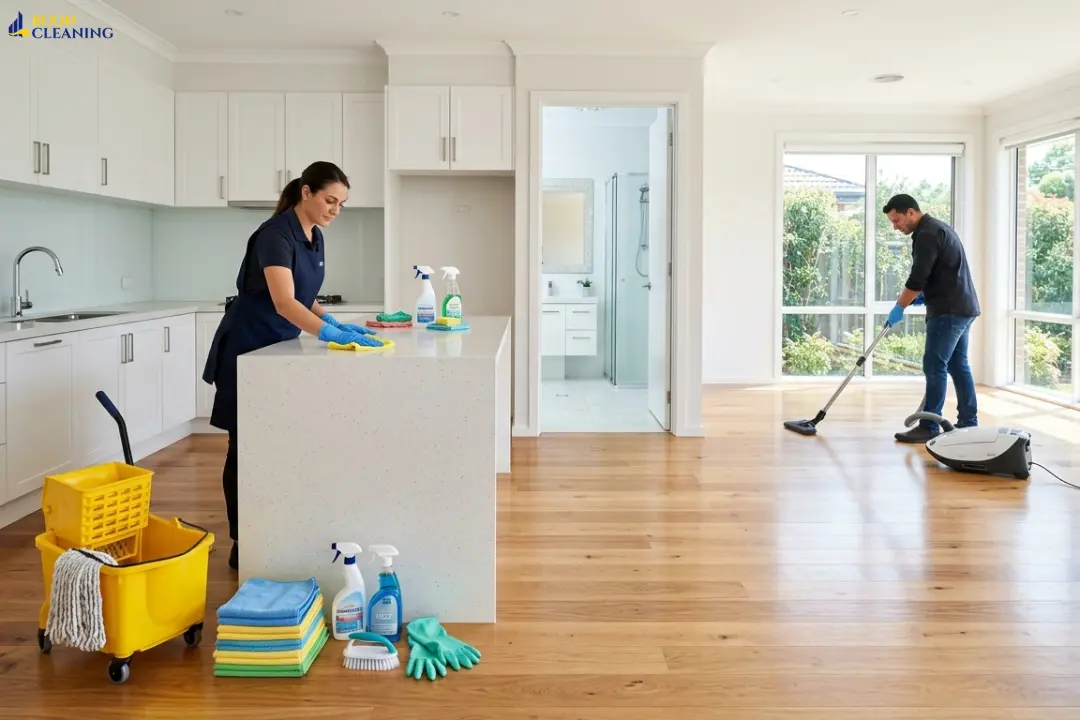
Deep Cleaning Before Moving In: A Complete Checklist
Moving into a new home is exciting, but bringing your belongings into a space that has not been properly cleaned can create unnecessary stress. A deep cleaning before moving in helps remove dust, leftover residue, allergens, and hidden dirt from previous use.
An empty property gives you the best opportunity to clean every corner. You can access areas behind appliances, inside cabinets, along floors, and around fixtures before furniture and boxes make the job harder.
A proper move-in cleaning checklist focuses on high-priority areas such as kitchens, bathrooms, floors, storage spaces, and frequently touched surfaces. Whether you clean yourself or hire a professional cleaning service, completing this work before unpacking creates a more comfortable start in your new home.
Table of Contents
Quick Answer: What Should You Deep Clean Before Moving In?
A move-in deep cleaning checklist should cover every room before furniture and belongings are unpacked:
- Kitchen: Clean appliances, cabinets, drawers, worktops, splashbacks, sink, taps and extractor fan.
- Bathroom: Disinfect the toilet, sink, shower, bath, tiles, grout, fixtures and storage areas.
- Living areas: Vacuum carpets, mop floors, dust surfaces, clean windows and wipe handles and switches.
- Bedrooms: Clean wardrobes, drawers, floors, windows, skirting boards, light fixtures and doors.
- Utility and storage areas: Clean shelves, cupboards, laundry areas, appliance connections and garage floors.
- Hidden areas: Remove dust from air vents, ceiling fans, curtain rails, corners and behind appliances.
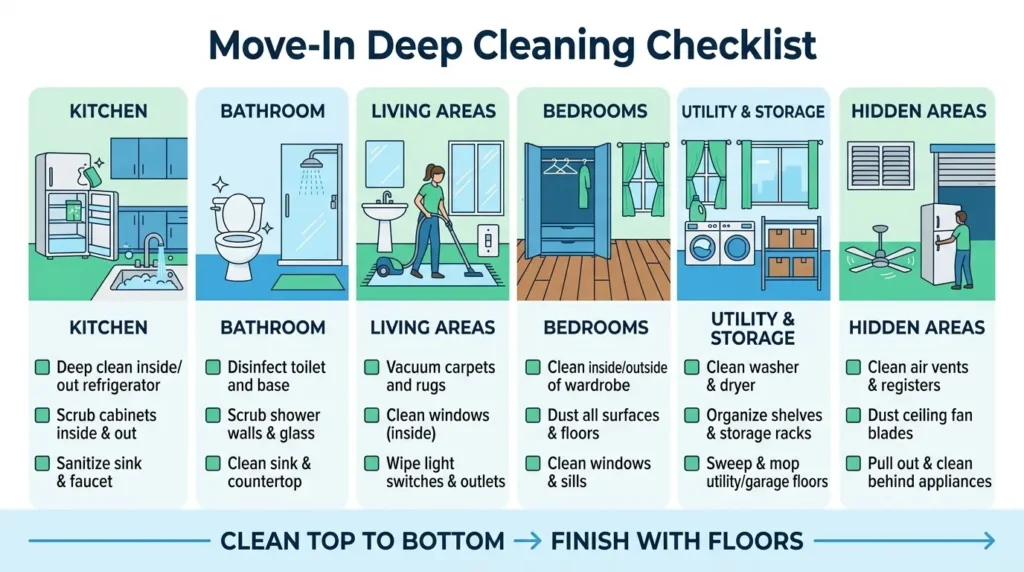
Clean from top to bottom and complete floors last to avoid re-cleaning settled dust.
Move-In Deep Cleaning Priorities
| Area | Why It Matters | Key Cleaning Tasks |
| Kitchen | Food preparation area requires high hygiene standards | Clean appliances, cabinets, counters, sink |
| Bathroom | Needs thorough sanitisation | Disinfect toilet, shower, tiles, and fixtures |
| Floors | Collect dust and debris during construction or previous use | Vacuum, mop, and remove stains |
| Storage Areas | Often overlooked during regular cleaning | Wipe shelves, drawers, and cupboards |
| High-Touch Surfaces | Frequently handled areas collect dirt | Clean switches, handles, and doors |
Why Does Deep Cleaning Before Moving In Matter?
Deep cleaning before moving in removes hidden dust, pet hair, grease, allergens and residue that a standard surface clean can leave behind. It also allows you to clean hard-to-reach areas before furniture, boxes and appliances restrict access.
A thorough house deep cleaning before moving should cover:
- Air vents, grilles and light fixtures
- Window tracks, frames and corners
- Areas behind appliances and under cabinets
- Kitchen cupboards, drawers and appliance interiors
- Bathroom fixtures and storage spaces
- Wardrobes, shelves and closets
- Door handles, switches and other high-touch surfaces
Cleaning these areas removes dirt left by previous occupants and creates clean storage spaces for food, clothes, toiletries and household items. It also makes unpacking easier because furniture and belongings can be placed directly into clean, prepared rooms.
Use a room-by-room move-in deep cleaning checklist to avoid missing important areas. Start with the kitchen and bathroom because they require the most detailed cleaning and sanitisation. Then clean bedrooms, living areas, storage spaces and utility areas before completing the floors and final touch-ups.
Completing the deep clean before unpacking gives you better access, reduces repeated cleaning and helps your new home feel clean, organised and ready from the first day.
Complete Room-by-Room Move-In Deep Cleaning Checklist
A successful move-in deep cleaning requires a room-by-room approach. Cleaning each area systematically helps you avoid missed spots and ensures your new home is ready before unpacking.
Start with rooms that need the highest level of hygiene, such as the kitchen and bathroom. Then move toward bedrooms, living areas, storage spaces, and final touch-ups.
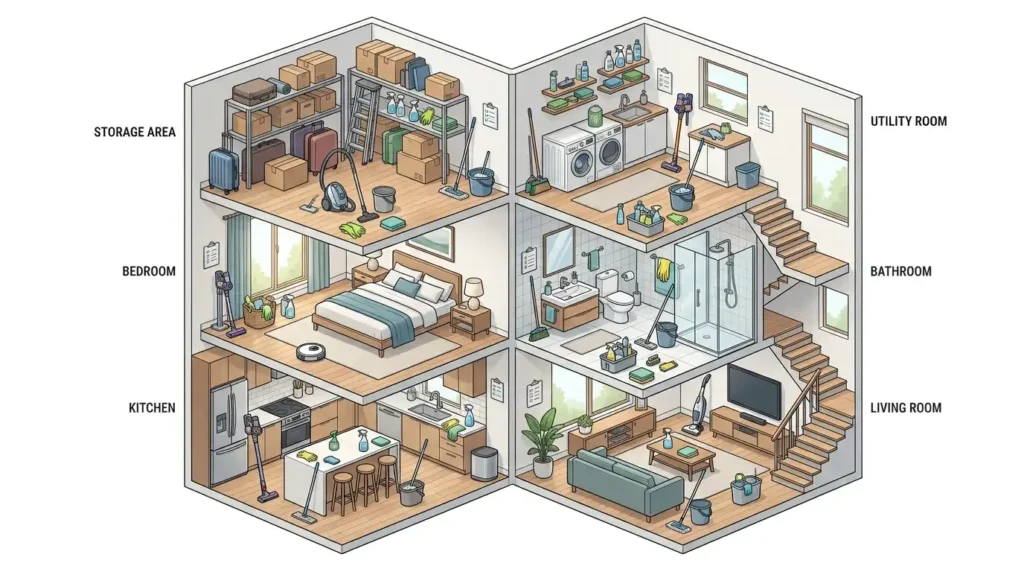
Kitchen Deep Cleaning Checklist
The kitchen should be one of your first priorities before moving into a new home. Food preparation areas can collect grease, dust, and residue that require more than a quick wipe.
A complete kitchen deep clean focuses on appliances, cabinets, surfaces, and hidden areas.
Clean Kitchen Appliances Inside and Out
Appliances often require detailed cleaning because they come into direct contact with food and daily use.
Refrigerator and Freezer
Before storing groceries:
- Remove old food or spills.
- Clean shelves, drawers, and door compartments.
- Wipe interior surfaces with an appropriate cleaner.
- Clean the exterior, including handles and seals.
Pay attention to rubber seals around refrigerator doors because they can collect crumbs and residue.
Oven, Hob, and Microwave
Cooking appliances can contain grease buildup that affects cleanliness and appearance.
Clean:
- Oven racks and interior surfaces
- Hob burners and control knobs
- Microwave walls and turntable
- Extractor fan surfaces
Follow manufacturer recommendations before using cleaning products on appliances to avoid surface damage.
Dishwasher and Washing Areas
If the property includes a dishwasher:
- Clean the filter area.
- Remove visible food particles.
- Wipe the door edges and seals.
Also clean:
- Kitchen sink
- Taps
- Drain areas
- Splashbacks
These areas receive frequent use and should be sanitised before your first meal preparation.
Sanitise Kitchen Counters and Food Preparation Areas
Kitchen surfaces should be cleaned before placing cooking equipment, utensils, and food items.
Focus on:
- Countertops
- Backsplashes
- Cabinet handles
- Drawer pulls
- Shelves
Different materials require different cleaning methods. For example, natural stone surfaces may need specific products to prevent damage.
Deep Clean Kitchen Cabinets and Drawers
Cabinet interiors are commonly missed during regular cleaning routines.
Before filling your storage spaces:
- Remove dust from shelves.
- Wipe inside corners.
- Clean drawer tracks.
- Remove crumbs or residue.
- Clean cabinet doors and handles.
This step helps create a clean storage area for plates, cookware, and groceries.
Bathroom Deep Cleaning Checklist
Bathrooms require detailed cleaning because they contain moisture-prone areas where soap residue, mineral deposits, and grime can build up.
A complete bathroom deep clean before moving in should include fixtures, surfaces, floors, and storage areas.
Disinfect High-Use Bathroom Areas
Clean and sanitise:
- Toilet seat and exterior surfaces
- Sink basin
- Shower walls
- Bathtub
- Taps and handles
- Bathroom counters
Pay special attention to areas touched frequently, such as flush handles, taps, and door handles.
Remove Limescale, Soap Residue, and Stains
Bathrooms often develop mineral deposits from water and soap products.
Common areas that need attention include:
- Shower screens
- Tap fixtures
- Tile surfaces
- Grout lines
- Shower corners
Use suitable cleaning products based on the surface material. Some harsh cleaners can damage certain tiles, finishes, or fixtures.
Refresh Bathroom Storage Areas
Before storing personal items:
Clean:
- Medicine cabinets
- Bathroom drawers
- Shelves
- Under-sink storage
Removing previous residue gives you a cleaner place for toiletries and daily essentials.
Living Room and Common Area Cleaning Checklist
Living rooms usually require less sanitisation than kitchens and bathrooms, but they collect dust from daily activity.
A detailed cleaning process should include:
- Vacuuming carpets and rugs
- Mopping hard floors
- Dusting shelves and surfaces
- Cleaning windows and frames
- Wiping doors and handles
- Removing cobwebs from corners
Clean Floors Before Bringing Furniture Inside
Floors are easier to clean when the room is empty.
Complete:
- Vacuuming edges and corners
- Removing stains
- Mopping hard surfaces
- Cleaning underneath fixed areas
Cleaning floors first prevents dust from collecting around furniture after you move in.
Remove Dust From High and Hidden Areas
Many homeowners focus only on visible surfaces and forget areas above eye level.
Check:
- Ceiling fans
- Light fixtures
- Curtain rails
- Wall corners
- Air vents
These areas can collect dust over time and are easier to clean before furniture placement.
Bedroom Deep Cleaning Checklist
Bedrooms should feel fresh before you bring in mattresses, clothing, and personal items.
Focus on:
- Wardrobes
- Closets
- Floors
- Windows
- Light fixtures
- Doors and handles
Clean Wardrobes and Storage Spaces
Before placing clothes inside:
- Wipe shelves and hanging areas.
- Clean drawers.
- Remove dust from corners.
- Check for leftover items.
This prevents your clean belongings from being stored in an unclean space.
Prepare Bedroom Floors and Surfaces
Complete:
- Vacuuming carpets
- Mopping floors
- Cleaning skirting boards
- Dusting surfaces
A clean bedroom creates a comfortable environment from the first night.
Utility Room, Garage, and Storage Area Cleaning
Storage spaces are often ignored during regular cleaning, but they can collect significant dust and debris.
Clean:
- Shelving units
- Laundry areas
- Utility sinks
- Garage floors
- Storage cupboards
For laundry rooms, clean around:
- Washing machine connections
- Dryer areas
- Detergent storage spaces
These areas are easier to organise after completing a deep clean.
Often Forgotten Areas That Need Deep Cleaning Before Moving In
A detailed deep cleaning before moving in should go beyond visible surfaces. Many areas collect dust, grease, and residue because they are not part of regular cleaning routines.
These overlooked spaces can affect how fresh your new home feels. Cleaning them before unpacking saves time and prevents you from moving furniture later.
Hidden Areas Most People Forget to Clean
Behind and Under Appliances
Large appliances can hide years of dust and debris.
Before moving in, check areas behind:
- Refrigerators
- Ovens
- Washing machines
- Dishwashers
- Dryers
Clean:
- Floor areas underneath appliances
- Walls behind appliances
- Appliance sides
- Dust buildup around corners
These spaces are easier to reach when the property is empty.
Window Tracks and Frames
Windows often look clean from a distance, but tracks and frames can collect dirt, insects, and dust.
Include these areas in your move-in cleaning checklist:
- Window tracks
- Window frames
- Glass surfaces
- Window corners
- Blinds and shutters
Clean windows also improve natural light and make rooms feel brighter.
Air Vents and Filters
Ventilation areas can collect dust over time.
Check:
- Air vents
- Exhaust fans
- Heating and cooling filters
- Vent covers
Follow equipment manufacturer instructions before removing or replacing filters.
Light Fixtures and Ceiling Areas
Many cleaning routines focus on furniture-level surfaces and ignore areas above eye level.
Clean:
- Ceiling fans
- Lamps
- Light covers
- Ceiling corners
- Cobwebs
Dust from these areas can fall onto freshly cleaned surfaces if they are ignored.
Door Handles, Switches, and High-Touch Areas
Frequently touched surfaces deserve extra attention before moving in.
Clean:
- Door handles
- Light switches
- Cabinet handles
- Drawer pulls
- Remote controls
- Railings
These areas collect regular contact residue and should be included in your final cleaning process.
What Should You Clean First When Moving In?
A move-in cleaning checklist should start with the areas that become difficult to access after furniture, boxes and personal belongings arrive. The best order is to remove rubbish, clean from top to bottom, sanitise the kitchen and bathrooms, prepare storage areas, and finish with the floors.
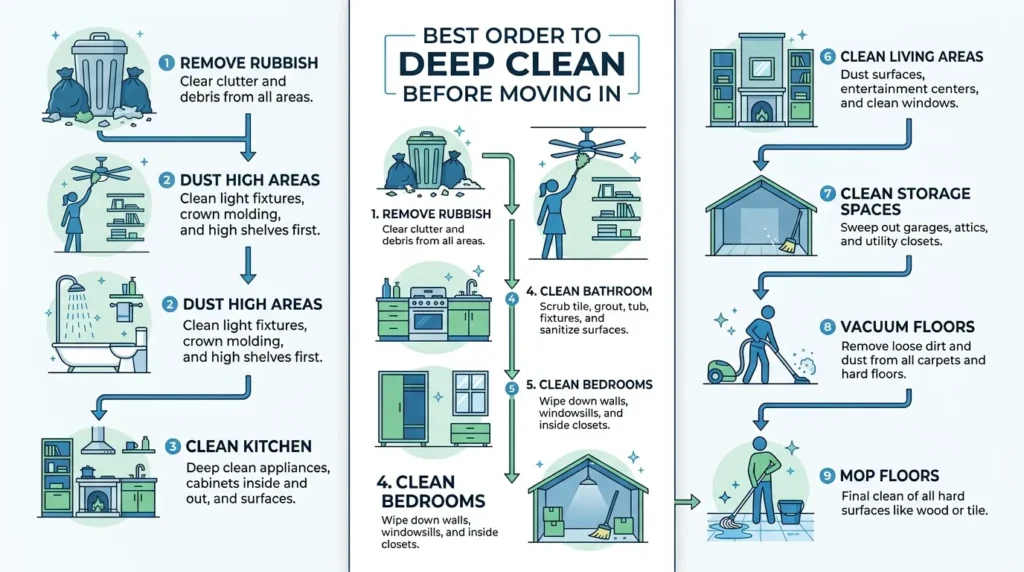
Follow this cleaning order:
- Remove leftover items and rubbish
Clear every room so all surfaces, corners and storage areas are accessible. - Dust high and hidden areas
Clean light fixtures, ceiling corners, vents, shelves and the tops of cabinets first. This prevents dust from falling onto surfaces you have already cleaned. - Clean the kitchen and bathrooms
These rooms require the most detailed cleaning and sanitisation. Clean kitchen appliances, cabinets, worktops, sinks and storage areas. In the bathroom, clean the toilet, shower, bath, tiles, taps and fixtures. - Prepare cupboards and storage spaces
Wipe wardrobes, kitchen cabinets, bathroom cupboards, shelves and drawers before placing food, clothes or toiletries inside. - Clean windows, walls and large surfaces
Wash windows, wipe doors, remove wall marks and clean skirting boards. - Vacuum and mop the floors last
Vacuum carpets, edges and corners before mopping hard floors. Complete any remaining touch-ups after the floors have dried.
Using this move-in deep cleaning order prevents repeated work, keeps cleaned areas free from falling dust and ensures every room is ready before unpacking begins.
Should You DIY or Hire Professional Move-In Cleaners?
Choose DIY move-in cleaning if the property is small, already in good condition and you have enough time to complete a detailed clean before moving day. Hire professional move-in cleaners if the property is large, heavily soiled, requires specialised equipment or your moving schedule leaves limited time for cleaning.
DIY deep cleaning is usually suitable when:
- The home is small or has fewer rooms.
- The property only needs light-to-moderate cleaning.
- Appliances, bathrooms and floors are already in reasonable condition.
- You have enough time before furniture and boxes arrive.
- You want to control the cleaning process and reduce labour costs.
A professional move-in cleaning service is worth considering when:
- The property is large or has multiple bathrooms.
- There is heavy grease, dust, limescale or built-up dirt.
- Previous occupants left appliances, cupboards or storage areas unclean.
- The property is a rental requiring a detailed pre-move clean.
- Carpet cleaning, window cleaning or specialist equipment is needed.
- You need the property cleaned quickly before moving day.
A professional pre-move cleaning service commonly includes kitchen appliance cleaning, bathroom sanitisation, floor cleaning, surface dusting, cupboard interiors and high-touch surfaces. Window, carpet and upholstery cleaning may be offered separately.
Before booking professional move-in cleaners, request a detailed checklist and confirm whether appliances, cabinets, windows, carpets and hard-to-reach areas are included. This makes it easier to compare services and avoid unexpected additional charges.
Practical scenario: A small, empty flat in reasonable condition may be manageable with basic supplies and one or two people. A larger property with multiple bathrooms, stained carpets and heavily used appliances may require specialist equipment and several cleaning sessions.
How Long Does Move-In Deep Cleaning Take?
Move-in deep cleaning can take several hours or require multiple cleaning sessions, depending on the property’s size, condition and the level of cleaning required. An empty home is usually faster to clean because floors, cupboards, appliances and hidden areas are easier to access.
Typical time requirements include:
- Small apartment or studio: Usually takes several hours to clean the kitchen, bathroom, floors, surfaces, cabinets and storage areas.
- Medium-sized house: May require one or more cleaning sessions due to additional rooms, bathrooms, flooring and storage spaces.
- Large property: Usually takes longer and may require multiple cleaners, especially when window cleaning, garages, extensive storage or several kitchens and bathrooms are included.
The main factors affecting how long deep cleaning before moving in takes are:
- Property size: More bedrooms, bathrooms and floor space increase cleaning time.
- Property condition: Heavy dust, grease, stains, uncleaned appliances and belongings left by previous occupants require additional work.
- Cleaning scope: A basic clean covers visible dust, vacuuming and mopping, while a full move-in deep clean includes appliance interiors, cupboards, detailed bathroom sanitisation, buildup removal and hard-to-reach areas.
- Property occupancy: Empty homes are generally quicker to clean than furnished properties.
- Number of cleaners: A professional cleaning team can divide tasks and complete larger properties more efficiently.
To estimate the cleaning time accurately, assess the number of rooms, bathrooms, appliances, storage areas and any heavy buildup before creating your cleaning plan.\
Practical scenario: Two homes with the same number of bedrooms can require very different cleaning times. A maintained property may only need surface cleaning and sanitisation, while a similar-sized home with greasy appliances, stained floors and full cupboards may require several additional hours.
Complete Move-In Deep Cleaning Checklist
Use this checklist before bringing your belongings into your new home.
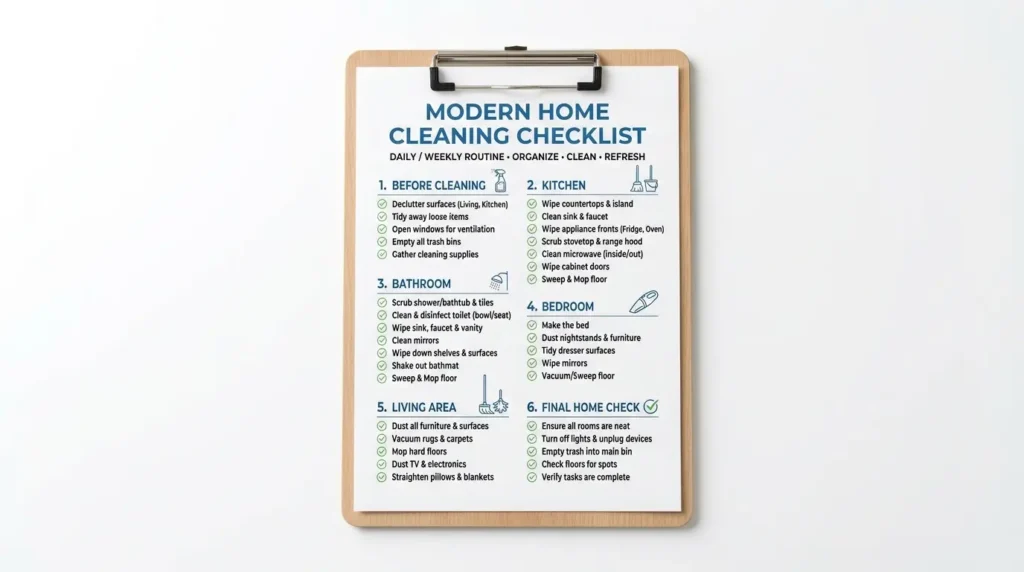
Before Cleaning
- Remove leftover items and rubbish
- Open windows for ventilation
- Prepare cleaning supplies
- Inspect rooms for problem areas
Kitchen Checklist
- Clean refrigerator and freezer
- Clean oven and hob
- Wipe cabinets and drawers
- Sanitise countertops
- Clean sink and taps
- Wipe appliance handles
Bathroom Checklist
- Disinfect toilet surfaces
- Clean shower and bathtub
- Remove soap residue
- Clean mirrors
- Wipe bathroom storage areas
- Clean floors and corners
Bedroom Checklist
- Clean wardrobes
- Dust shelves
- Clean floors
- Wipe doors and handles
- Clean windows and frames
Living Area Checklist
- Vacuum carpets
- Mop hard floors
- Clean skirting boards
- Dust fixtures
- Clean switches and handles
Final Home Check
- Inspect hidden corners
- Check storage areas
- Remove remaining dust
- Complete final floor cleaning
- Confirm every room is ready for moving day
What Are the Most Common Move-In Cleaning Mistakes?
The most common move-in cleaning mistakes are cleaning after furniture arrives, ignoring hidden areas, using unsuitable products and trying to deep clean the entire property in one day. The best approach is to complete deep cleaning before moving in, work from top to bottom and divide larger jobs into manageable stages.
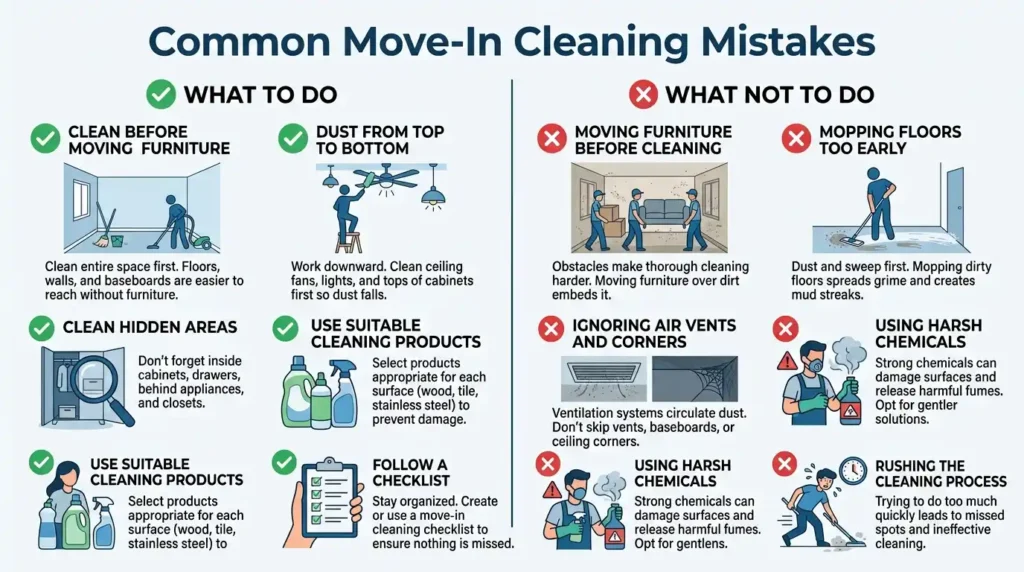
1. Moving Furniture In Before Cleaning
Beds, sofas, tables and boxes block access to floors, walls, corners, skirting boards and storage areas. Complete the main move-in deep cleaning checklist while the property is empty.
Common scenario: A wardrobe, bed or refrigerator is moved into position before the room is cleaned. Dust, debris and wall marks behind it then become inaccessible without unloading and moving the item again. Cleaning these areas while the property is empty prevents duplicate work.
2. Cleaning Only Visible Surfaces
Wiping worktops and mopping floors is not enough for a complete move-in clean. Commonly missed areas include:
- Behind and under appliances
- Inside cabinets and drawers
- Window tracks and frames
- Door frames and skirting boards
- Ceiling fans and light fixtures
- Air vents and grilles
Clean high and hidden areas first so falling dust does not settle on freshly cleaned surfaces.
3. Using the Wrong Cleaning Products
Strong chemicals can damage natural stone, wood, stainless steel and certain flooring finishes. Always check the surface-care instructions and appliance manufacturer’s guidance before applying a product.
Common scenario: An acidic multipurpose cleaner is applied to a marble or limestone worktop, leaving a dull or etched patch. Identifying the surface material and testing the product in a hidden area first can prevent permanent damage.
4. Trying to Clean Everything in One Day
Rushing a full-property deep clean often leads to missed corners, poorly cleaned appliances and repeated work. A realistic schedule is:
- Day 1: Kitchen, appliances and bathrooms
- Day 2: Bedrooms, living areas and storage spaces
- Day 3: Windows, final checks, vacuuming and mopping
For a smaller property, these stages may be completed in one day. Larger or heavily soiled homes may require several sessions or professional move-in cleaners.
5. Cleaning Floors Too Early
Floors should be cleaned near the end because dust and debris from cabinets, fixtures, walls and windows will fall during the cleaning process.
Vacuum carpets and corners first, then mop hard floors after all other major tasks are complete.
Avoiding these common move-in cleaning mistakes saves time, prevents surface damage and ensures the property is properly cleaned before furniture and belongings restrict access.
Common scenario: Floors are vacuumed and mopped before cupboards, light fixtures and window frames are cleaned. Dust from those higher surfaces then settles onto the finished floor, forcing it to be cleaned again. Complete overhead and surface cleaning first, then finish with the floors.
Conclusion
Deep cleaning before moving in helps remove hidden dust, grease, pet hair and residue before furniture and boxes restrict access. It also prepares kitchens, bathrooms, cupboards, wardrobes and floors for immediate use.
For the most efficient result, follow a room-by-room move-in deep cleaning checklist:
- Remove rubbish and leftover items.
- Dust high and hidden areas.
- Deep clean the kitchen and bathrooms.
- Clean cupboards, drawers and wardrobes.
- Wash windows and wipe high-touch surfaces.
- Vacuum carpets and mop hard floors last.
Example: Cleaning skirting boards, wardrobe interiors and the floor behind a washing machine takes only a few straightforward steps while the property is empty. Once furniture and appliances are installed, the same work may require unloading cupboards, disconnecting appliances or moving heavy items.
A DIY move-in clean may be suitable for a small property in reasonable condition. For larger homes, heavy buildup or limited time before moving day, hiring a professional move-in cleaning service may be more practical.
Whichever option you choose, a structured checklist helps prevent missed areas and ensures your new home is clean, organised and ready for unpacking.
FAQs
How do you clean grease and dust from the tops of kitchen cabinets?
Remove loose dust first, then wipe the surface with a suitable degreasing cleaner. Once dry, place removable cabinet liners or parchment paper on top to collect future dust and grease.
Practical scenario: Cabinet tops positioned close to a hob often collect a sticky mixture of airborne grease and dust. After degreasing the surface, adding a removable liner makes future cleaning easier because the liner can be replaced instead of repeatedly scrubbing the cabinet.
How should you clear a slow bathroom drain before moving in?
Remove visible hair and debris using a drain tool or mechanical strainer. Avoid immediately pouring strong chemical drain cleaners into the pipe, especially when the plumbing material and condition are unknown.
For ongoing maintenance, use a suitable enzyme-based drain product according to its instructions. Contact a plumber if the drain remains slow or repeatedly blocks.
How do you remove embedded pet hair from carpets?
Loosen the hair with a rubber carpet rake, squeegee or stiff carpet brush, then vacuum slowly in several directions using a suitable vacuum attachment.
Practical scenario: A carpet may appear clean after vacuuming but still release visible pet hair when brushed by hand. Using a rubber rake or squeegee first loosens hair trapped between the fibres, allowing the vacuum to collect more of it.
Should vinegar be used to deep clean hardwood floors?
Vinegar is generally not recommended for regular hardwood-floor cleaning because its acidity may affect some protective finishes. Use a pH-neutral product approved for the specific flooring type.
Avoid soaking the floor. Apply minimal moisture and dry the surface promptly.
What should you do about air vents and ventilation before moving in?
Vacuum accessible vent covers, wipe grilles and replace suitable heating or cooling filters where required. Check extractor fans and dryer vents for visible dust or restricted airflow.
Professional inspection may be needed when ductwork is heavily contaminated, airflow is poor or the ventilation system has not been maintained.

Leave a Reply