

How to Clean a Sofa Professionally
The professional method runs in a fixed order: check the care label, vacuum thoroughly, spot test, pre-treat marks, clean in whole sections, groom the fabric while it is still damp, then dry it fast. Most of it you can do at home.
The two steps almost nobody does are grooming and fast drying, and they are exactly why a home-cleaned sofa often ends up looking patchy and smelling faintly damp for a week.
Table of Contents
The Professional Process, in Order
Allow two to three hours for a three seater, plus drying time.
1. Read the Label First
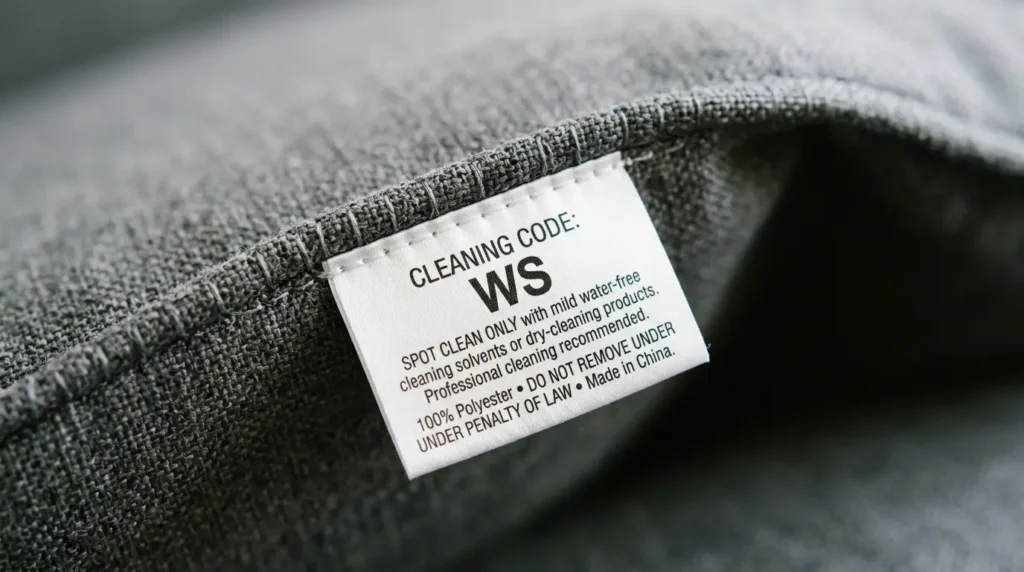
Find the care label before anything else. On a sofa it is usually under a seat cushion, sewn to the deck, or on the frame underneath.
It carries a cleaning code that tells you what the fabric can take. Get this wrong and you can permanently watermark or shrink the upholstery, so it is not a step to skip.
2. Vacuum Properly
Take every cushion off. Vacuum both sides of each one, the deck underneath, the arms, the back, and the frame.
Use the upholstery attachment on the flat surfaces and the crevice tool everywhere else. Go slowly. Most of what makes a sofa look tired is dry soil sitting in the weave, and a proper vacuum lifts a surprising amount of it before anything wet is involved.
3. Spot Test
Pick somewhere hidden, the back panel or underneath, and apply a small amount of whatever you plan to use. Blot it, then leave it to dry completely.
Check for colour transfer onto the cloth and for any ring or lightening as it dries. This takes an hour and it is the difference between a clean sofa and an expensive mistake.
4. Pre-Treat Marks
Deal with individual marks before the general clean, while the fabric is dry. Work from the outside of the mark inwards so you do not spread it, and blot rather than rub.
Rubbing distorts the weave and leaves a fuzzy patch that stays visible after the mark has gone. For specific stains, our guide to cleaning fabric sofa stains covers the treatments, and wine on upholstery has its own method.
5. Clean in Sections
Work one complete panel at a time. A whole cushion, a whole arm, the entire back. Never stop halfway across a panel.
This is where most home cleaning goes wrong. If one part of a panel dries while the next part is still being worked, you get a tide line along the join that will not come out afterwards. Finish what you start, edge to edge.
Use as little moisture as the job allows. Mist and blot rather than soak.
6. Groom the Fabric
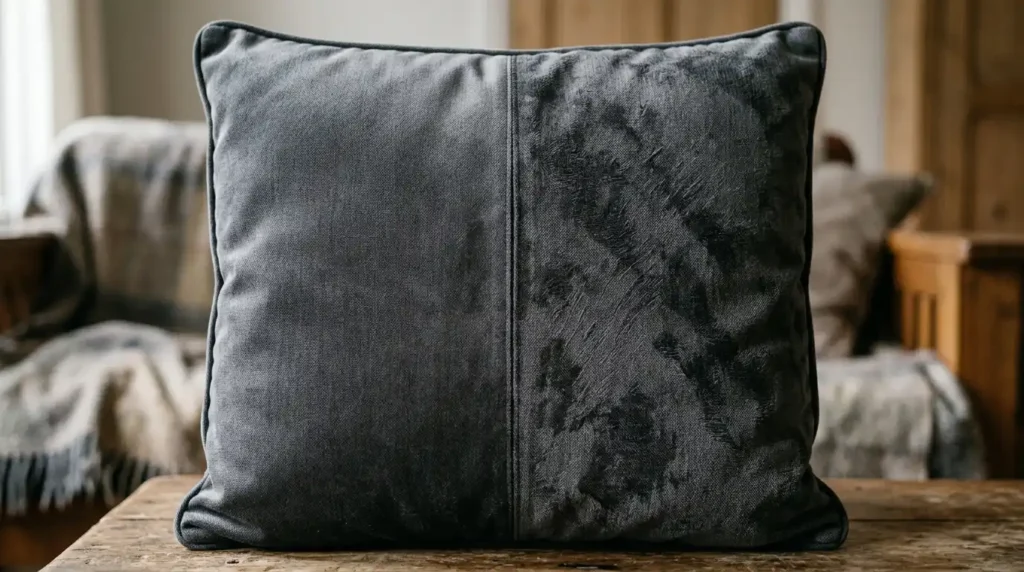
While the panel is still damp, brush the whole surface in one direction with a soft upholstery brush.
Almost nobody at home does this and it is the main reason DIY sofas look blotchy. Fabric fibres dry in whatever direction they were last pushed, so if half a cushion has been worked one way and half the other, light catches them differently and the cushion looks two-tone even though it is perfectly clean.
One direction, whole panel, every time.
7. Dry It Fast
Stand the cushions on their edges so air reaches every side. Open windows, put a fan on it, and keep everyone off it until it is dry all the way through.
A sofa dried slowly smells damp, and moisture left inside the cushion fill is what causes that. Fast drying is not optional.
Before You Start: What the Label Code Means
Four codes, and they decide everything else:
- W — water-based cleaning only
- S — solvent cleaning only, no water
- WS — either is fine
- X — vacuum only, nothing wet
An S code sofa cleaned with water will watermark, and the marks are permanent. An X code sofa should not be wet-cleaned at all.
No label, or a code you are unsure about? Our full guide to upholstery cleaning methods breaks each one down properly and explains what to do when the label has gone.
The Cushion Cover Mistake That Ruins Sofas
Cushion cover has a zip? That does not mean it is washable.
The zip is there so the cover can be fitted over the foam during manufacture, not so you can take it off and put it in the machine. Most manufacturers specify dry clean only regardless of the zip, and washing anyway causes three problems at once.
The cover shrinks, often by enough that it will not go back over the foam at all. The colour lifts unevenly, so the washed cushion no longer matches the rest of the sofa. And the fabric loses its shape, leaving the cushion looking baggy where it used to sit tight.
Check the label on the cover itself, not the one on the sofa frame. They are sometimes different.
If the Label Does Allow Washing
Wash all the covers together, not one at a time, so any colour change is at least consistent across the whole sofa.
Cold water, gentle cycle, zips closed halfway so they do not snag. Never tumble dry, which is what causes most shrinkage.
Then put the cover back on the foam while it is still very slightly damp. It will stretch into place easily and dry to the right shape. Wait until it is bone dry and you will fight it.
Cleaning the Parts People Miss
Arms and Headrests
Arms go dark before anything else, and vacuuming will not touch it.
The soil there is not dust, it is oil. Hands on the arms, hair on the headrest, and body oils transfer into the fabric and build up over time. Dry soil lifts out with suction. Greasy soil does not, which is why a sofa can look clean everywhere except the two places you touch most.
These areas need a wet clean with something that will cut grease, and usually more than one pass. Treat them as their own job rather than assuming the general clean will get them.
Under and Between the Cushions
Lift everything out and vacuum the deck properly, including the crevices where the base meets the arms and back.
What collects down there is crumbs, hair, coins and grit. The grit matters more than it looks, because it works down into the base fabric and abrades the fibres every time someone sits down. Sofas often wear through at the deck before the seat cushions give up.
The Back and Base
The back panel collects household dust and is almost never cleaned, so over years it darkens by comparison with the front.
The base and valance collect pet hair and floor dust. Both need vacuuming, and the back panel benefits from the same clean as the rest so the sofa ends up an even colour rather than clean in front and grey behind. The same applies to armchairs, which get missed entirely in most households.
Feather, Foam or Fibre? It Changes Everything
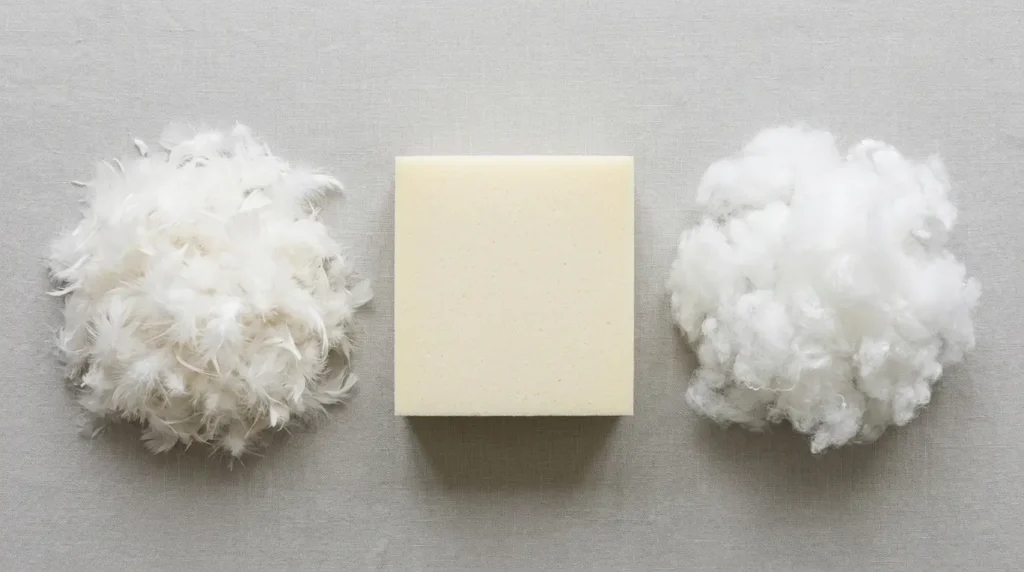
What is inside the cushion decides how much moisture is safe and how long you will be waiting.
Foam absorbs water readily and releases it slowly, much like a memory foam mattress. Over-wet a foam cushion and it stays damp in the middle for days, which is where the musty smell comes from. Use the least moisture you can and dry it hard.
Feather and down is the least forgiving. Wet feathers clump, take several days to dry, and produce a strong smell until they are completely dry. Avoid getting moisture into a feather cushion at all. Clean the cover surface only and keep the fill dry.
Fibre and hollowfibre is the most forgiving. It dries fastest and tolerates more moisture. The tradeoff is that it flattens under heavy agitation, so be gentle rather than scrubbing.
Squeeze the cushion to work out which you have. Feather feels soft and shifts around inside. Foam holds its shape and springs back. Fibre feels somewhere between, and slightly lumpy.
Why Sofas Look Patchy After Cleaning
Three causes, and all three are avoidable.
Uneven moisture. Cleaning one area wetter than another leaves tide lines where the damp section met the dry one. This is why step five says finish whole panels edge to edge rather than working in patches.
Detergent residue. Any cleaning product left in the fabric attracts dirt, so the cleaned area actually gets dirty faster than the rest and looks worse within a few weeks. Always go over it with a clean damp cloth afterwards to lift the residue out.
Pile not groomed. The most common cause and the least known. Fibres dry in whatever direction they were last pushed, so a panel worked in several directions dries with the light catching it unevenly. Brushing the whole panel one way while damp fixes it completely, and takes about thirty seconds.
If your sofa is already patchy, a light re-clean of the whole panel followed by proper grooming will usually even it out.
Can You Use a Carpet Cleaner on a Sofa?
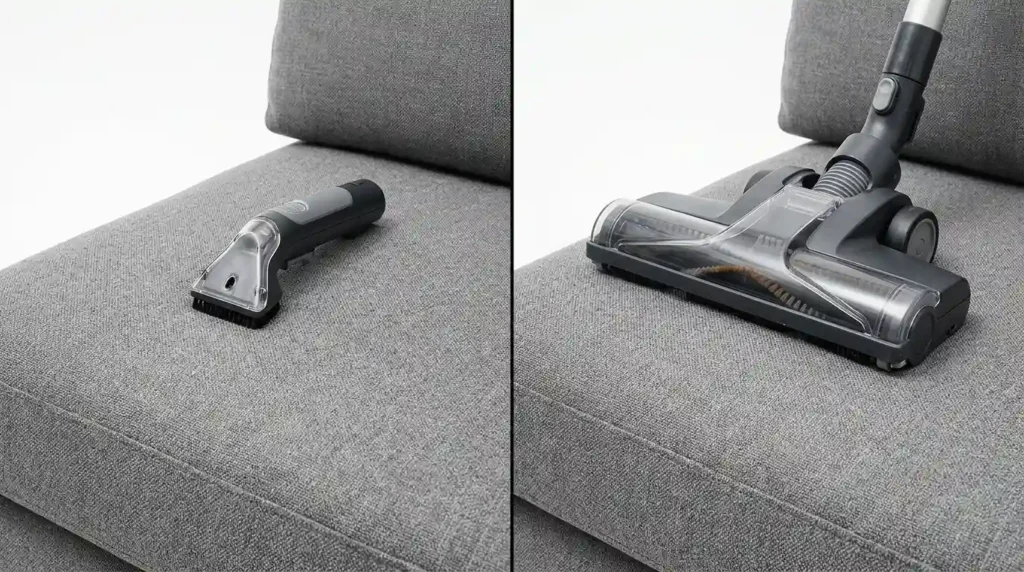
Yes, but only with the upholstery attachment, and only if the label code is W or WS.
Never use the floor head. It puts down far more water than upholstery can handle and the suction is designed for carpet backing rather than cushion fill.
Even with the right attachment, domestic machines share one weakness: they release more water than they pull back out. On a carpet that means slow drying. On a foam or feather cushion it means water sitting inside the fill with nowhere to go, and a sofa that smells for a fortnight.
If you do use one, go over each section twice with the trigger released to lift extra moisture, then dry aggressively with a fan.
What a Professional Does That You Cannot
Three things, and they are all about equipment rather than skill.
Suction. Professional extraction machines inject solution and immediately pull it back out under high vacuum lift, so the sofa comes out damp rather than wet and dries in hours rather than days.
Solvent methods. S code fabrics cannot be cleaned with water at all. Professionals carry dry solvent systems for them. There is no domestic equivalent.
Fabric-specific chemistry. Velvet, chenille, linen and microfibre all behave differently, and using the wrong product on any of them can flatten the pile or set a mark permanently. If yours is one of the awkward ones, see our guides to velvet and suede specifically.
Worth doing yourself if the sofa is generally grubby and the code is W or WS. Worth paying for if it is S or X coded, has heavy greasy soiling on the arms, has an odour problem, or is expensive enough that a mistake matters. Our sofa cleaning cost guide has the pricing, and there is more on what to expect in our piece on hiring a professional.
Rather not risk it? Buon Cleaning deep cleans sofas and upholstery across Nottingham, West Bridgford, Beeston, Arnold and Mapperley using hot water extraction, so the fabric is dry enough to use the same evening. See our cleaning service.
FAQ’s
Can I clean my sofa myself, or do I need to hire a professional?
You can safely clean it yourself if the label code is W or WS and you are dealing with general dust or light marks. Hire a professional if the sofa has an S or X code, heavy greasy stains, an unpleasant odor, or is an expensive material like velvet or leather.
Why does my sofa smell musty after I clean it?
A musty smell occurs when moisture gets trapped deep inside the inner cushion fill (especially foam or feather). If the core cannot breathe, stagnant water sits inside the cushion, leading to damp odours.
Can I wash my sofa cushion covers in the washing machine?
Only if the care label on the cover itself explicitly allows it. Do not rely on the presence of a zip. Machine washing dry-clean-only covers can cause severe shrinkage, uneven color fading, and shape distortion.
Can I use a carpet cleaner on my sofa?
Yes, but only with an upholstery attachment on W or WS-coded fabrics—never use the floor head. Because domestic carpet cleaners inject more water than they extract, make a second pass over every area with the spray trigger released to pull out maximum moisture.
Why does my sofa look patchy or two-toned after cleaning?
The most common cause is ungroomed fabric pile—fibres dry in whichever direction they were last pushed, reflecting light unevenly. Brushing the damp panel in a single direction before it dries corrects this. Leftover detergent residue and uneven moisture levels can also cause patchiness.

Leave a Reply